Aging and oxidative stress weaken nerve signals in male flies
Experiments compared male flies aged 80 days or older with younger controls and mutants up to 30 days old that had elevated oxidative stress.
Our read
Mechanisms- Studied:
- Preprint: experiments in male Drosophila melanogaster flies, against younger controls
- What changed:
- Nerve-to-muscle signaling was weaker in older flies and oxidative-stress mutants than in younger controls
- The catch:
- Recordings from dissected muscle did not measure nerve signaling in intact flies
- In the record:
- One of 683 papers on SOD1 on record: 6 with results in people, 56 in animals.
- Why it’s aging research:
- It studies organisms or tissues that aged naturally.
Editor of record: Boris Djordjevic · AgingResearch.News
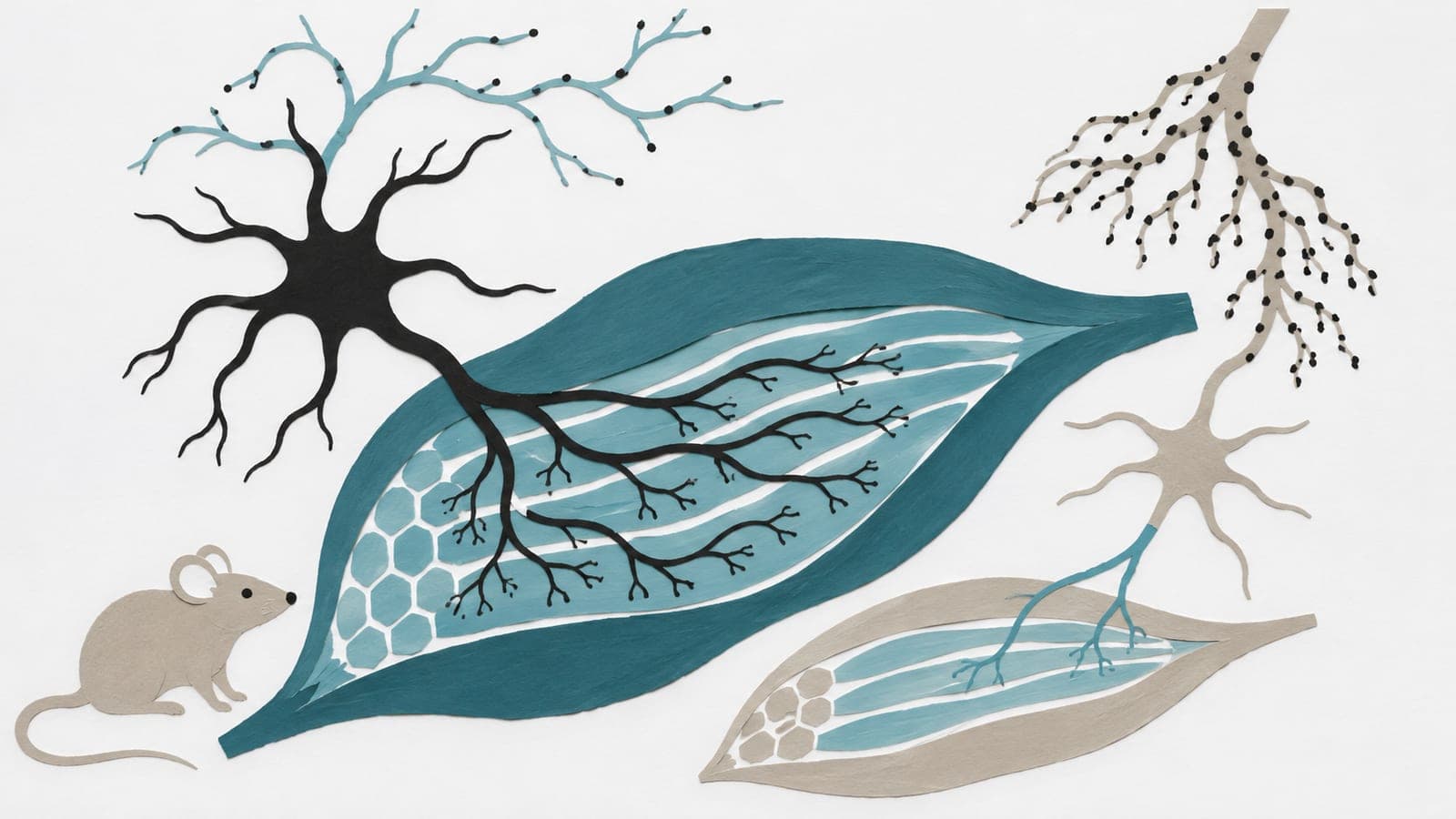
In experiments with male Drosophila melanogaster flies, researchers recorded electrical signals from a dissected, male-specific abdominal muscle and its nerves. They compared normal flies aged 80 days or older, younger controls and mutants up to 30 days old with elevated oxidative stress—an imbalance between reactive chemicals and cellular defenses.
In older flies, poorer nerve conduction accounted for most of the decline in nerve-to-muscle signaling. Transfer at the connection itself remained largely intact. Mutants showed similar trends. Both groups also had weaker activity in calcium-activated potassium channels, protein gateways that help muscle cells reset after electrical activity. Unusually large spontaneous releases of nerve-signaling chemicals appeared in older flies but not mutants. Function varied widely between individuals.
Why it matters
Comparing aging with oxidative stress addresses whether this form of cellular stress reproduces the changes in nerve and muscle function that accompany age.
Caveats
The experiments used dissected tissue from a male-specific fly muscle, limiting generalization to other muscles or females. This preprint has not been peer-reviewed.
The paper
University of Iowa
bioRxiv, Jun 16, 2026, Open access, Preprint, not yet peer-reviewed

Comments
Be the first to comment.