A protein supports force in stretched animal muscle fibers
Experiments in animal muscle fibers found that reducing the protein plakoglobin impaired the extra activation of force-producing structures as their contractile units lengthened.
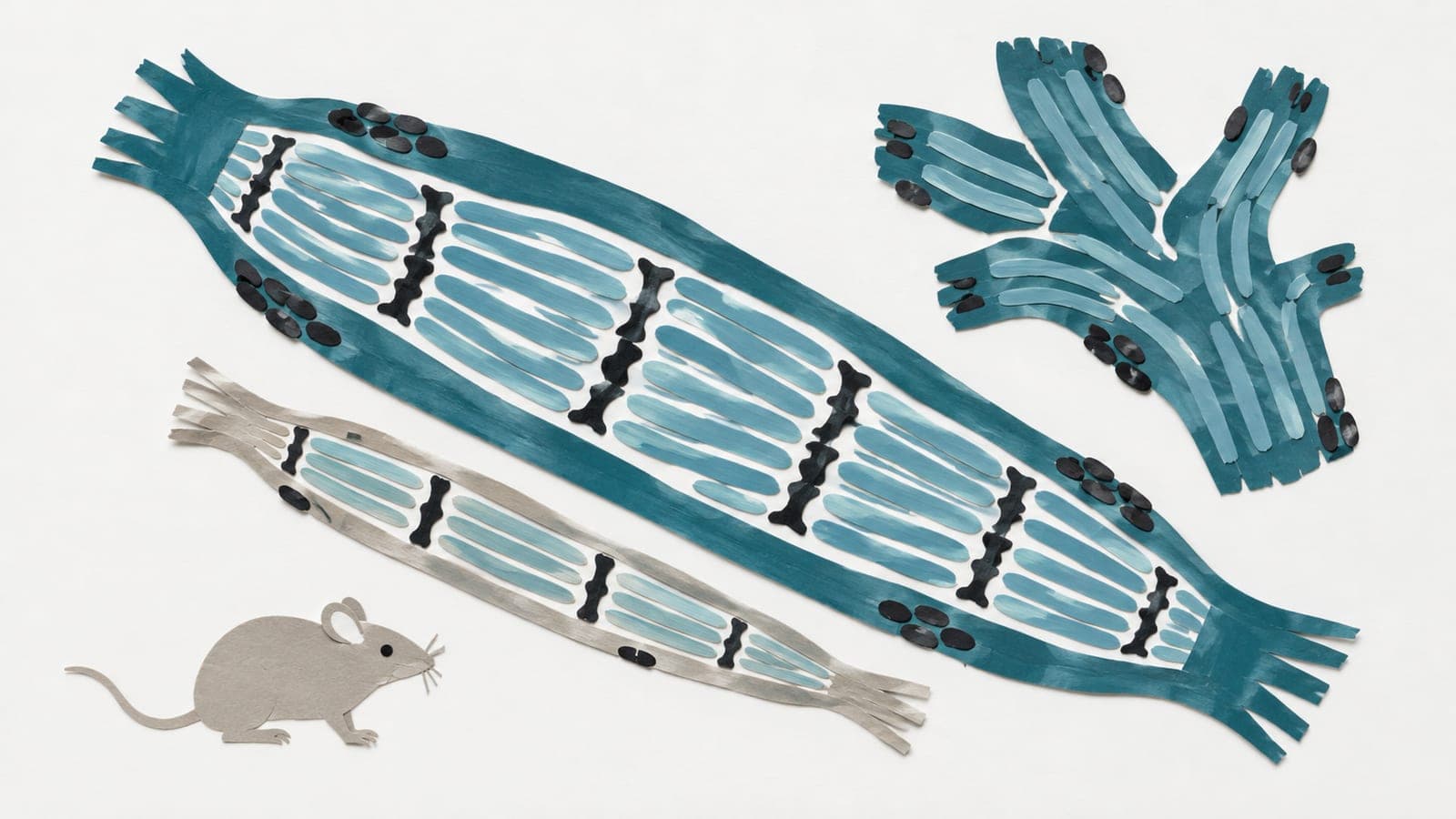
Experiments in animal skeletal and heart muscle examined how plakoglobin, a protein, supported muscle force and resistance to wasting during fasting. The researchers used high-resolution microscopy and muscle fibers with their outer membranes removed. Lowering plakoglobin impaired the increase in activation of force-producing structures when the fibers’ contractile units were stretched.
During fasting, skeletal muscle lost protein complexes containing plakoglobin from its cell membranes. Insulin signaling and muscle mass also fell, while activity increased in genes associated with muscle wasting. Heart muscle retained these complexes and growth-related signaling, and maintained its mass. Blocking a cell-signaling pathway disrupted this heart-muscle response. It reduced growth-related signaling, increased activity in muscle-wasting genes and decreased heart-muscle mass. The researchers concluded that preserving plakoglobin-containing complexes and this signaling pathway accompanied the heart’s resistance to fasting-related wasting.
Why it matters
Understanding how muscles maintain their mass bears on questions about muscle wasting with age. This work examined the connection between mechanical activity and growth-related signaling.
Caveats
These were animal experiments involving fasting, not a study of aging or people. The preprint has not been peer-reviewed, and the abstract did not specify the species or sample size.
The paper
Plakoglobin supports length-dependent force generation and cardiac resistance to fasting
Technion – Israel Institute of Technology
bioRxiv, Oct 13, 2026, Open access, CC BY, Preprint, not peer-reviewed


