Semaglutide tied to fewer kidney events in lower-risk type 2 diabetes
Kidney problems or death occurred in 8.7% of semaglutide users versus 12.6% of those starting a comparison diabetes drug class over 36 months.
Our read
Interventions- Studied:
- Preprint: cohort study of 13,410 adults with type 2 diabetes, 36 months, against DPP4i initiators
- What changed:
- Risk of kidney deterioration or death was 31% lower with semaglutide than with DPP4i
- The catch:
- Differences in patient engagement and frailty could explain part of the association
- In the record:
- The 649th paper on semaglutide with results in people; 1,641 on record in all. Its result on mortality agrees with 23 of 26 other findings on record; 2 point the other way and 1 found no change.
- Why it’s aging research:
- It studies an intervention with evidence of extending healthy life.
Editor of record: Boris Djordjevic · AgingResearch.News
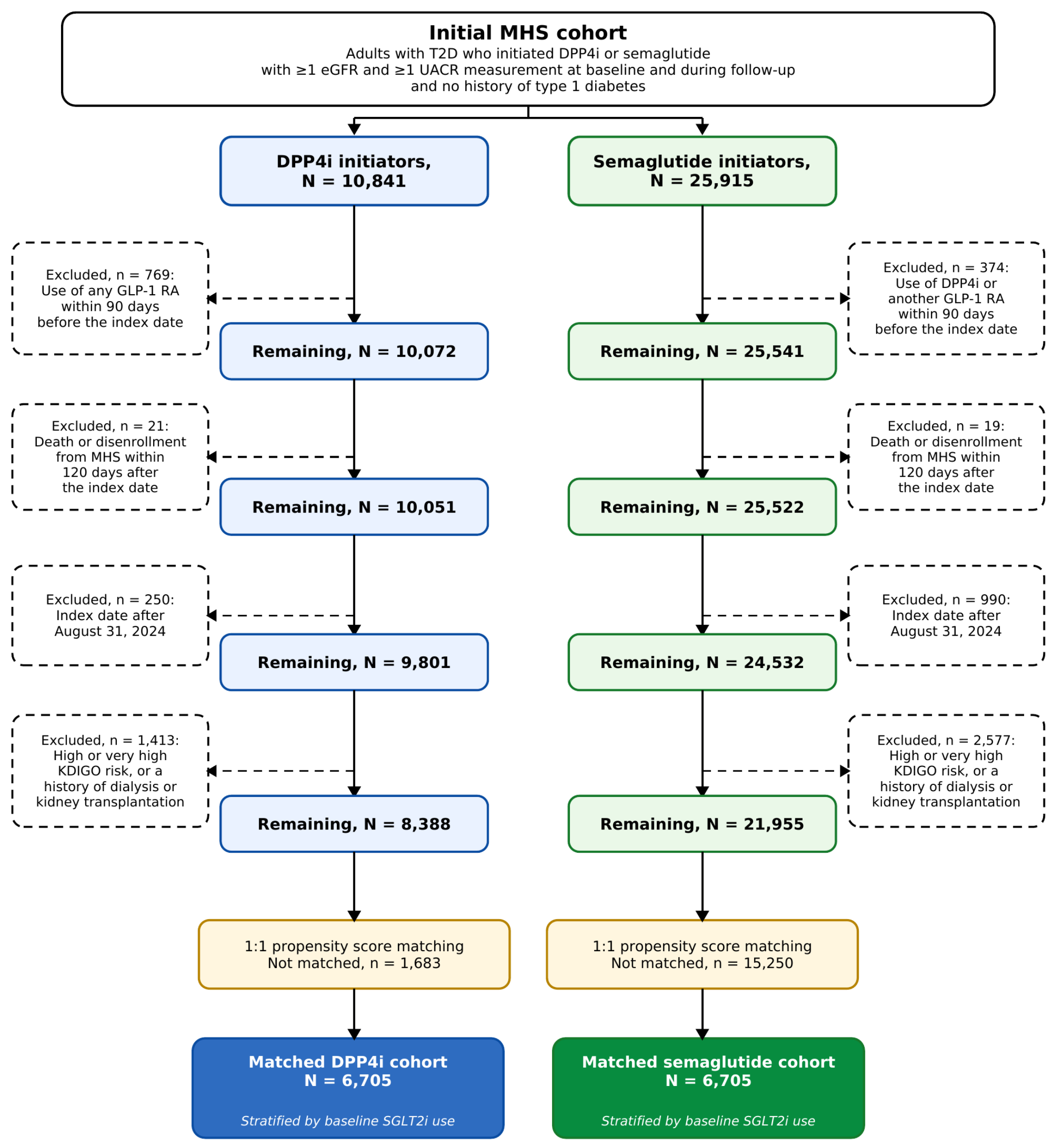
Adults aged 18 or older with type 2 diabetes and low-to-moderate kidney risk in Israel were compared in a retrospective observational cohort study. Researchers matched 6,705 people starting semaglutide with 6,705 starting dipeptidyl peptidase-4 inhibitors, another class of diabetes drugs, using recorded health characteristics. Most semaglutide users received injections.
The main outcome combined a confirmed decline of at least 30% in estimated kidney filtration, new or worsening leakage of the blood protein albumin into urine, kidney failure, or death from any cause. During follow-up capped at 36 months, this outcome occurred in 8.7% of semaglutide users and 12.6% of comparison-drug users. The association mainly reflected differences in albumin leakage, with smaller contributions from filtration decline and death. Kidney failure was rare in both groups.
Why it matters
For people aging with type 2 diabetes, the findings add evidence about kidney outcomes before advanced kidney disease.
Caveats
Matching recorded health characteristics could not rule out other differences between people starting the drugs that might account for the association. The Research Square preprint has not been peer-reviewed; it excluded people receiving dialysis, those with kidney transplants and anyone who died within 120 days of starting medication.
From the paper
- Follow-up
In the primary analysis population, the median follow-up was 31.7 months (IQR 20.4–36.0) in the semaglutide group and 36.0 months (IQR 23.7–36.0) in the DPP4i group.
- Result
According to the time-to-event analysis, semaglutide was associated with a 31% lower risk of the primary composite outcome than DPP4i was (HR 0.69; 95% CI 0.60–0.78; p < 0.001) (Fig. 2A).
- Absolute difference
Participants were matched 1:1 by nearest-neighbor propensity score matching without replacement, within strata of baseline SGLT2i use, with a maximum absolute difference of 0.1 between estimated propensity scores.
- Limitation
As with all observational studies, residual confounding cannot be excluded despite extensive matching and adjustment, including confounding by indication …
Quoted word for word from the full text on researchsquare.com.
- Semaglutide
- Type 2 diabetes
- Albuminuria
- End-stage renal disease
- Estimated glomerular filtration rate
- Humans
The paper
Hadassah Medical Center; Kaplan Medical Center
Research Square, Nov 4, 2026, Open access, Preprint, not yet peer-reviewed

Comments
Be the first to comment.