Blood pressure support linked to deaths after hip fracture surgery
Among 243 older intensive care patients, 30-day mortality was 28.6% with drugs to raise blood pressure versus 4.6% without them.
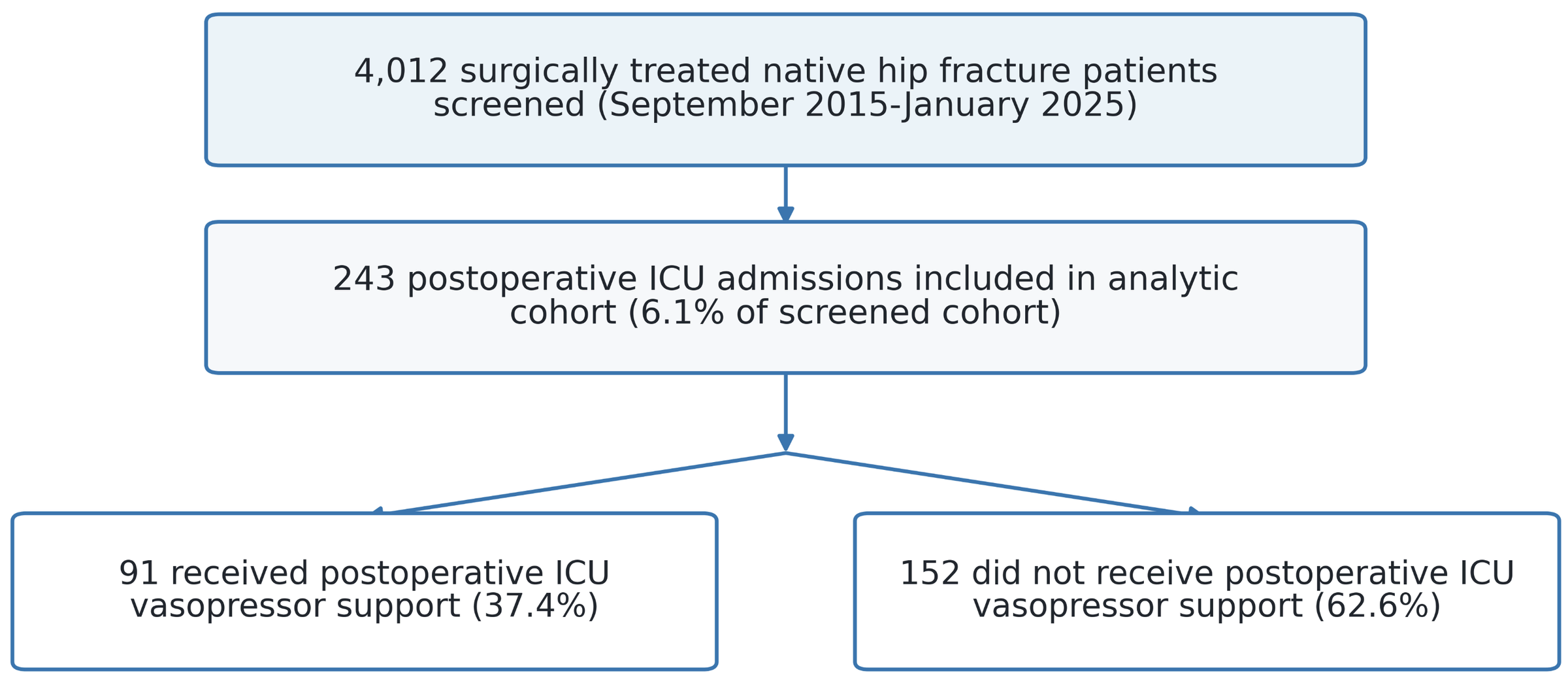
4,012 participants, multicenter
Limit: Low blood pressure severity could explain both vasopressor use and higher mortality
Edited by Boris Djordjevic · AgingResearch.News
Researchers reviewed records of 4,012 patients aged 65 or older who underwent surgery for hip fractures caused by low-energy injuries. This retrospective observational cohort study covered three hospitals within one academic medical center from September 2015 to January 2025. Of these patients, 243 needed postoperative intensive care, and 91 received vasopressors, drugs that raise blood pressure.
Among intensive care patients, 30-day mortality was 28.6% with vasopressors versus 4.6% without them. One-year mortality was 38.5% versus 13.2%. These associations remained after adjustment for age, sex, other illnesses and surgical factors. Readmission and repeat surgery rates at 90 days did not differ significantly.
Why it matters
For older hip fracture patients, the authors suggest that needing these drugs may prompt reassessment by care teams, planning for additional medical support and timely discussions about goals of care.
Caveats
This observational study cannot establish that vasopressors caused the higher mortality. The preprint has not been peer-reviewed, and the findings concern older patients needing intensive care after hip fracture surgery, not all hip fracture patients.
Where the evidence stands
Vasopressors
- 13 independent labs in 10 countries
- 1 finding against
- 1 trial, 1 with no results posted
- Funders: Chonnam National University and others
- 1 of 15 findings with company ties
The paper
NYU Langone Health
Research Square, Nov 1, 2026, Open access, Preprint, not peer-reviewed


Comments
Be the first to comment.