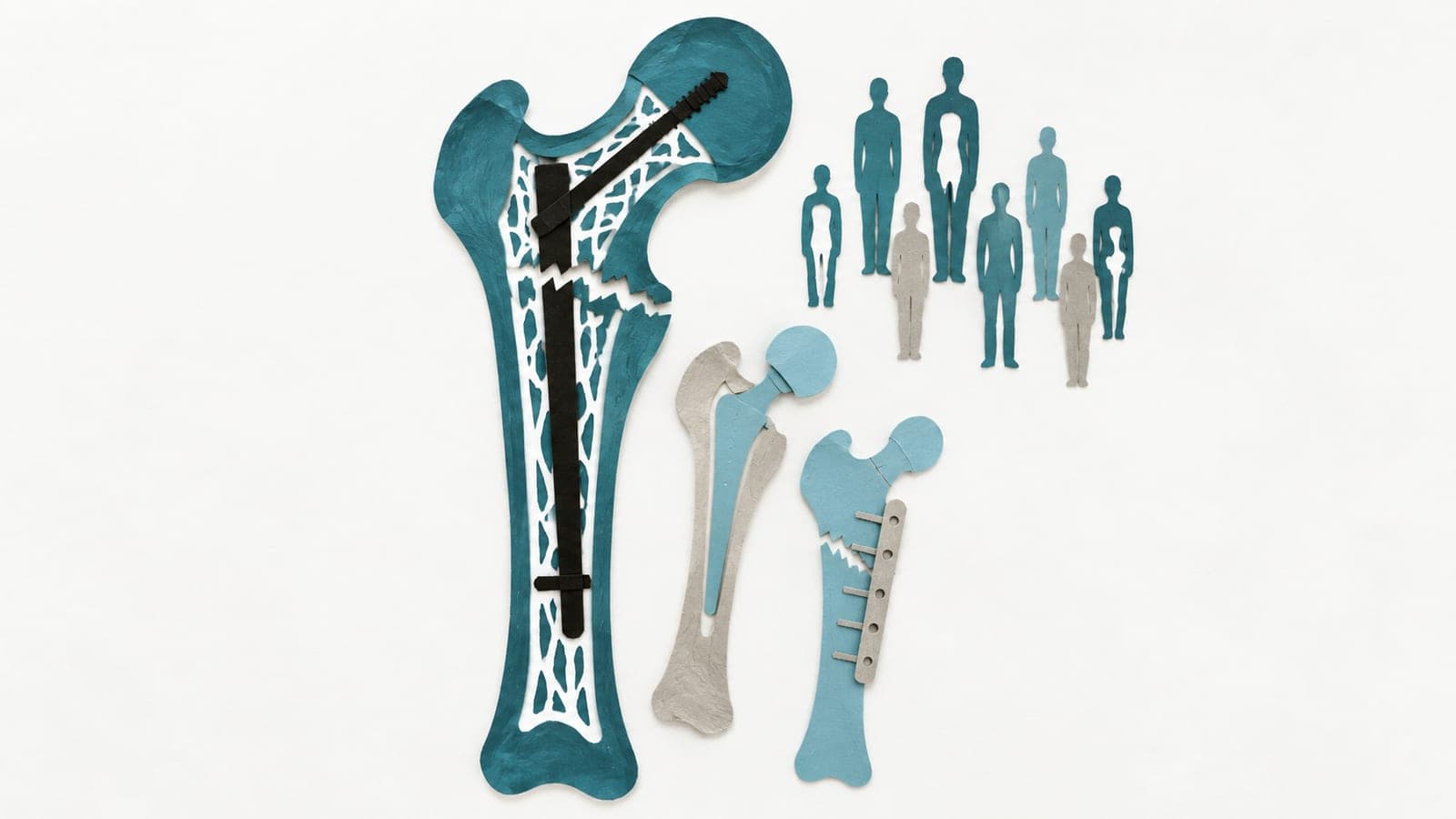
Sedative reduced delirium after hip fracture surgery
In a preprint trial, delirium occurred in 21.2% of older patients given the sedative versus 45.7% given placebo within seven days of hip fracture surgery.
Double-blind, placebo-controlled, registered ISRCTN12589867
Edited by Boris Djordjevic · AgingResearch.News
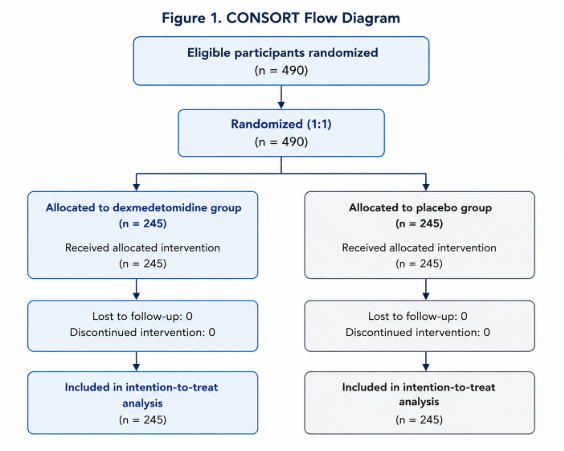
In a randomized, double-blind trial in Vietnam, 490 patients aged 65 or older underwent hip fracture surgery under general anesthesia. Half received dexmedetomidine, a sedative; half received saline placebo. The drug dose was 0.2 micrograms per kilogram over 10 minutes before anesthesia, then 0.15 micrograms per kilogram per hour during surgery and for an average of 7.4 hours afterward. Both groups received standardized pain relief, including a nerve block for 48–52 hours.
Dexmedetomidine reduced delirium, a sudden state of confusion, during the first seven postoperative days. Delirium lasted 15 hours with the drug versus 37 hours with placebo. During surgery, heart rate averaged 68 versus 73 beats per minute, and average arterial blood pressure was 69 versus 75 millimeters of mercury, respectively.
Why it matters
Postoperative delirium in older adults is associated with delayed recovery, longer hospitalization and poor clinical outcomes, making prevention an important question for surgical care in later life.
Caveats
The abstract reports trial registration on September 29, 2026, after the stated study period of December 2024 to April 2026. This preprint has not been peer-reviewed and covered only patients aged 65 or older having hip fracture surgery under general anesthesia at one hospital.
From the paper
- Participants
A total of 490 patients aged ≥ 65 years scheduled for hip fracture surgery under general anesthesia were randomly assigned (1:1) to receive either dexmedetomidine (Group D, n = 245) or 0.9% normal saline (Group C, n = 245).
- Result
Dexmedetomidine significantly reduced the incidence of postoperative delirium compared with placebo (21.2% [52/245] vs. 45.7% [112/245]; relative risk [RR] 0.46, 95% confidence interval [CI] 0.35–0.61; P < 0.001) …
- Absolute difference
Dexmedetomidine significantly reduced the incidence of postoperative delirium compared with placebo (21.2% [52/245] vs. 45.7% [112/245]; relative risk [RR] 0.46, 95% confidence interval [CI] 0.35–0.61; P < 0.001), corresponding to an absolute risk reduction of 24.5% …
Quoted word for word from the full text on researchsquare.com.
The paper
Saigon ITO Phu Nhuan Hospital; Nguyen Tat Thanh University
Research Square, Oct 22, 2026, Open access, Preprint, not peer-reviewed