Falls varied across older adults’ health and social profiles
The estimated share reporting falls ranged from 17.11% in a low-burden, independent group to 57.08% in a group with complex dependency across several areas.
189,639 participants
Limit: Excluding respondents with incomplete profile indicators could distort differences in fall prevalence
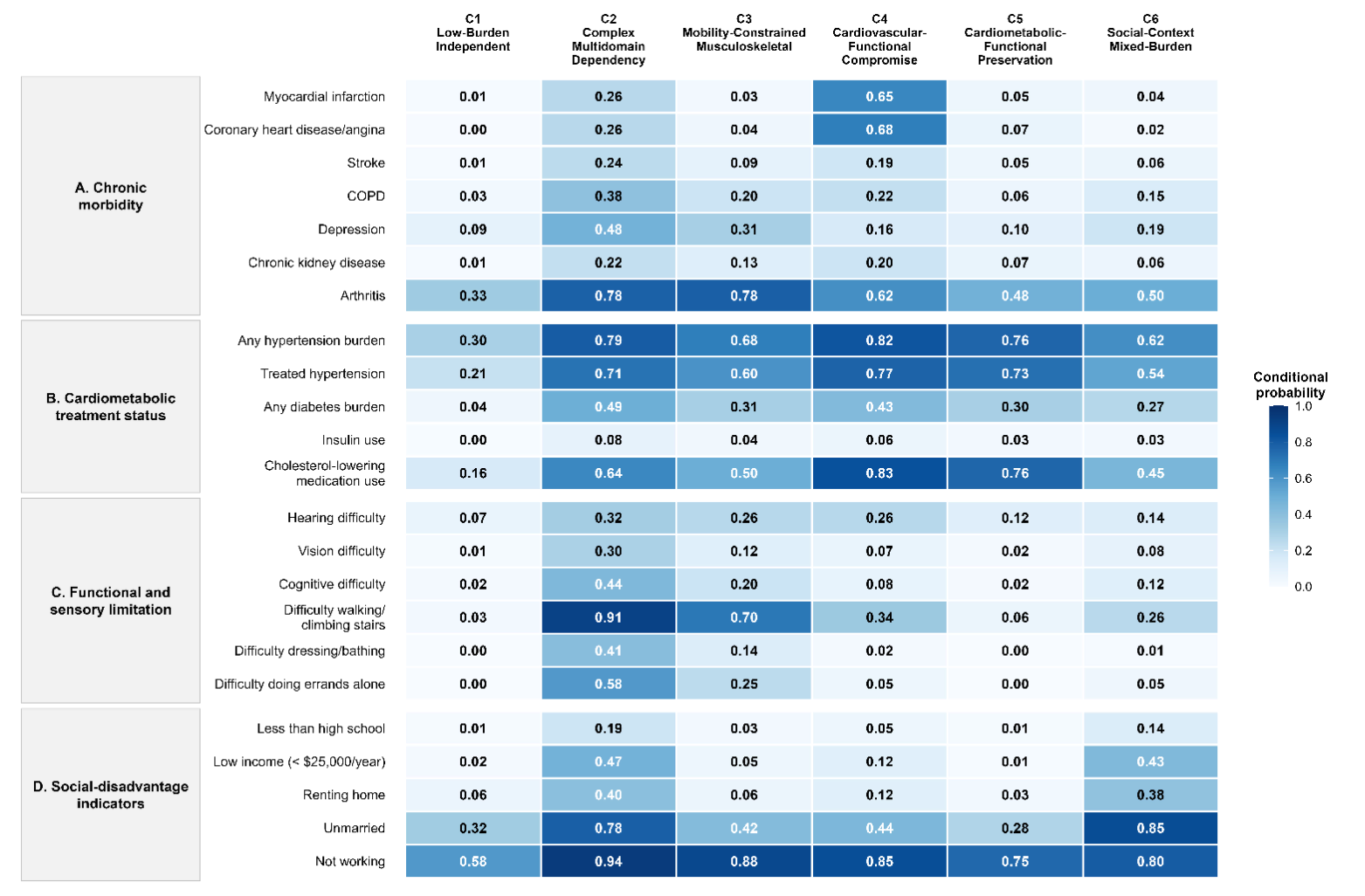
US adults aged 60 years or older—189,639 in total—were included in a cross-sectional analysis of the 2023 Behavioral Risk Factor Surveillance System survey. Researchers used 21 measures of chronic illness, treatment status, everyday functioning, sensory limitations and social disadvantage to identify six profiles.
Among 187,435 respondents with fall data, the researchers estimated how common falls were in each profile. They also analysed links between profiles and falls, adjusting for age group, sex, race and ethnicity. Fall burden did not simply track illness burden or treatment status. It differed according to the broader pattern of functioning, thinking abilities, mobility and social circumstances. The links were stronger for falls that caused injury and remained consistent across additional analyses.
Why it matters
These population profiles may inform research on monitoring and preventing falls in older adults that considers health, daily functioning and social circumstances together.
Caveats
Cross-sectional, self-reported data cannot establish cause and effect or show whether these profiles predict future falls. The profiles are not clinical diagnoses, and this preprint has not been peer-reviewed.
From the paper
- Participants
A total of 207,121 respondents met the age criterion.
Quoted word for word from the full text on researchsquare.com.
The paper
Chulabhorn Royal Academy; University of Alabama at Birmingham
Research Square, 12 Oct 2026, Open access, Preprint, not peer-reviewed