Blood proteins may mark activity rather than explain cancer links
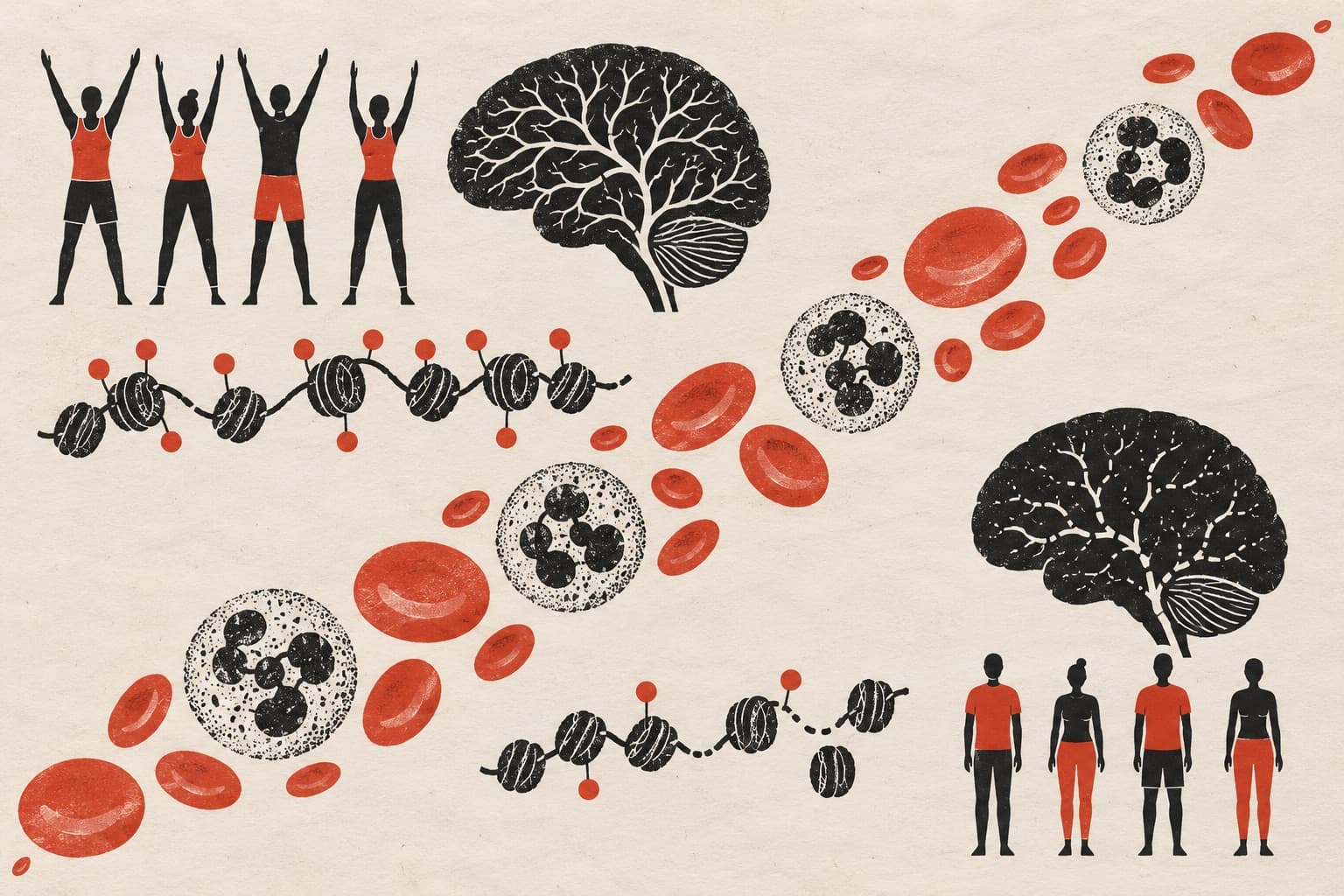
Of 436 blood proteins associated with activity, 44 were also linked to cancer risk, but genetic analyses offered little evidence that they explained the connection.

Our read
Populations- Studied:
- Preprint: cohort study of 100,000 people
- In the record:
- The 3,609th paper on exercise with results in people; 9,875 on record in all. Its result on breast cancer agrees with all 3 other findings on record.
Editor of record: Boris Djordjevic · AgingResearch.News
UK Biobank participants aged 40–69 at recruitment contributed to an observational study and a Mendelian randomization analysis, which used genetic differences to examine activity, proteins and cancer. The observational analyses included 127,474 people across different comparisons; 55% were female. Around 100,000 wore wrist activity monitors for seven days, and 53,016 provided blood samples for protein measurements.
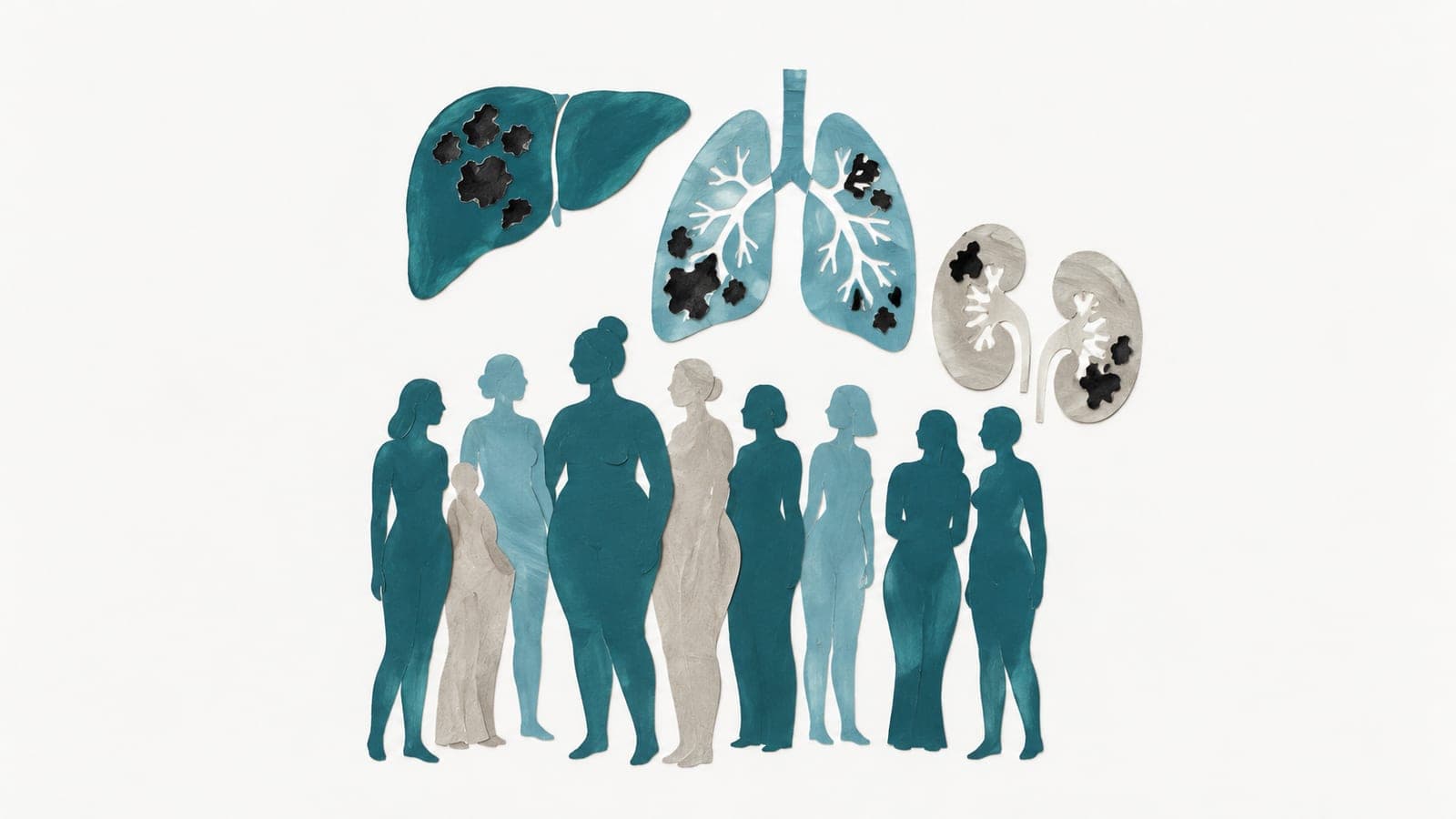
Higher activity was associated with lower breast, colorectal and endometrial cancer risk, but higher prostate cancer risk. Adjustment for body mass index weakened the colorectal and endometrial links. Genetic analyses linked higher activity to lower breast, colorectal and prostate cancer risk. However, they offered little support for blood proteins as intermediates between activity and cancer. The authors suggested that these proteins may primarily be markers of physical activity.
Why it matters
The work addresses how physical activity may relate to cancers that become more common with age, and whether blood proteins help account for those links.
Caveats
Blood samples were collected in 2006–2010, before activity was measured in 2013–2015, so the protein analysis relied on activity remaining broadly stable. The cancer and protein genetic data came from people of European ancestry, and this preprint has not been peer-reviewed.
From the paper
- Participants
The UKB is a prospective study which recruited 500,000 participants across 22 assessment centres across the United Kingdom.
- Result
The proteins most strongly positively associated with overall physical activity in our fully adjusted model were three integrins: integrin subunit alpha v (ITGAV, beta = 0.33 SD, 95% CI 0.31 to 0.35, p=8.87 ×10⁻²⁴⁵), integrin alpha M chain (ITGAM, beta = 0.26, 95% CI 0.24 to 0.28, p=6.40 ×10⁻¹³⁹) …
Results, Association between physical activity and circulating proteins
Quoted word for word from the full text on medRxiv.
Exercise is part of Bryan Johnson's Blueprint
The paper
Exploring proteins as intermediates between physical activity and cancer in UK biobank
University of Bristol
medRxiv, Sep 11, 2026, Open access, CC0, Preprint, not yet peer-reviewed
Comments
Be the first to comment.