Sleep changes linked to higher death risk in older women
Declining nighttime sleep or increasing day-and-night sleepiness was linked to approximately double the relative risk of death versus stable patterns over a median 2.1 years.
Our read
Populations- Studied:
- Cohort study of 651 community-dwelling older women, against women with stable sleep patterns (Multicenter)
- What changed:
- Death from any cause was higher with declining nighttime sleep than with stable patterns (hazard ratio 2.16)
- The catch:
- Under-detected sleep apnea could contribute to both increased sleepiness and higher death risk
- In the record:
- The 46th paper on daytime napping with results in people; 76 on record in all. Its result on mortality agrees with 4 of 5 other findings on record; 1 found no change.
Editor of record: Boris Djordjevic · AgingResearch.News
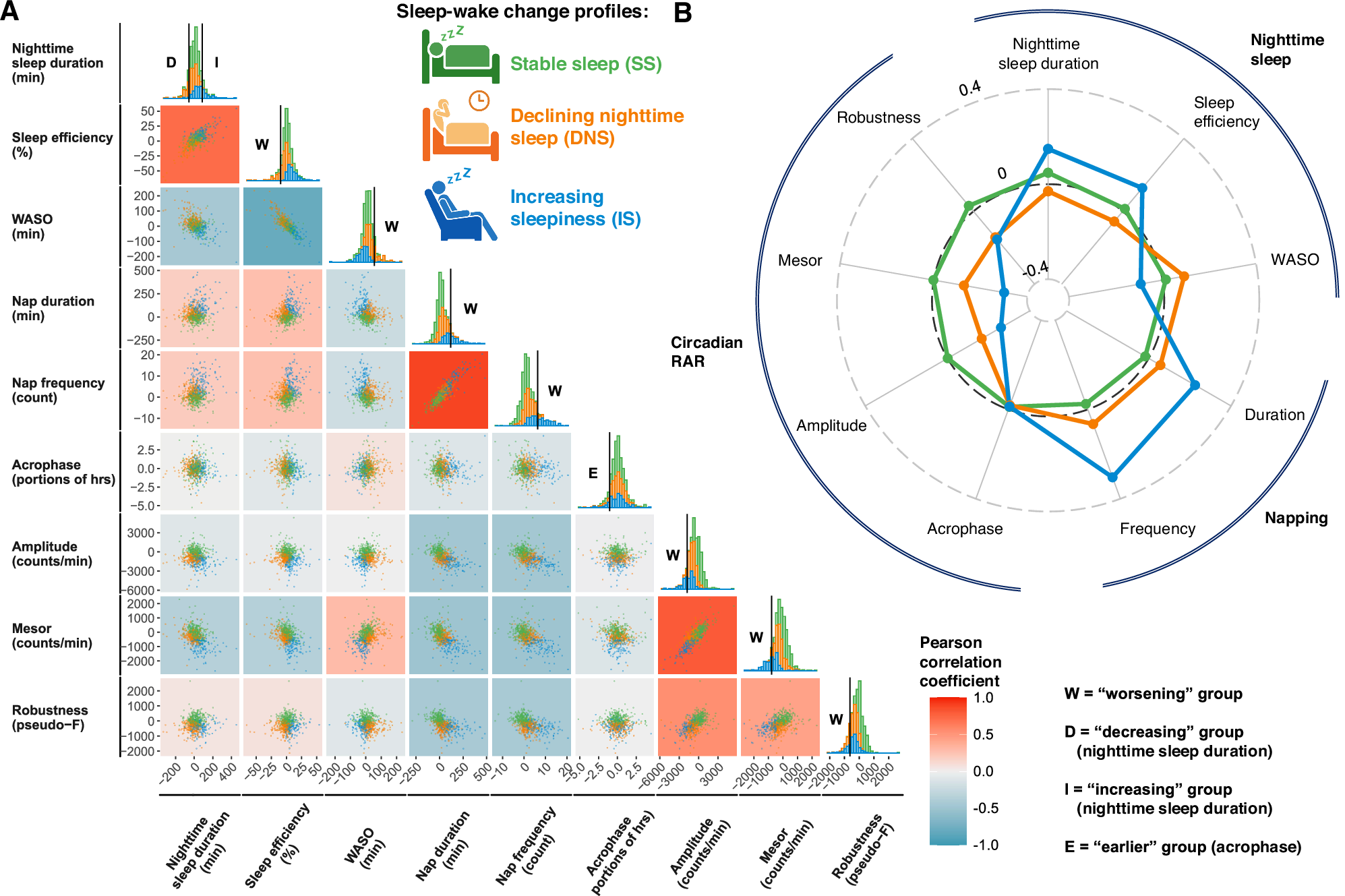
704 community-dwelling white women, averaging 82.9 years old at baseline, took part in an observational study of sleep changes and mortality. They wore wrist movement monitors for four nights and five days, then repeated the measurements five years later. Researchers grouped women by changes in nighttime sleep, daytime naps and daily rhythms of rest and activity.
The groups with declining nighttime sleep or increasing sleep across day and night had approximately double the relative risk of death compared with the stable group over a median 2.1 years. These links remained after accounting for health conditions and other factors. Large increases in daytime napping were also linked to higher risks of death overall and from heart and blood vessel disease. During follow-up, 90 women (12.8%) died, including 35 (5.0%) from heart and blood vessel disease.
Why it matters
Sleep-wake patterns often worsen with age. Following their changes addresses whether these shifts reflect normal aging or carry information about survival in very late life.
Caveats
Worsening health could have changed sleep patterns as well as raised death risk, despite adjustment for measured health factors. The findings may not extend to men, other racial groups or people in care facilities.
Where the evidence stands
Nighttime sleep
- 1 lab in 1 country
- Funder: National Institute on Aging
Daytime napping
- 33 independent labs in 11 countries
- 6 findings against
- Funders: National Institute on Aging and others
- 6 of 69 findings with company ties
From the paper
- Participants
We studied 704 Caucasian women (mean [SD] age at the baseline sleep visit (2002–2004) = 82.5 [2.9] years) who had complete actigraphy sleep data at two SOF study visits and were followed for mortality information after the second sleep visit (2006-2008) (Supplementary Fig. 1).
Results, Five-year changes in sleep and circadian RAR patterns
- Follow-up
… women experiencing declining nighttime sleep (hazard ratio [HR] = 2.16 [95% CI: 1.26, 3.72]) or increasing 24-hour sleepiness (HR = 2.09 [1.12, 3.92]) have approximately double the risk of subsequent all-cause mortality over a median follow-up time of 2.1 years …
- Result
… women experiencing declining nighttime sleep (hazard ratio [HR] = 2.16 [95% CI: 1.26, 3.72]) or increasing 24-hour sleepiness (HR = 2.09 [1.12, 3.92]) have approximately double the risk of subsequent all-cause mortality over a median follow-up time of 2.1 years …
Quoted word for word from the full text on nature.com.
The paper
University of California, San Francisco
Communications Medicine, Jul 28, 2026, Open access


Comments
Be the first to comment.