Chest X-ray model ranked fracture risk better than standard tool
The model scored 0.843 versus 0.779 for a standard tool on a measure of how well it ranked patients’ fracture risk.
Our read
Biomarkers- Studied:
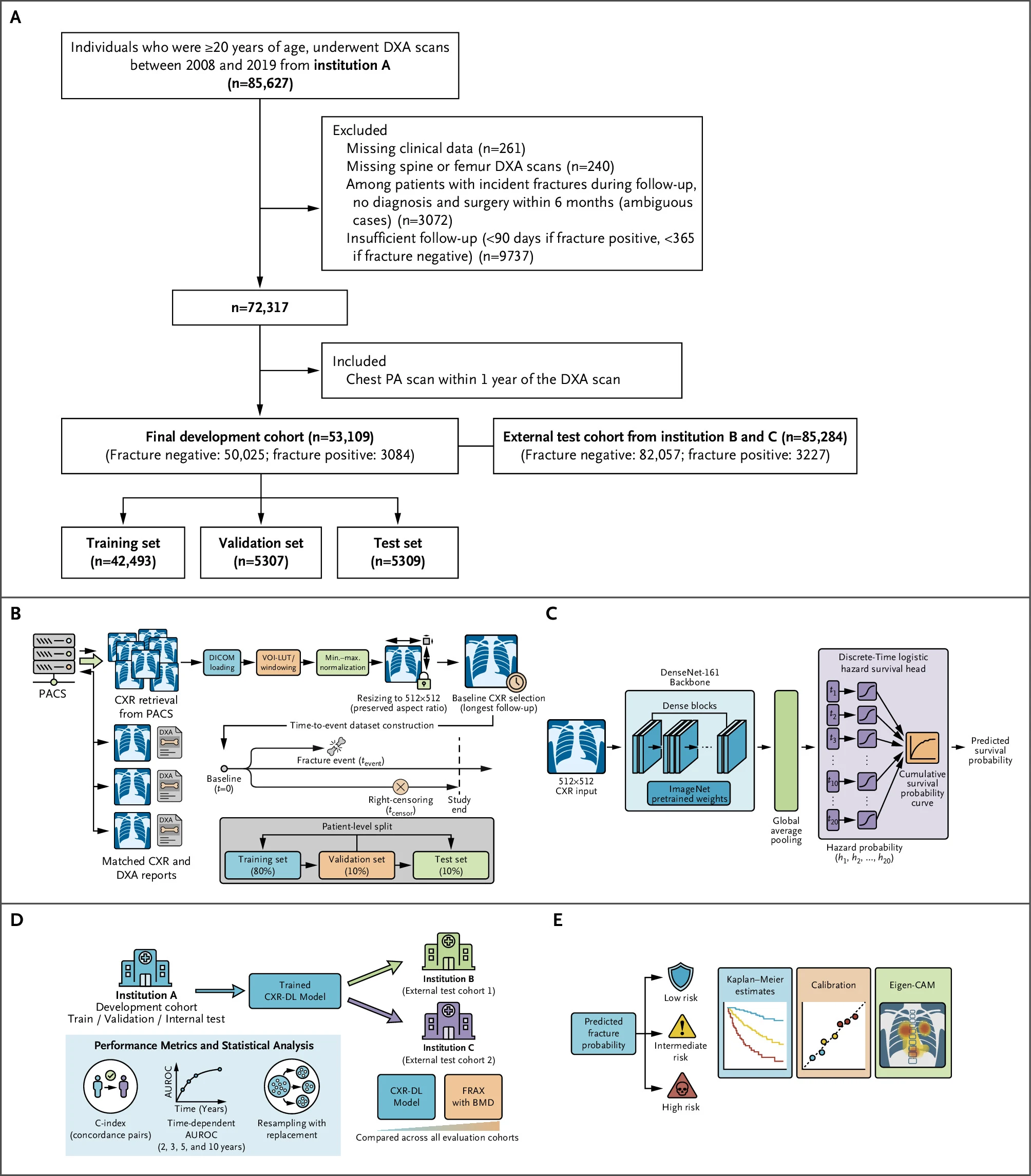
- Cohort study of 85,284 adults referred for bone-density scans, 77 months, against FRAX with BMD (Independent replication, multicenter)
- What changed:
- The chest X-ray model ranked fracture risk better than FRAX with bone density: C-index 0.843 versus 0.779
- The catch:
- The model lacks prospective validation of absolute-risk estimates and case-finding performance
Editor of record: Boris Djordjevic · AgingResearch.News
Adults referred for bone-density scans were the focus of an observational study that developed an artificial intelligence model using routine chest X-rays from 53,109 people. The team tested it in 85,284 patients at two other institutions. These patients averaged 58.6 years of age; 68.9% were female, and follow-up was 77 months.
The model ranked patients by their risk of major osteoporotic fractures—major fractures related to fragile bones—better than the standard Fracture Risk Assessment Tool, which included bone density. Adding that tool to the model did not meaningfully improve risk ranking. The advantage was greatest in patients with osteopenia, meaning bone density below normal but above the osteoporosis range. It was consistent across fracture types and bone-density categories.
Why it matters
Age-related bone fragility makes identifying people at high fracture risk important. Routine chest X-rays may offer a complement to existing risk assessment without requiring additional imaging.
Caveats
All participants had already been referred for bone-density testing. Absolute-risk estimates and the model’s ability to find high-risk patients require prospective evaluation in an unselected population receiving routine chest X-rays.
- Deep learning
- Major osteoporotic fractures
- Osteopenia
- Incident major osteoporotic fracture
- Bone mineral density
- Humans
The paper
Seoul National University Graduate School; Seoul National University College of Medicine
NEJM AI, Nov 16, 2026


Comments
Be the first to comment.