Gut microbes and blood metabolites linked to macular degeneration
A genetic analysis in European populations linked 22 groups of gut microbes and 59 blood metabolites to age-related macular degeneration risk.
Our read
Mechanisms- Studied:
- Study in people
Editor of record: Boris Djordjevic · AgingResearch.News
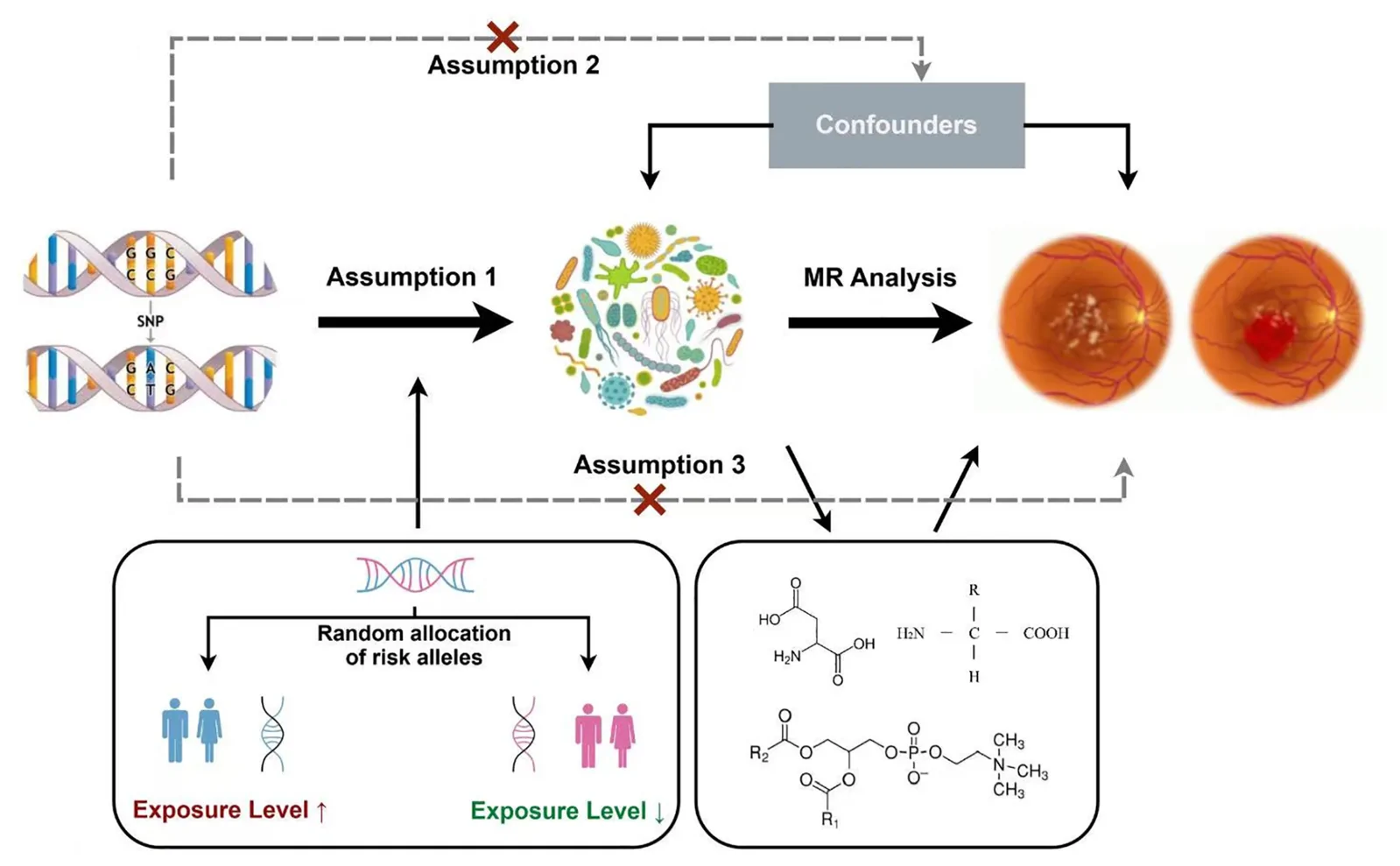
European populations provided the genetic data for a two-sample Mendelian randomization analysis of gut microbes, blood metabolites and age-related macular degeneration, an eye disease that damages central vision. The researchers used summary results from large studies linking genetic differences to measured traits. Mendelian randomization uses inherited genetic differences to investigate relationships between traits and disease risk.
The analysis linked 22 groups of gut microbes and 59 metabolites—small molecules involved in the body’s chemical processes—to disease risk. A two-step Mendelian randomization analysis identified 21 potential metabolic pathways linking gut microbes to the disease. The authors suggested that gut microbes may influence disease development by changing circulating metabolites.
Why it matters
Age-related macular degeneration affects vision in later life. The authors proposed that the identified metabolites could serve as markers to help assess disease risk.
Caveats
Genetic differences may affect disease risk through routes other than the gut microbes or metabolites being studied. The analysis used data from European populations.
The paper
Hangzhou Normal University
Medicine, Oct 30, 2026, Open access
Comments
Be the first to comment.