A blood fat linked to glaucoma risk and higher eye pressure
Genetically predicted sphingomyelin, a blood fat, was linked to higher glaucoma odds—an odds ratio of 1.58 per standard deviation, a measure of variation.
Our read
Mechanisms- Studied:
- Cohort study of 252,226 people
- In the record:
- The 23rd paper on sphingomyelin with results in people; 114 on record in all.
- Why it’s aging research:
- It bears on staying healthy in midlife and later life.
Editor of record: Boris Djordjevic · AgingResearch.News
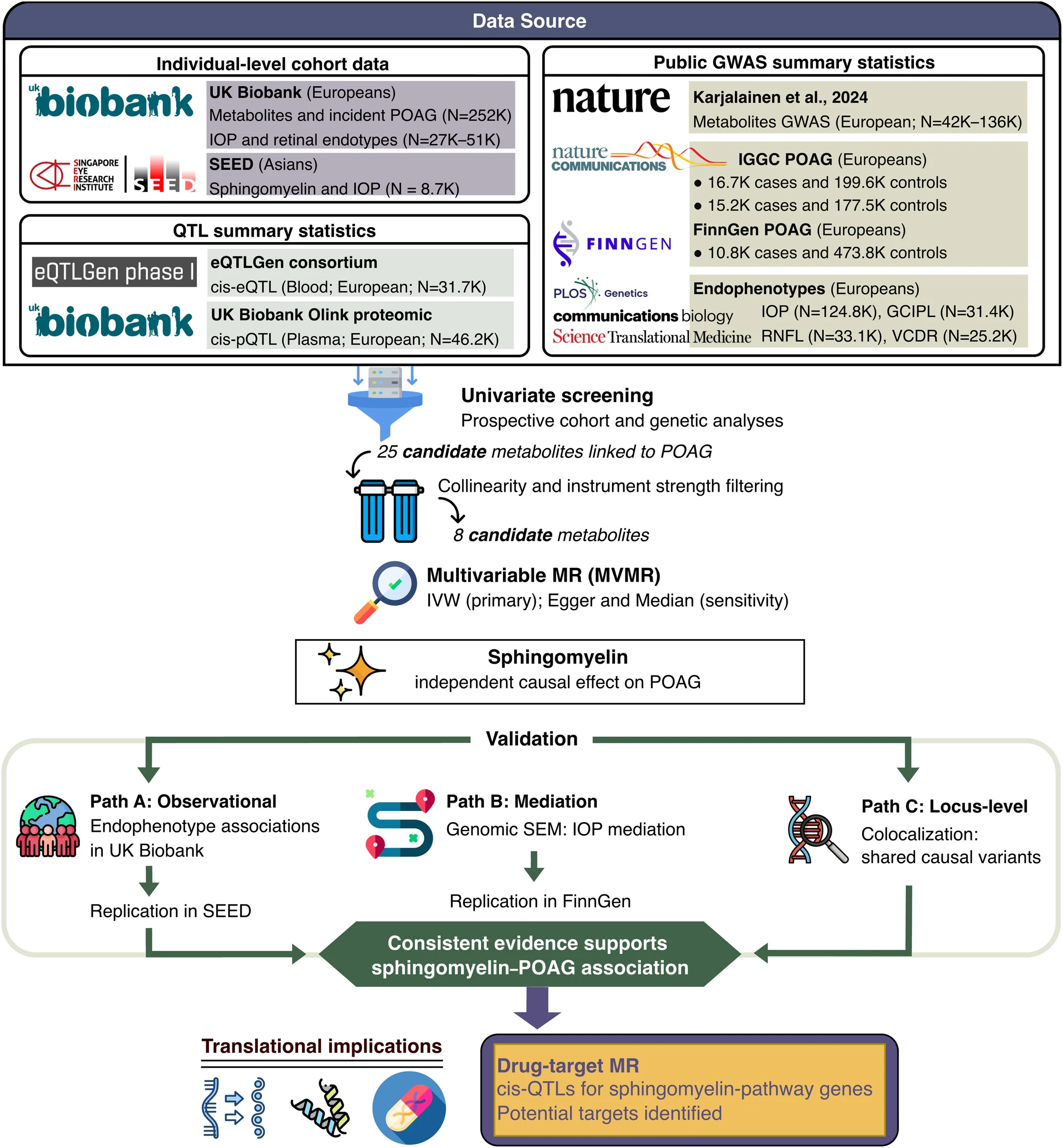
Among 252,226 European participants from the UK Biobank and 8,683 Asian participants from the Singapore Epidemiology of Eye Diseases study, prospective cohort analyses examined blood molecules and glaucoma. Researchers also analyzed European genetic data covering 16,677 glaucoma cases and 199,580 controls. They used Mendelian randomization, a method that uses genetic variants to examine links with disease.
Higher genetically predicted levels of sphingomyelin, a type of fat, were associated with higher odds of primary open-angle glaucoma after accounting for other blood molecules. This disease damages the nerve that carries visual signals from the eye. Higher sphingomyelin levels were also linked to higher pressure inside the eye in both cohorts. Genetic analyses supported the authors’ interpretation that eye pressure partly mediated the association with glaucoma.
Why it matters
Glaucoma is an age-related eye disease, and eye pressure is its principal modifiable risk factor. The findings support investigating sphingomyelin-related biology in this pathway.
Caveats
The analyses did not test whether lowering sphingomyelin would reduce eye pressure or prevent glaucoma. The genetic findings came from European data, limiting their applicability to other populations.


Comments
Be the first to comment.