Cognitive health linked to movement and sleep in older adults
Adults with dementia walked 17.2 fewer minutes and lay awake 46.5 more minutes per day than cognitively unimpaired peers, after adjustment.
Our read
Populations- Studied:
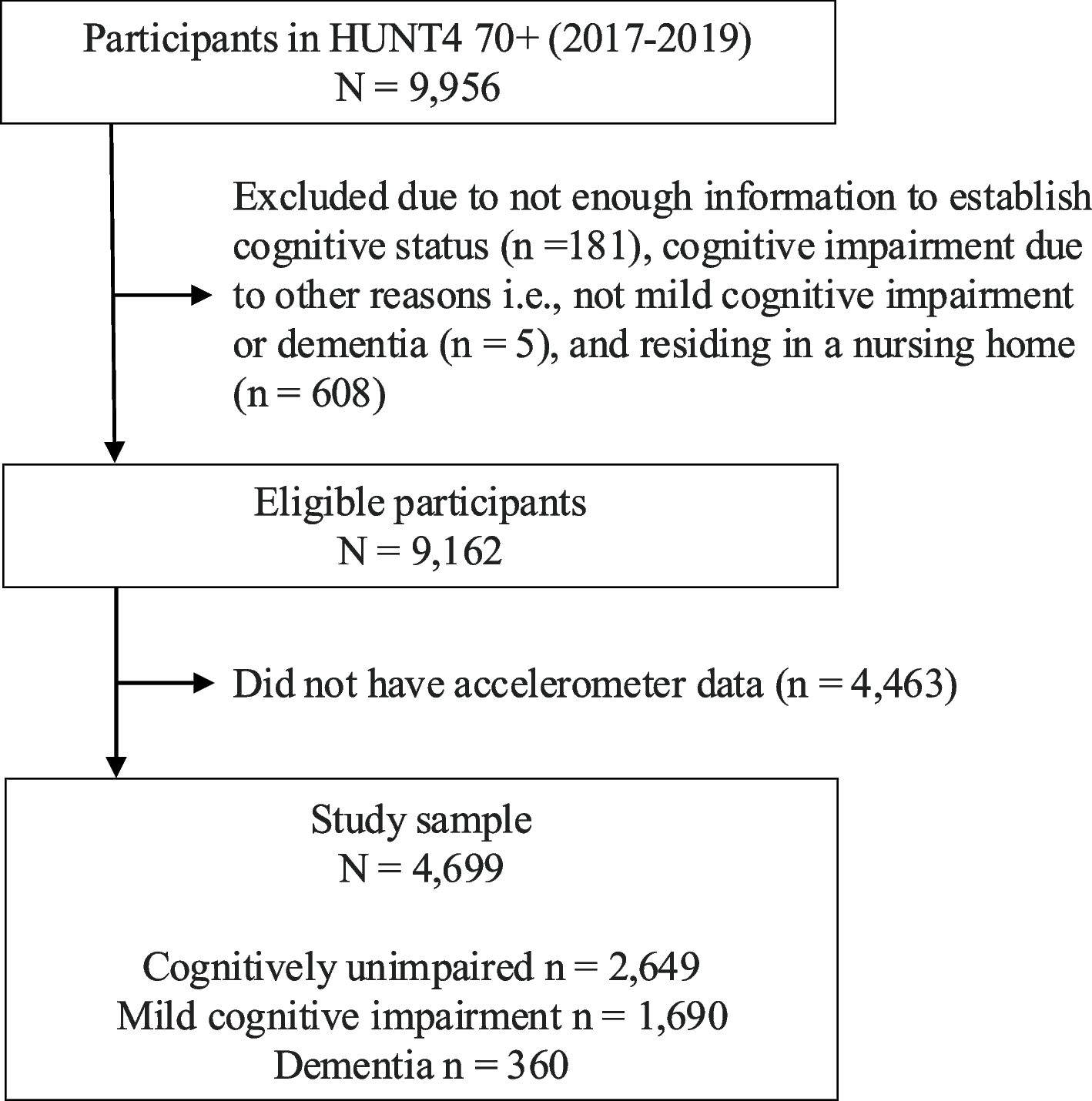
- Cross-sectional study of 4,699 people
- In the record:
- The 3,797th paper on dementia with results in people; 10,514 on record in all.
Editor of record: Boris Djordjevic · AgingResearch.News
Community-dwelling adults aged 70–100 participated in a cross-sectional, population-based HUNT study of 4,699 people, about half women. The group included 1,690 people with mild cognitive impairment—problems with memory or thinking—and 360 with dementia. They wore movement sensors on their thigh and lower back for up to seven days.
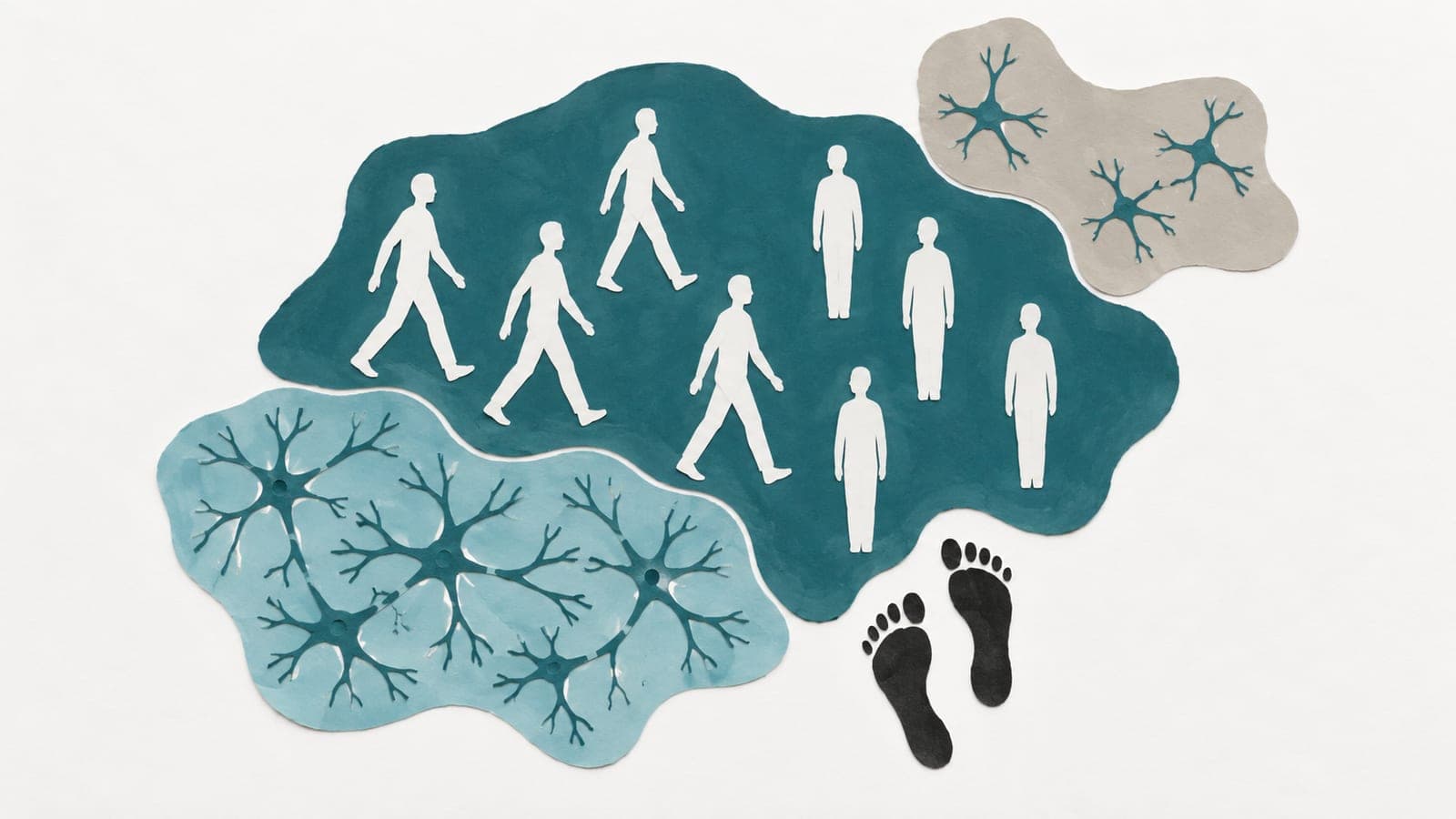
After adjustment for age, sex, health and other factors, people with mild cognitive impairment sat 12.4 fewer minutes, lay awake 10.3 more minutes and slept 3.9 more minutes per day than peers without either condition. Their standing and walking times were similar. People with dementia stood and walked less and lay awake more than both other groups. Compared with peers without either condition, they stood 30.3 fewer minutes, walked 17.2 fewer minutes, lay awake 46.5 more minutes and slept 7.5 more minutes per day.
Why it matters
Daily movement and sleep have different implications for health and function in older age. Comparing the full day bears on how these behaviors, together and separately, relate to cognitive health.
Caveats
The cross-sectional comparison could not determine whether cognitive problems preceded the different daily patterns or followed them; their clinical importance remains unknown. The study excluded nursing-home residents.
From the paper
- Participants
We analysed cross-sectional, population-based data from 4,699 community-dwelling older adults (≥ 70 years) participating in the HUNT4 70 + study.
- Result
In fully adjusted models, participants with MCI spent less time sitting (β = −12.4 min, 95% CI: −20.0, −4.4) and more time lying awake (β = 10.3 min, 95% CI: 2.7, 17.9) and sleeping (β = 3.9 min, 95% CI: 0.8, 7.0) per 24-h than cognitively unimpaired participants.
Results, Differences in 24-hour movement behaviours and sleep
Quoted word for word from the full text on link.springer.com.
The paper
Oslo University Hospital
European Review of Aging and Physical Activity, Aug 13, 2026, Open access
Comments
Be the first to comment.