Proteins improved cardiovascular risk prediction in metabolic syndrome
A blood-protein model better distinguished who later developed cardiovascular events, scoring 0.730 versus 0.673 for a clinical model in a validation group.
Limit: Participants were healthier than the broader population, potentially biasing the model’s performance
Edited by Boris Djordjevic · AgingResearch.News
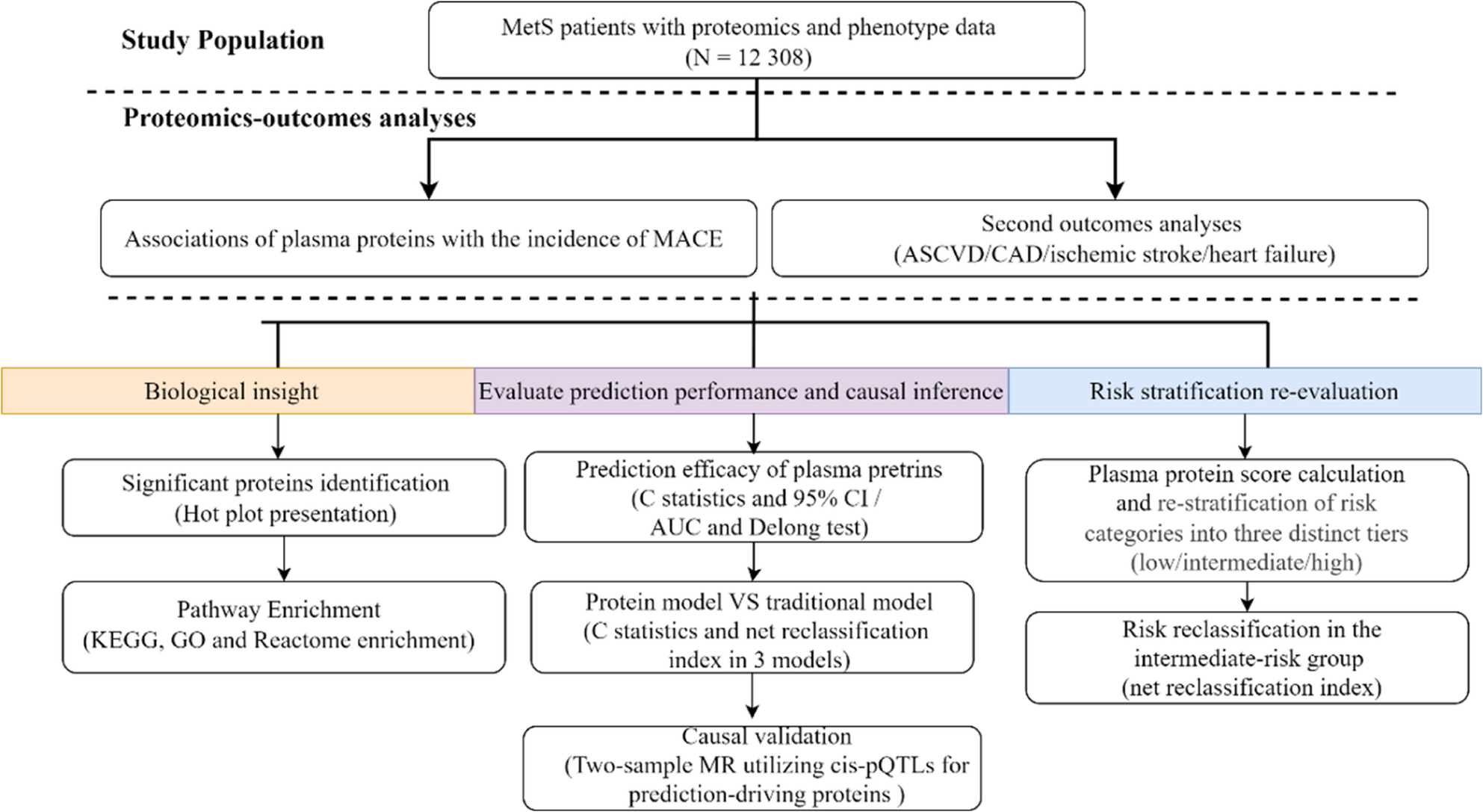
In an observational study, researchers analyzed 2,911 blood proteins in 12,308 UK Biobank participants with metabolic syndrome, a cluster of conditions that raise cardiovascular risk. They recorded 1,899 major adverse cardiovascular events over a median 14-year follow-up.
The researchers built a protein-based prediction model in a training group and tested it in a validation group. Its C-statistic, a measure of how well a model distinguishes risk, was 0.730, compared with 0.673 for a clinical model called PREVENT. Among participants PREVENT classified as intermediate risk, the protein score correctly reclassified 64% of those who developed an event.
Why it matters
Cardiovascular disease can limit health in later life. Better risk estimates may help guide personalized prevention for people with metabolic syndrome.
Caveats
Validation used another group from UK Biobank with metabolic syndrome, not an outside population. The observational study did not test whether using the score prevented cardiovascular events.
From the paper
- Participants
This study included 12,308 individuals with MetS who were free of MACEs at baseline and for whom plasma proteomics data was available.
- Follow-up
Over a median 14-year follow-up, 1,899 incident MACEs occurred.
- Result
… genetically predicted higher levels of advanced glycosylation end-product-specific receptor (AGER; OR = 0.754, 95% CI: 0.667–0.853, P = 6.53 × 10⁻⁶) were associated with a decreased risk of HF …
- Limitation
First, the proteomics prediction models were mainly constructed using data from individuals of White ethnicity within the UKB, and lack an independent external validation cohort, which limits the generalizability of the results.
Quoted word for word from the full text on link.springer.com.
- Machine learning
- Metabolic syndrome
- Major adverse cardiovascular events
- PREVENT
- Coronary artery disease
- Humans
The paper
Capital Medical University
BMC Cardiovascular Disorders, Aug 5, 2026, Open access



Comments
Be the first to comment.