Worms lacking a regulatory protein lived longer on certain diets
Worm experiments traced the lifespan benefit to vitamin B12-dependent enzymes and a process that removes mitochondria, the cell’s energy-producing structures.
Edited by Boris Djordjevic · AgingResearch.News
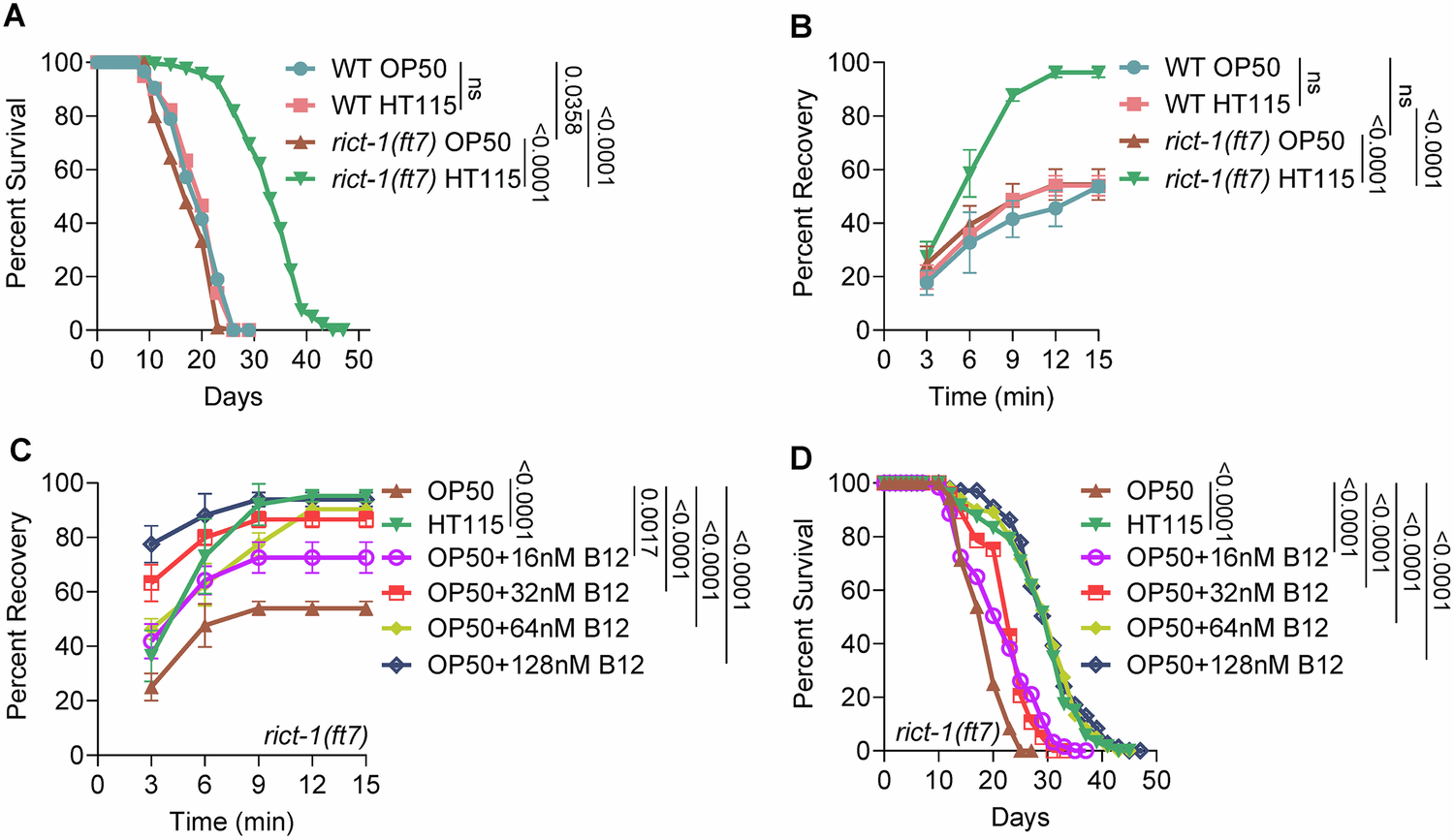
In experiments in Caenorhabditis elegans worms, animals lacking RICTOR, a protein that regulates responses to diet, lived longer on vitamin B12-rich bacterial diets containing optimal amounts of methionine, a building block of proteins. They also better tolerated osmotic stress, an imbalance in dissolved substances.
Both benefits required two vitamin B12-dependent enzymes and mitophagy, a process that removes mitochondria, the cell’s energy-producing structures. Elevated succinate, a substance involved in energy metabolism, caused mitochondria to fragment, activating mitophagy. Fragmentation early in life promoted sustained mitophagy into late adulthood. Aging mutant worms retained tube-shaped mitochondria, unlike worms without the mutation. The authors concluded that RICTOR restrained sensitivity to changes in substances produced by microbes through mitochondrial quality control.
Why it matters
The study addressed how nutrients supplied by microbes interact with an animal’s genes to influence lifespan and the upkeep of mitochondria during aging.
Caveats
These were laboratory experiments in worms, not studies in people. The abstract does not report how much lifespan increased.
The paper
National Institute of Immunology
Nature Communications, Sep 14, 2026, Open access

Comments
Be the first to comment.