Digital ease and skills had opposite links to cognitive health
Across 19,521 person-year observations, perceived ease using digital technology was linked to better cognitive health, while device proficiency was linked to poorer cognitive health.
19,521 person-year observations
Limit: Cognitive health was represented only by social knowledge, time orientation, and mathematical reasoning
Edited by Boris Djordjevic · AgingResearch.News
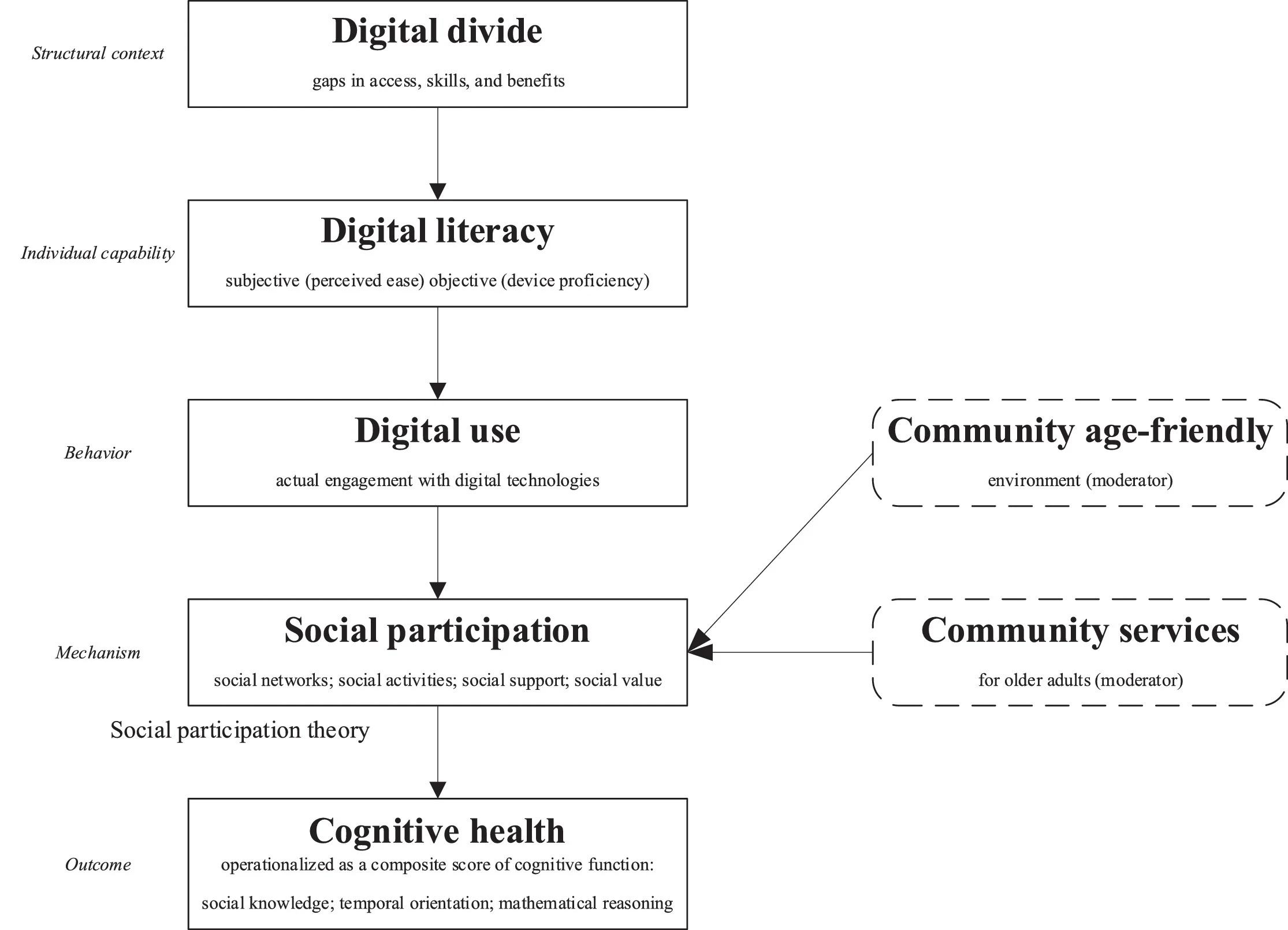
Adults aged 60 and older in China were studied in a longitudinal observational study using surveys from 2018, 2020 and 2023. Researchers analyzed 19,521 observations of people in particular years. They measured cognitive health through social knowledge, awareness of time and mathematical reasoning.
Fewer perceived obstacles to using digital technology were associated with better cognitive health. Greater device proficiency was associated with poorer cognitive health after adjustment for other factors. The authors attributed the perceived-ease association largely to social participation and a greater sense of social value. Social participation accounted for 12.52% of the total association. Their analyses linked the device-proficiency association to smaller social networks and less support between generations.
Why it matters
The authors suggested that digital inclusion strategies supporting psychological empowerment while addressing social isolation risks may help sustain cognitive health in later life.
Caveats
The observational design cannot establish cause and effect. The findings concern adults aged 60 and older in China.


Comments
Be the first to comment.