Social disadvantages linked to cognition gaps in older Chinese adults
Class differences within groups accounted for over 95% of cognitive inequality, rather than fixed gender or geographic divisions.
Edited by Boris Djordjevic · AgingResearch.News
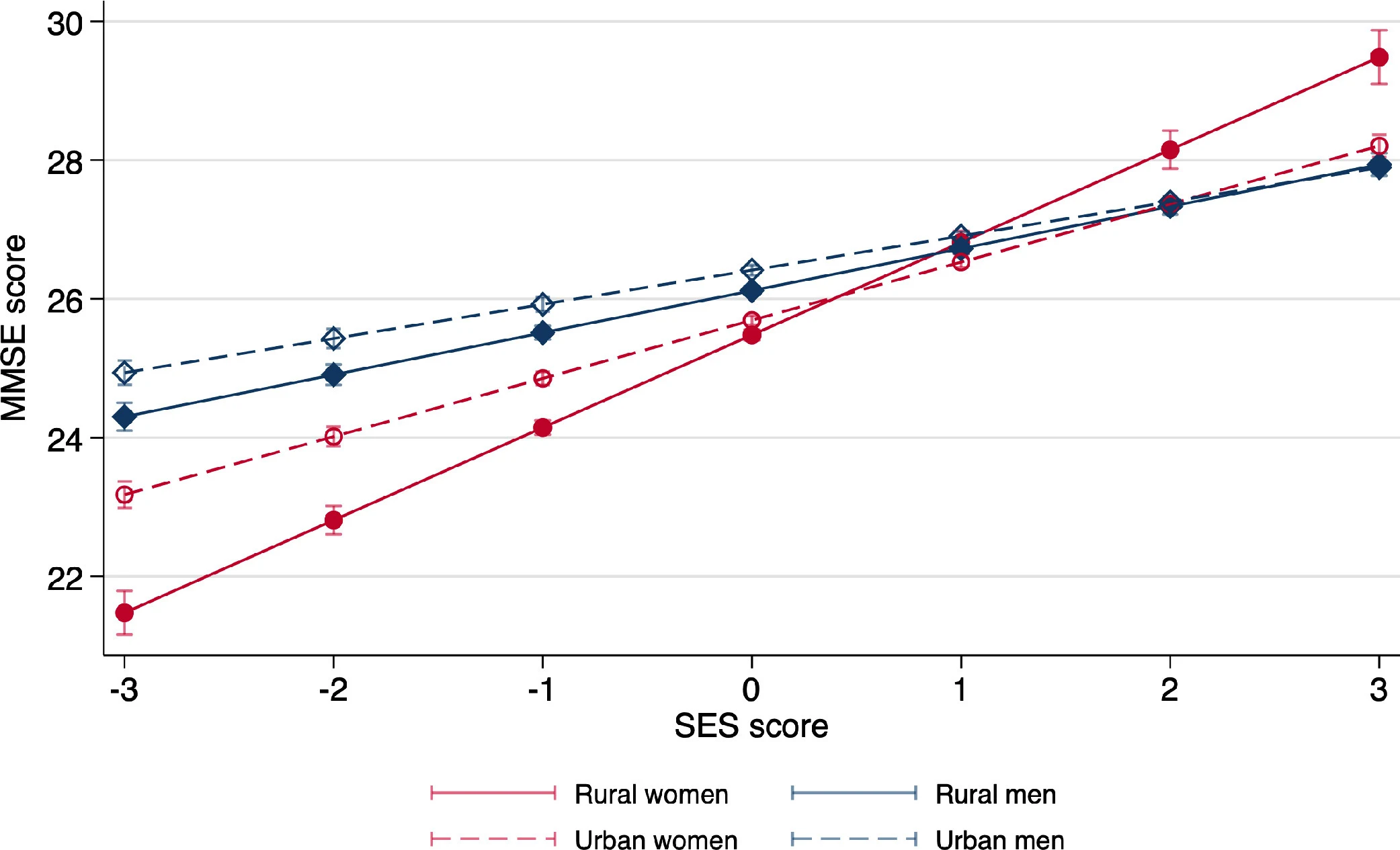
An observational study of Chinese adults aged 65 and older analyzed 74,147 observations from the Chinese Longitudinal Healthy Longevity Survey, collected between 1998 and 2018. Researchers examined how social and economic standing overlapped with gender and rural or urban residence in relation to cognitive function—the ability to think, learn and remember.
The link between social and economic standing and cognitive impairment was strongest among rural women with low standing. Statistical analyses attributed over 95% of cognitive inequality to class differences within groups, rather than fixed gender or geographic boundaries. Resource deprivation accounted for 73.1% of the gender gap. The analysis also suggested that the association between social and economic standing and better cognitive health was stronger for women than for men.
Why it matters
Cognitive impairment poses a public health challenge in aging societies. The authors called for targeted efforts to tackle dementia by addressing lifelong resource deprivation and the heightened vulnerabilities of marginalized groups.
Caveats
The observational design cannot establish cause and effect or show that targeted interventions would reduce dementia. The findings concern Chinese adults aged 65 and older, not younger adults or populations elsewhere.


