Cognitive frailty linked to multiple chronic diseases
Reversible cognitive frailty was linked to higher risk of multiple chronic diseases than robust status, with a hazard ratio (a relative risk measure) of 2.74.
9,816 participants, dose-response
Limit: Disease prevention from treatment to improve cognitive frailty was not measured
Edited by Boris Djordjevic · AgingResearch.News
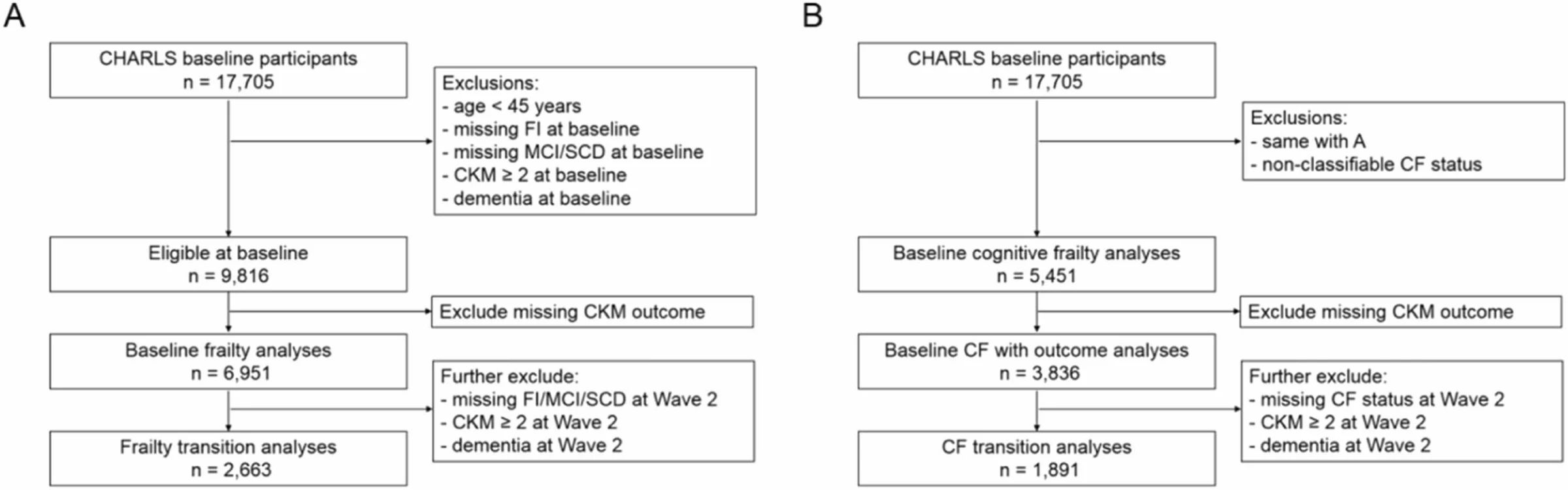
An observational cohort study analyzed data from 9,816 adults aged 45 or older in China during 2011–2018. Researchers examined cognitive frailty, in which physical decline and memory problems occur together. They defined cardiovascular-kidney-metabolic multimorbidity as at least two of cardiovascular disease, chronic kidney disease and metabolic disease.
The baseline analysis included 3,836 people. Compared with participants classified as robust, those labeled as having reversible or potentially reversible cognitive frailty had higher risks of developing this disease combination. Their hazard ratios were 2.74 and 2.51, respectively. An analysis of changes in frailty status included 1,891 people. Improvement from reversible cognitive frailty to robust status was associated with 56% lower relative risk. Greater worsening tracked with higher risk, and the magnitude of change added information beyond whether people improved or worsened.
Why it matters
The authors suggest considering cognitive screening when planning prevention of overlapping heart, kidney and metabolic diseases in middle-aged and older adults.
Caveats
This observational study cannot show that improving cognitive frailty prevents these diseases. The findings concern adults aged 45 or older in China, not younger adults.
- Cardiovascular-kidney-metabolic multimorbidity
- Cardiovascular disease
- Chronic kidney disease
- Metabolic disease
- Cognitive change score
- Humans
The paper
Ageing Research Reviews, Oct 30, 2026


Comments
Be the first to comment.