Spine scan findings linked to fractures and death in older adults
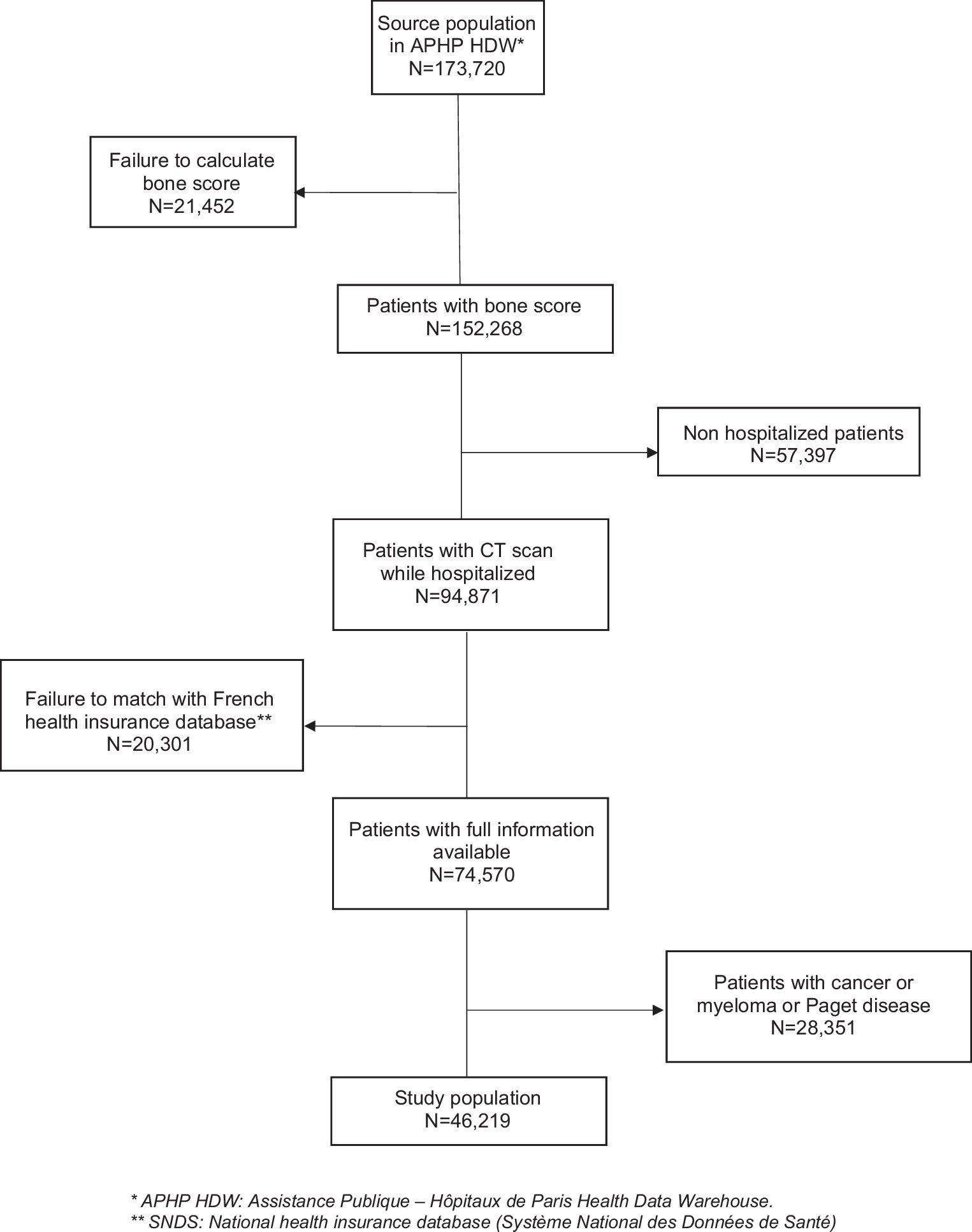
Over three years, 6.8% of 46,219 older hospital patients had osteoporosis-related fractures requiring hospitalization and 27.9% died; scan findings helped predict both.
Multicenter
Limit: Anti-osteoporosis treatments during follow-up were omitted from the models
Edited by Boris Djordjevic · AgingResearch.News
In 46,219 patients aged 60 or older who had inpatient computed tomography scans involving the lower spine, researchers assessed automated screening for osteoporosis. This retrospective observational cohort study involved multiple centers and three years of follow-up. Patients’ average age was 75.3.
Software measured a bone score in the first bone of the lower spine and detected existing lower-spine fractures. These fractures were present in 27.3% of patients. Models combining age, sex, bone score and existing fractures predicted later osteoporosis-related fractures requiring hospitalization. Existing lower-spine fractures were associated with both later fractures requiring hospitalization and death over three years.
Why it matters
The authors suggested that screening scans taken for other reasons could help improve care for osteoporosis, a condition that weakens bones.
Caveats
This observational study assessed prediction, not whether screening improved care or prevented fractures. The findings concern older adults undergoing inpatient scans and may not apply to younger people or community screening.
From the paper
- Participants
The study population thus included 46 219 patients.
- Limitation
Our study has some limitations: (1) we did not control for technical acquisition parameters, obtained from various device models; this weakness, however, increases the generalisability of our results; (2) our data were generated between 2007 and 2014 …
Quoted word for word from the full text on link.springer.com.
The paper
Fractures and mortality prediction by opportunistic screening of osteoporosis
Université Paris Cité and Université Sorbonne Paris Nord; Centre de Pharmacoépidémiologie (CEPHEPI)
Osteoporosis International, Oct 30, 2026
