Low-dose aspirin did not prevent functional decline in older adults
Women assigned aspirin had a small extra decline versus placebo, with an estimated effect of minus 0.006 on the capacity score; men showed no effect.
5 years, placebo-controlled
Limit: The main functional score omitted eyesight and hearing
Edited by Boris Djordjevic · AgingResearch.News
In 18,581 community-dwelling adults aged 65 or older, researchers analyzed the five-year effects of aspirin using data from a randomized trial. Participants received either 100 mg of aspirin daily or placebo. The researchers calculated an annual intrinsic capacity score combining thinking, movement, vitality and psychological well-being.
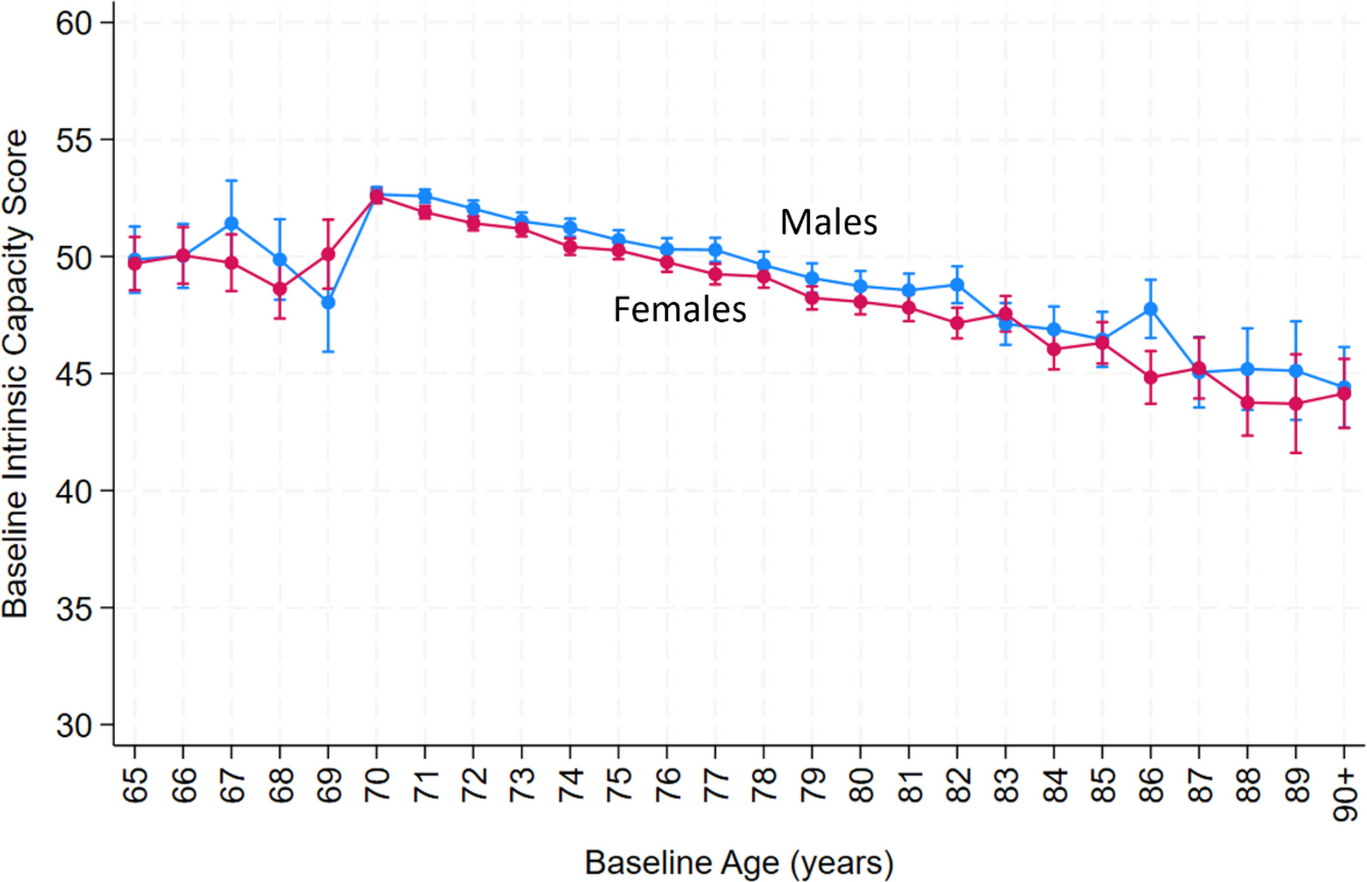
Low-dose aspirin did not prevent decline in this score. Women assigned aspirin had a small additional decline compared with placebo; no effect was observed in men. Women also started with lower scores and declined faster than men overall. Lower starting scores were associated with a lower likelihood of remaining alive without dementia or disability in both sexes. The score also correlated with chronological age and measures of biological aging.
Why it matters
The study addressed whether an anti-inflammatory drug could preserve physical and mental capacity in older age.
Caveats
This was a post-hoc analysis, and the statistical comparison did not clearly establish that aspirin’s effect differed by sex. The findings concern community-dwelling older adults; the abstract does not report adverse-event rates.
From the paper
- Participants
The ASPREE clinical trial involved 19,114 community-dwelling individuals in relatively good health aged predominantly 70 years and over, from family doctors in Australia, and from clinic-based mailing lists, electronic medical screening in clinics and media advertisements in the U.S.
- Follow-up
Over a median 4.7 years of the ASPREE trial, the incidence of the primary composite endpoint (disability, dementia or death) increased with decreasing IC quintiles (Fig. 2).
- Result
In linear regression models adjusted for age, education and race/ethnicity, the Deficit Accumulation Index remained significantly associated with IC (β: − 0.038, 95% CI: − 0.039; − 0.037, p < 0.001 in females; β: − 0.042, 95% CI: − 0.043; − 0.040, p < 0.001 in males).
- Limitation
The inclusion criteria for the trial means that participants were generally healthy and without major life limiting illness, thus restricting the generalizability of findings to individuals reaching older age in relatively good health.
Quoted word for word from the full text on link.springer.com.
Aspirin is part of David Sinclair's daily regimen in Lifespan
The paper
Monash University; University of Basel
GeroScience, Oct 29, 2026, Open access