Artery stiffness fell with exercise during dialysis
An artery stiffness measure fell 5% from baseline in the exercise group over 20 weeks; the standard-care group showed no significant change.
20 weeks
Limit: Only 36 participants were analyzed, leaving the study underpowered for small-to-moderate effects
Edited by Boris Djordjevic · AgingResearch.News
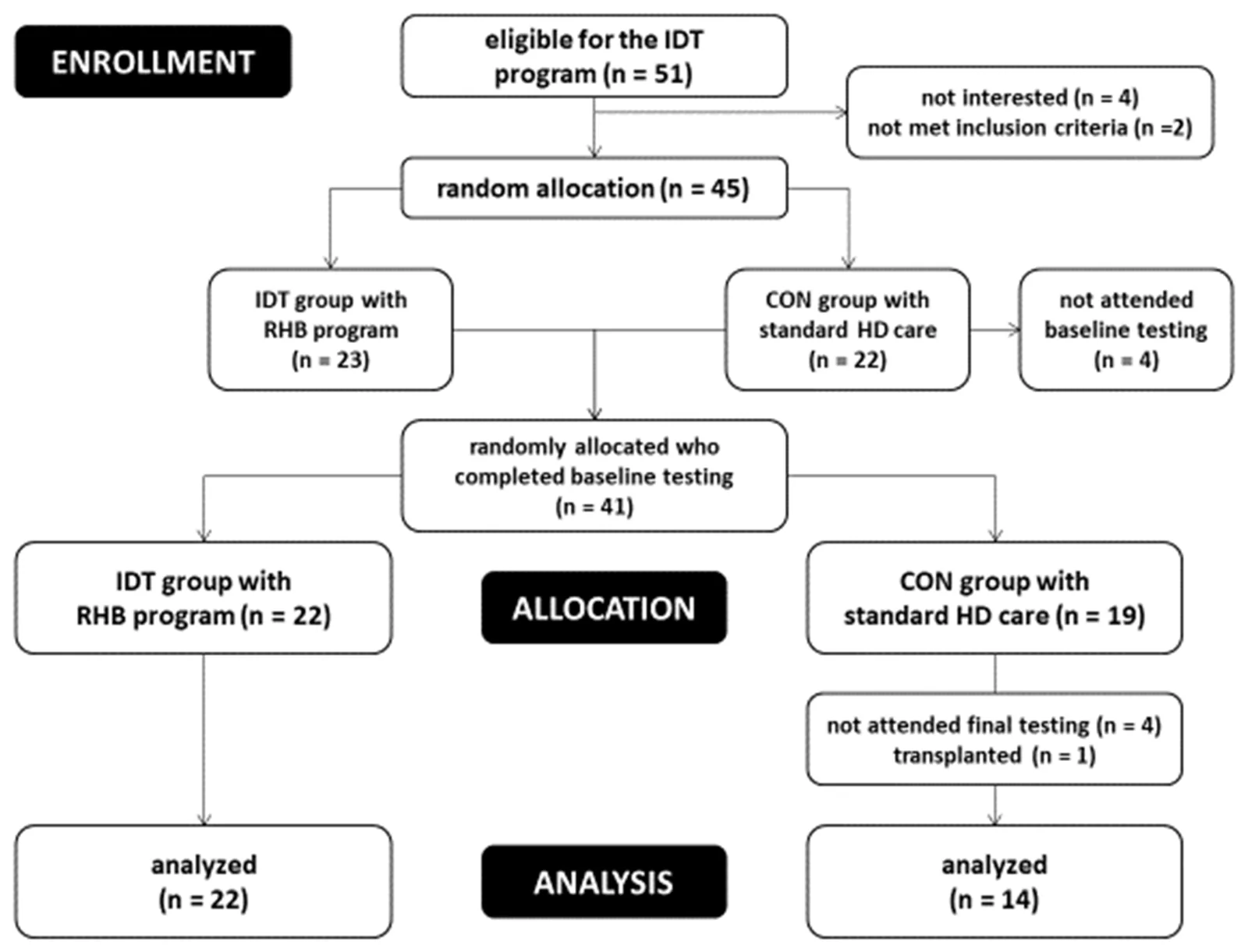
Outpatients receiving hemodialysis, a procedure that filters the blood, took part in a randomized pilot trial. Researchers assigned them to bedside exercise-bike training during dialysis for 20 weeks or to standard care. They assessed artery stiffness, physical fitness, blood test results and quality of life before and after the study.
Artery stiffness, measured with the cardio-ankle vascular index, fell 5% in the exercise group. Peak oxygen use relative to body weight, a measure of fitness, rose 31%. The distance participants covered in a six-minute walk rose 18%. Some quality-of-life scores also improved, including general health and well-being. The standard-care group had no statistically significant changes.
Why it matters
Greater artery stiffness is linked to higher mortality in chronic kidney disease, making it a relevant target for research on vascular aging.
Caveats
This was a 20-week pilot trial, so the findings do not establish longer-term effects or benefits for people not receiving dialysis. The abstract did not report the sample size or adverse events.
From the paper
- Participants
The final evaluation included 22 patients in the IDT group who completed a 20-week intradialytic aerobic training on bicycle ergometers.
- Limitation
We are aware that the results of AS measurement using CAVI are preliminary and should be interpreted with caution.
Quoted word for word from the full text on mdpi.com.
- Intra-dialytic aerobic training
- Cardio-ankle vascular index
- Chronic kidney disease
- Arterial stiffness
- 6-minute walk distance
- Humans
The paper
Masaryk University
Journal of Clinical Medicine, Oct 15, 2026, Open access

