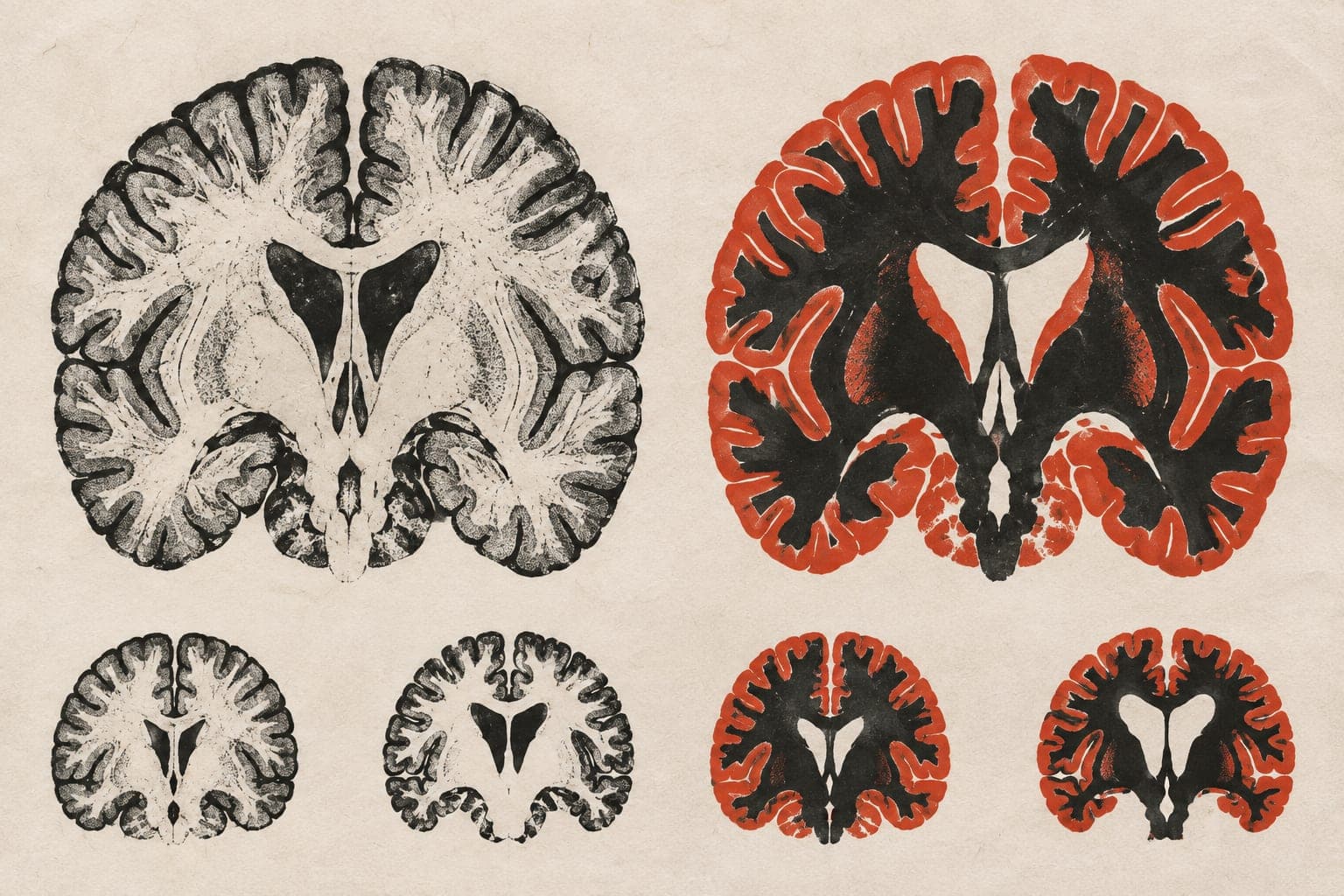
White matter aging has three distinct patterns in people
An observational analysis of 17,310 UK Biobank participants without overt clinical disease identified three coexisting patterns rather than one uniform pattern of white matter aging.

27,582 participants
Limit: Silent small vessel disease and long-term medication use could confound the aging patterns
Edited by Boris Djordjevic · AgingResearch.News
In 17,310 UK Biobank participants selected to exclude overt clinical disease, researchers conducted an observational study of white matter, brain tissue that carries signals between regions. A computer model analyzed 144 measures of its fine structure and identified three coexisting aging patterns. These patterns reflected distinct arrangements across brain regions and were reproducible across participant samples and sexes.
For further association analyses, the researchers included another 10,272 participants with clinical diagnoses, bringing the total to 27,582. All three patterns were associated with age. They had partly shared and partly independent links with thinking abilities, lifestyle factors, measures from elsewhere in the body, and disease risk.
Why it matters
The study addresses whether differences in brain aging reflect one underlying biological process or several partly separable processes.
Caveats
This observational analysis cannot establish cause and effect. The reference group excluded people with overt clinical disease, although the later association analyses included participants with clinical diagnoses.
From the paper
- Participants
The final CDAR cohort comprised 17,310 participants.
- Limitation
First, all participants were drawn from the UKB database, which predominantly comprises middle-aged and older volunteers of white British ethnicity who were community-dwelling and not recruited from clinical or institutional settings, with relatively high socioeconomic status and health awareness.
Quoted word for word from the full text on mdpi.com.
The paper
Beijing University of Technology; North China University of Technology
Brain Sciences, Oct 7, 2026, Open access