Tooth loss linked to deaths in adults with intellectual disability
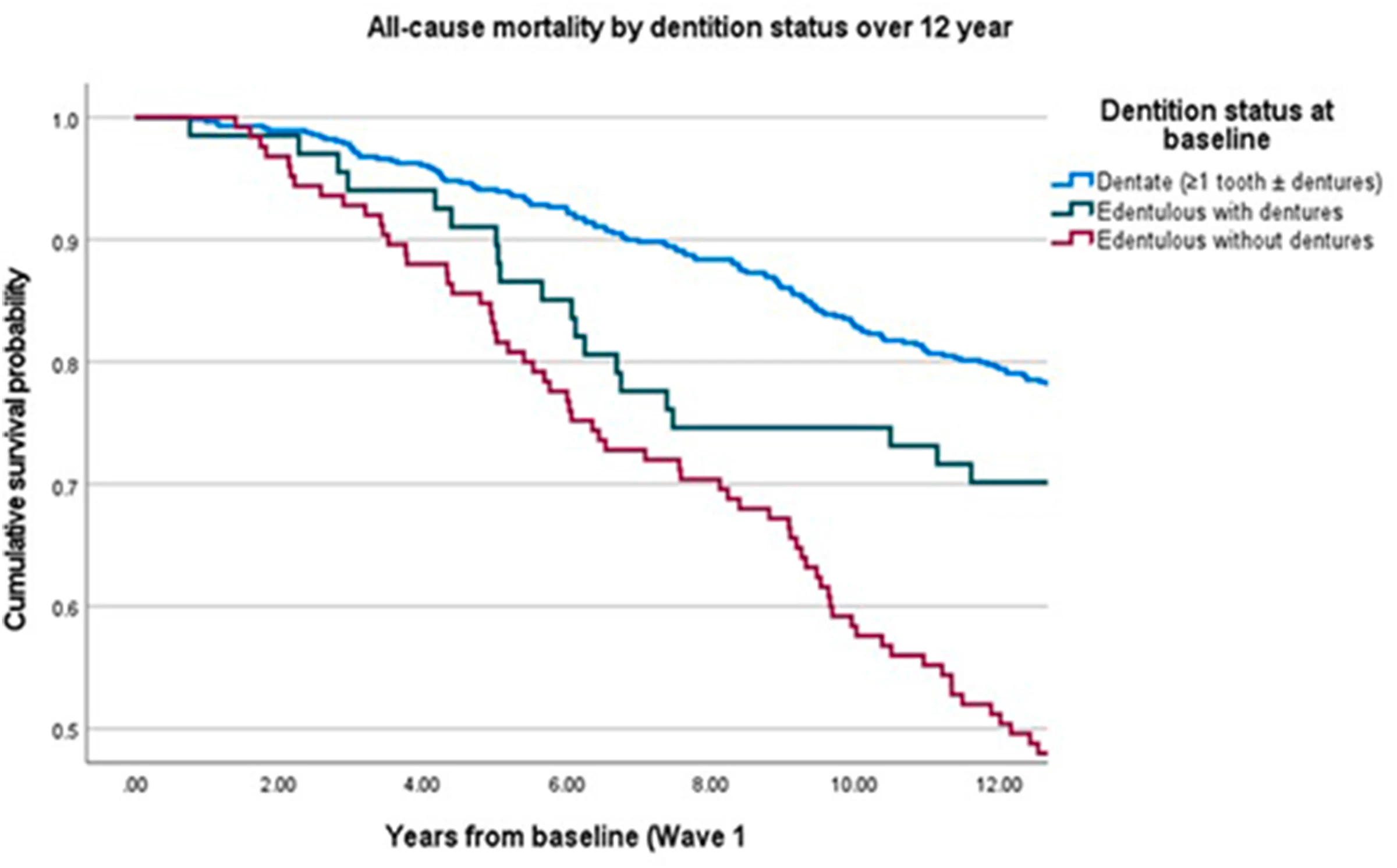
Over 13 years, 54.4% of participants without teeth or dentures died, compared with 24.3% of those who retained teeth.
752 participants
Limit: Findings cover only adults with intellectual disabilities aged 40 or older
Edited by Boris Djordjevic · AgingResearch.News
The observational cohort study followed 752 adults with intellectual disabilities aged 40 or older in the Intellectual Disability Supplement to The Irish Longitudinal Study on Ageing. Researchers recorded whether participants had teeth, had no teeth but wore dentures, or had neither teeth nor dentures in 2009–2010. They tracked deaths through death certificates until March 2023.
Over 13 years, 225 participants died, including 114 from respiratory causes. Mortality was 54.4% among people without teeth or dentures, 24.3% among those with teeth and 29.9% among those without teeth who wore dentures. Analyses adjusted for measured factors used 742 participants with complete data. Complete tooth loss without dentures remained associated with higher mortality from any cause and respiratory causes. The analyses found no statistically clear link with either outcome among people without teeth who wore dentures.
Why it matters
People with intellectual disabilities face premature aging and elevated mortality. The authors called for preventive dental care and timely replacement of missing teeth to be priorities in disability health and aging policies.
Caveats
This observational study cannot show that tooth loss caused deaths or that dentures reduced mortality. The findings concern adults with intellectual disabilities aged 40 or older, not younger people or people without intellectual disabilities.
The paper
Association between tooth loss and mortality in older adults with an intellectual disability
Trinity College Dublin; Dublin Dental University Hospital & School of Dental Science
Disability and Health Journal, Oct 20, 2026