Higher ultra-processed food intake linked to some blood cancers
Higher intake was associated with more new blood cancer diagnoses among 204,494 UK Biobank participants followed for a median 10.5 years.
Independent replication
Limit: Hospital inpatient records could miss myeloid cancers managed entirely in outpatient care
Edited by Boris Djordjevic · AgingResearch.News
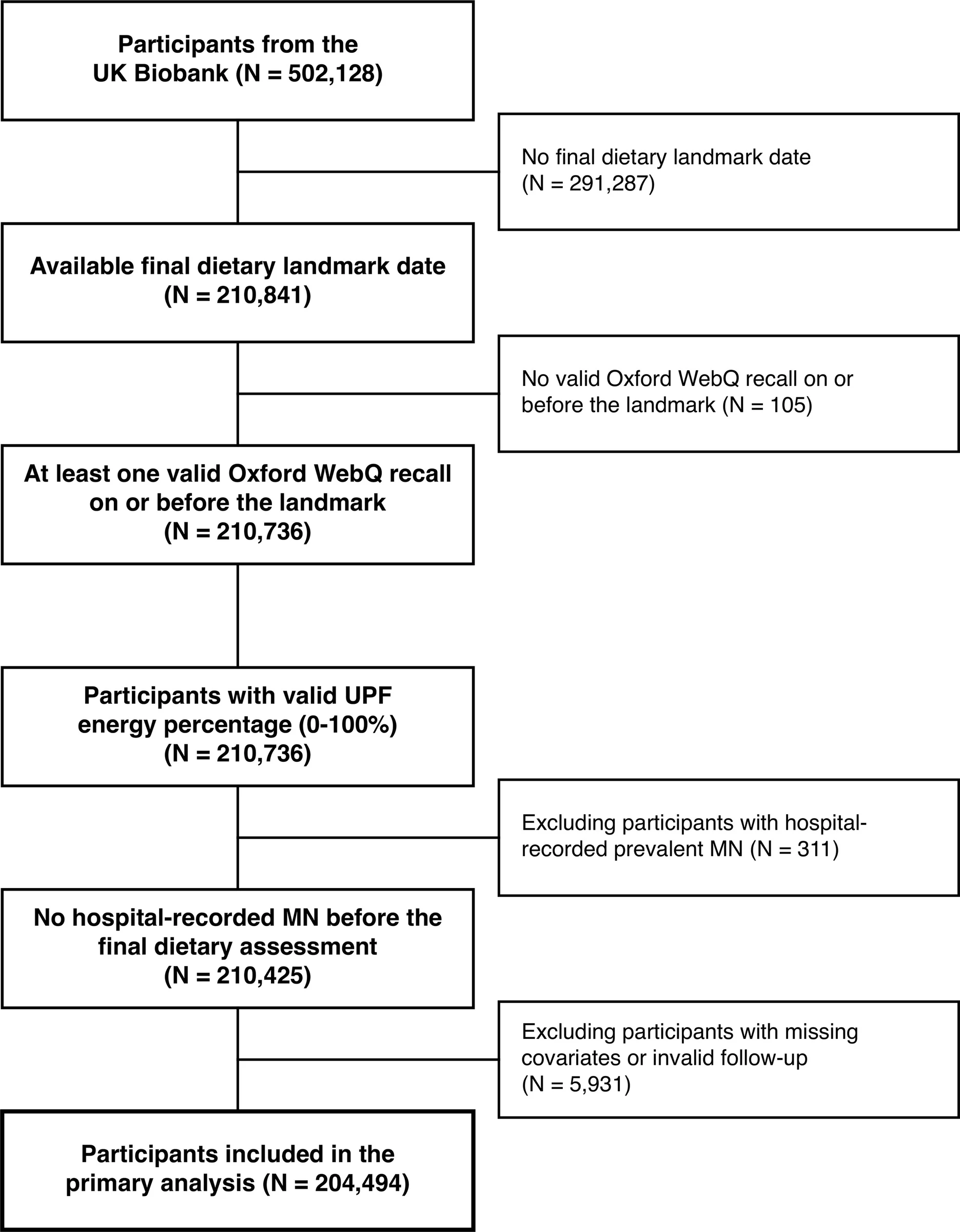
An observational cohort study followed 204,494 UK Biobank participants without hospital-recorded myeloid neoplasms, a group of cancers affecting blood-forming cells. Researchers used dietary questionnaires to estimate the average share of dietary energy participants obtained from ultra-processed foods.
During a median 10.5 years, 848 participants received a new hospital-recorded diagnosis. Higher intake was associated with a higher rate of diagnosis after adjustment for demographic, behavioral and other measured factors. For each standard-deviation increase in the energy share—a step based on how widely intake varied among participants—the hazard ratio was 1.12. This ratio compares diagnosis rates during follow-up. Exploratory analyses of molecules in blood provided biological context but did not establish a causal pathway.
Why it matters
Myeloid cancers are relevant to healthy aging. The study addresses whether diet may be a factor in their development.
Caveats
This observational study cannot establish cause and effect. The findings concern UK Biobank participants and diagnoses recorded in hospital inpatient data.
The paper
The American Journal of Clinical Nutrition, Oct 26, 2026


