Responses to physical training varied among older adults
After 12 months of training, 46% of participants met the study’s threshold for a high response in two to five physical outcomes.
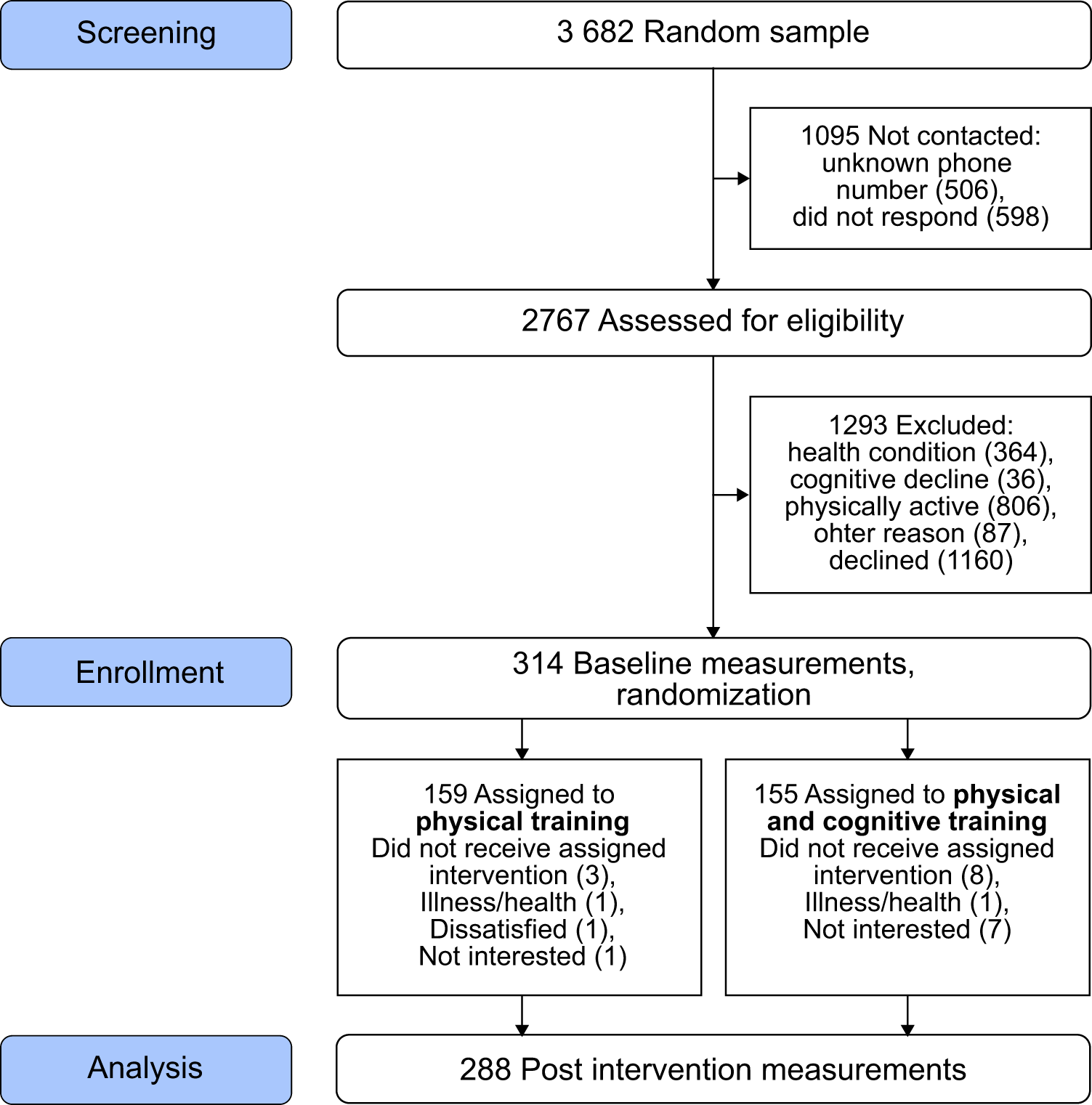
314 participants
Limit: Ceiling effects could understate training responses in participants already functioning well at baseline
Edited by Boris Djordjevic · AgingResearch.News
Community-dwelling older adults (314 people, average age 74.5) were randomized to physical training alone or physical training plus cognitive exercises for 12 months. Physical training included resistance, walking, balance and flexibility exercises. The responder analysis combined both randomized groups, using the 288 participants measured before and after training.
High responders exceeded a threshold based on how much participants differed before training. Grip strength, knee extension strength, walking speed and walking distance improved; 27%, 46%, 30% and 44%, respectively, met their high-response thresholds. Lean mass in the arms and legs did not change significantly, although 17% met its threshold. Multiple medical conditions, younger age, lower body mass index—a measure of weight relative to height—and following the resistance-training program more closely were associated with high responses in two to five outcomes.
Why it matters
The study addressed why older adults differ in their responses to exercise, a question relevant to tailoring physical training in later life.
Caveats
The responder analysis pooled the randomized groups and included only participants measured before and after training. The associations do not show that health factors or training adherence caused greater responsiveness.
From the paper
- Participants
A total of 288 participants attending baseline and post-intervention measurements were included in the responder analyses regardless of group allocation.
- Result
Multimorbidity (OR 2.60, 95% CI 1.47–4.59) younger age (OR 0.90, 95% CI 0.84–0.96), lower body mass index (OR 0.94, 95% CI 0.88–0.99), and higher resistance training adherence (OR 1.03, 95% CI 1.01–1.04) were associated with having 2–5 high responses.
- Limitation
From a methodological perspective, the absence of a non-exercise control group should be considered a limitation.
Quoted word for word from the full text on link.springer.com.
The paper
University of Jyväskylä
European Journal of Applied Physiology, Oct 24, 2026