Added training showed no walking-skill edge in older adults
A randomized trial of 249 adults aged 65 or older found no differences between standard exercise and a 12-week program adding timing and coordination exercises.
Registered NCT02663778
Limit: The abstract did not report harms
Edited by Boris Djordjevic · AgingResearch.News
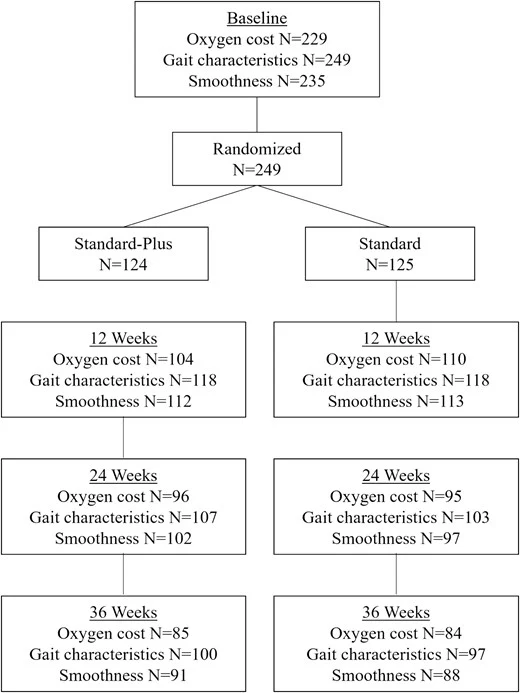
A randomized trial assigned 249 community-dwelling adults aged 65 or older with walking problems to 12 weeks of standard exercise or standard exercise plus timing and coordination exercises. Their average age was 77.4 years. The standard group included 125 people; the added-training group included 124.
Researchers assessed walking skills at 12, 24 and 36 weeks. They found no differences between groups apart from one result at 24 weeks that they considered likely a chance finding. Both groups used less oxygen to walk a given distance after their exercise programs. This improvement lasted for 24 weeks after the programs ended, without continued exercise.
Why it matters
For older adults with walking problems, the study addressed whether training timing and coordination could add benefits beyond standard exercise.
Caveats
These were secondary trial outcomes, and neither group went without exercise, limiting conclusions about exercise itself. The findings concern older adults with walking problems; the abstract did not report harms.