Two blood measures linked to artery disease in type 2 diabetes
In 18,741 people with type 2 diabetes taking lipid-lowering drugs, remnant cholesterol and inflammation were linked to artery disease over a median 13.6 years.
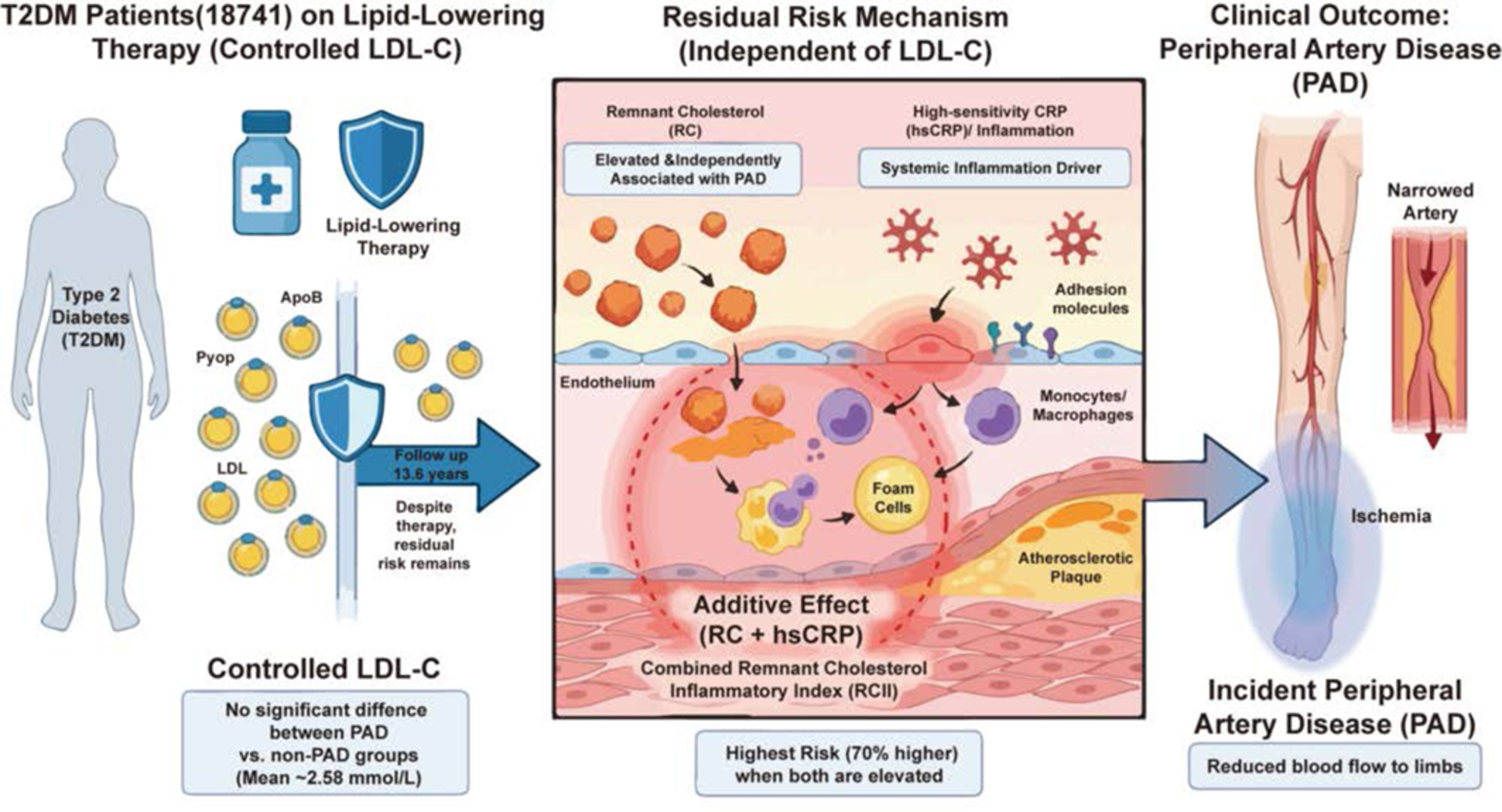
Limit: The study did not measure artery disease prevention from lowering either blood marker
Edited by Boris Djordjevic · AgingResearch.News
The prospective observational study included 18,741 UK Biobank participants with type 2 diabetes who were taking lipid-lowering medication and had no peripheral artery disease at enrollment. This disease narrows arteries supplying the limbs. Researchers measured remnant cholesterol—cholesterol in leftover fat-carrying particles—and a blood marker of inflammation at enrollment.
Over a median 13.6 years, 1,223 participants (6.5%) developed peripheral artery disease. Higher remnant cholesterol and inflammation were each independently associated with higher risk. Participants with elevated levels of both had the highest risk. These links remained after researchers accounted for other factors, including low-density lipoprotein cholesterol, often called “bad” cholesterol, and existing disease of the arteries supplying the heart.
Why it matters
Peripheral artery disease is an age-related vascular disease. The findings support further research on strategies targeting remnant cholesterol and inflammation to address risk that remains despite lipid-lowering therapy.
Caveats
This observational study cannot show whether lowering either measure would prevent artery disease. The findings concern people with type 2 diabetes already taking lipid-lowering medication, rather than people without diabetes or those not taking these drugs.
The paper
Southern Medical University; South China University of Technology
Journal of the American Heart Association, Oct 23, 2026, Open access