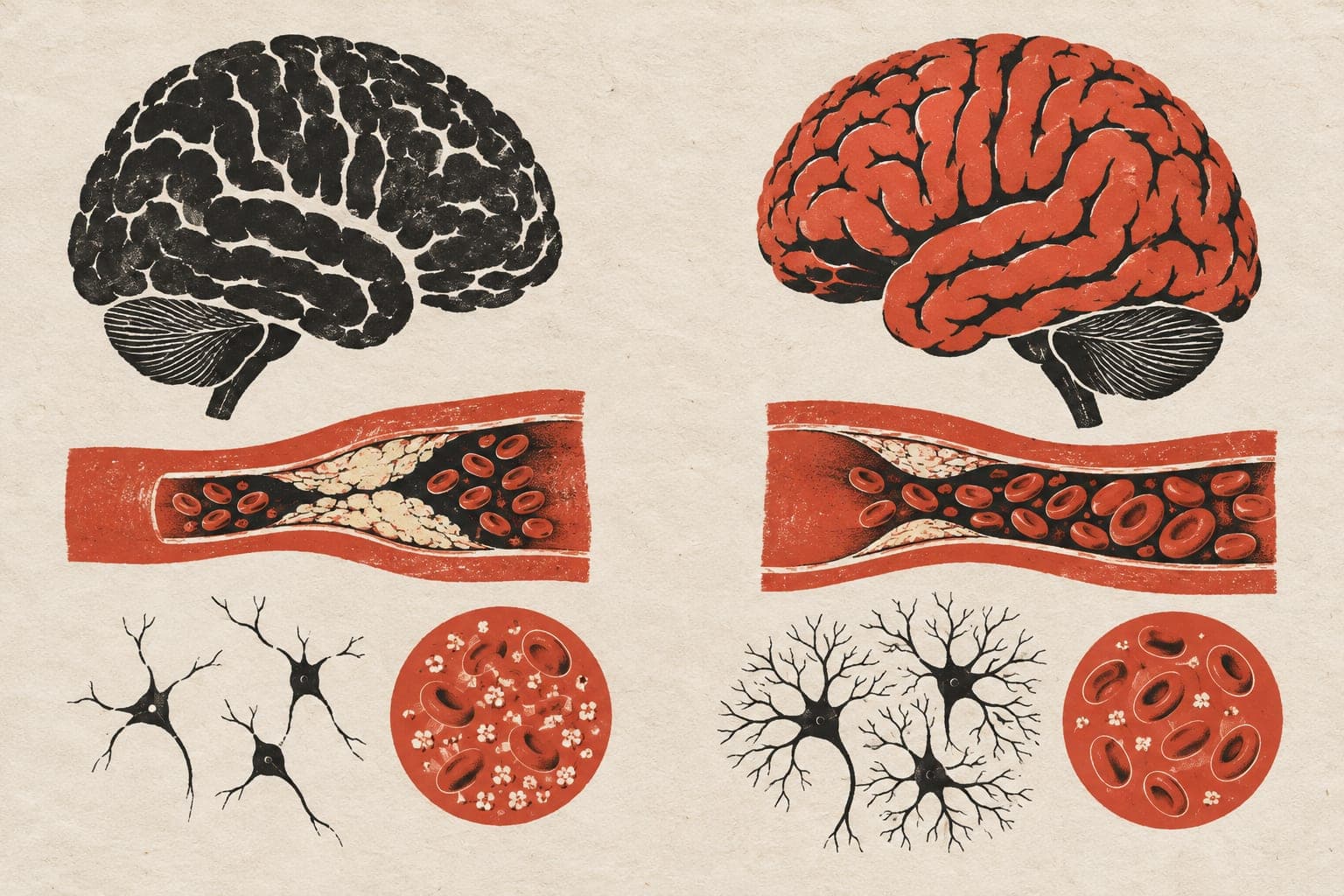
Artery stiffness estimate linked to Alzheimer disease risk
Each one-meter-per-second rise in the stiffness estimate was linked to 39% higher relative Alzheimer disease risk in one cohort and 63% in the other.

Dose-response
Limit: Calculated pulse wave velocity served as a stand-in for artery stiffness
Edited by Boris Djordjevic · AgingResearch.News
Researchers followed 14,602 adults aged 45 or older without Alzheimer disease at enrollment in a prospective observational cohort study. Participants came from two population-based cohorts. Researchers used a formula to calculate estimated pulse wave velocity, a noninvasive marker of artery stiffness.
During a median follow-up of 8.2 years, 203 participants developed Alzheimer disease in the first cohort. In the second, 136 developed it during a median follow-up of 10.2 years. Each one-meter-per-second rise in the estimate was linked to higher relative risk: 39% in the first cohort and 63% in the second, after adjustment for other factors. Higher estimates were associated with higher risk, without a clear threshold.
Why it matters
The researchers suggested the estimate may help group people by their future Alzheimer disease risk to inform prevention efforts.
Caveats
This observational study used a calculated marker of artery stiffness and cannot show causation. It did not include people younger than 45 or those with Alzheimer disease at enrollment.
The paper
Shanxi Medical University
Alzheimer Disease and Associated Disorders, Oct 23, 2026