Elinzanetant’s safety profile appeared favorable in women
Over 12 weeks, new or worsening health problems occurred in 50.8% of women taking elinzanetant and 43.2% taking placebo.
Registered NCT03596762
Limit: Exposure-adjusted rates assume constant risk over time, potentially masking early-onset or transient harms
Edited by Boris Djordjevic · AgingResearch.News
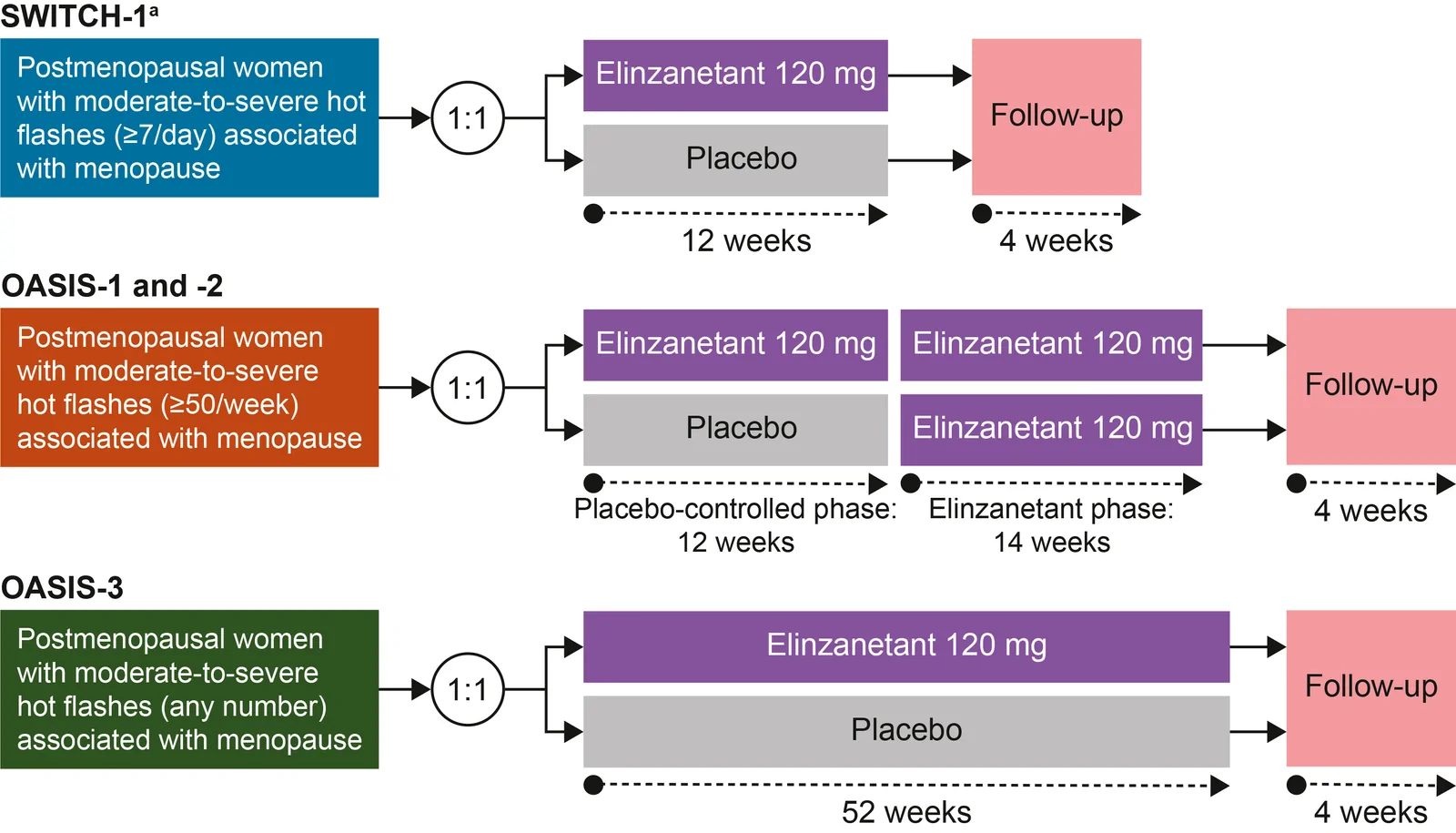
An exploratory pooled analysis of four randomized, placebo-controlled trials included 1,519 postmenopausal women aged 40–65 with moderate-to-severe menopause-related hot flashes or night sweats in its 12-week comparison. Menopause was natural or surgical. Women received elinzanetant 120 mg or placebo. Longer-term data extended through 52 weeks and included 1,113 women who received elinzanetant.
Over 12 weeks, headache affected 7.5% taking elinzanetant versus 4.2% taking placebo; fatigue affected 5.4% versus 1.3%, and sleepiness 3.4% versus 0.5%. Adverse events led 7.8% to stop elinzanetant, compared with 3.6% on placebo. Serious new or worsening health problems occurred in 1.2% versus 0.9%. The researchers concluded that the overall safety profile appeared favorable but called for further analyses and real-world data to better assess long-term safety.
Why it matters
For women managing menopause-related hot flashes and night sweats, treatment decisions depend on harms as well as symptom relief.
Caveats
This exploratory, post-hoc analysis compared unequal treatment durations, with some women switching from placebo after 12 weeks. Its findings concern women aged 40–65 with symptoms from natural or surgical menopause; Bayer funded and helped conduct the analysis.
From the paper
- Participants
The 12-week pooled safety analysis set included 1519 participants: 765 participants in the elinzanetant 120 mg group and 754 participants in the placebo group.
- Harms
The proportion of participants with overall TEAEs was 50·8% in the elinzanetant 120 mg group and 43·2% in the placebo group in the first 12 weeks.
Quoted word for word from the full text on PubMed Central.
The paper
Safety and tolerability of elinzanetant: a pooled analysis from four randomized clinical trials
University of Virginia Health System; Queen Charlotte's and Chelsea Hospital
EClinicalMedicine, Oct 7, 2026, Open access