Disability linked to more post-COVID diagnoses in older adults
Among COVID-19 patients aged 50 and older, disability was linked to shorter time to heart and blood vessel diagnoses (time ratio 0.70 versus no disability).
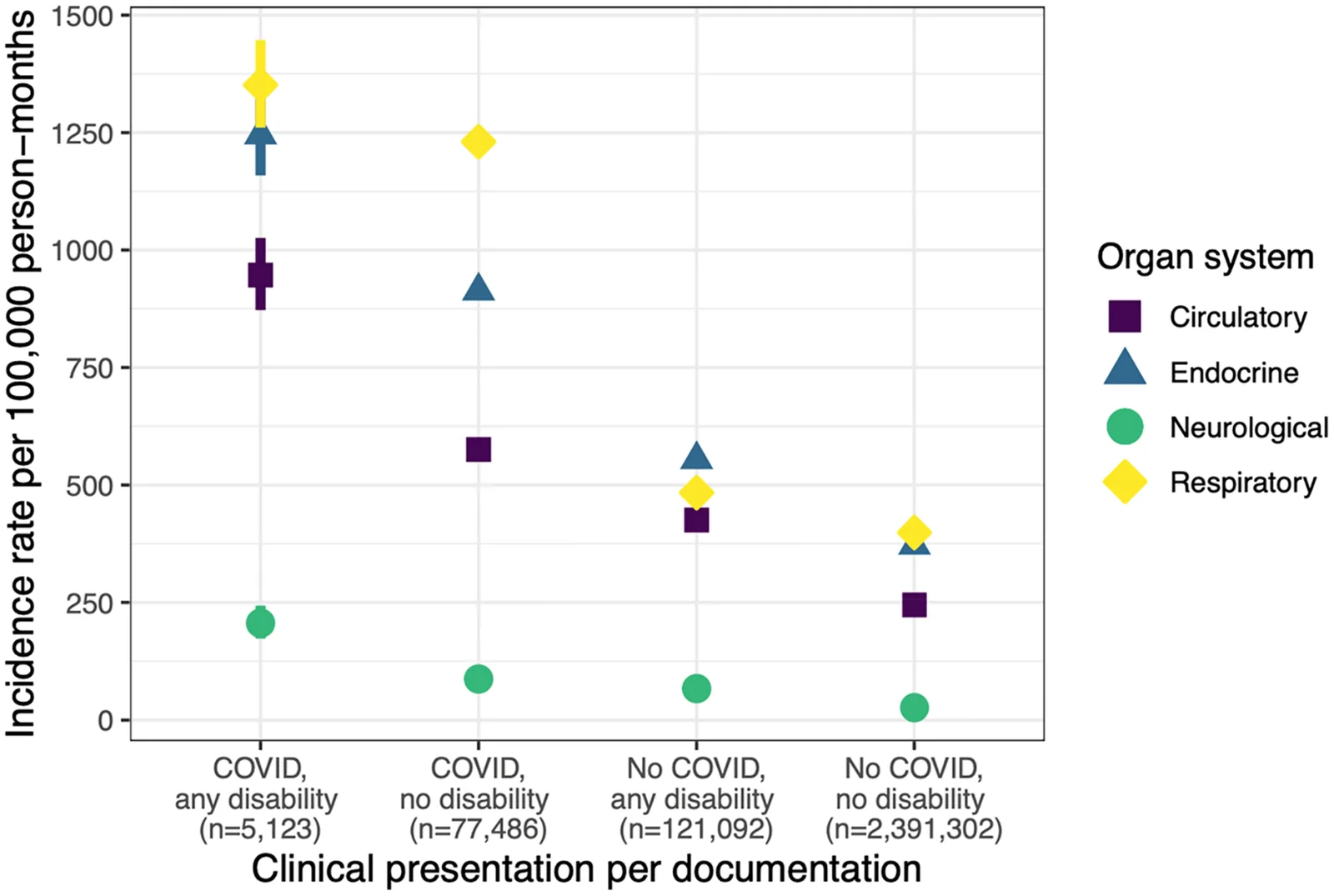
Limit: COVID-19 severity and treatments were unaccounted for and could explain differences in post-COVID diagnoses
Edited by Boris Djordjevic · AgingResearch.News
Primary care patients aged 50 and older and patients younger than 50 were studied in a retrospective observational cohort using electronic health records. Researchers identified pre-pandemic disabilities from diagnostic codes recorded in 2018–2019. They tracked new diagnoses at least 28 days after COVID-19.
Among patients aged 50 and older with COVID-19, those with disabilities had higher incidence and earlier diagnoses of heart and blood vessel, hormone-related, and brain and nerve conditions than those without disabilities. The time ratios were 0.70, 0.91 and 0.52, respectively. Values below 1 indicated earlier diagnosis compared with patients without disabilities. The researchers found no association for breathing-related conditions in this age group, and no associations among patients younger than 50.
Why it matters
Tracking new conditions after COVID-19 can help clarify how pre-existing disability relates to health burdens in later life.
Caveats
This observational study could not establish cause and effect; newly recorded diagnoses were not necessarily caused by COVID-19. It covered primary care patients with visits both before and during the pandemic.
From the paper
- Result
… those with disabilities and COVID-19 had higher incidence and earlier onset of newly diagnosed circulatory [time ratio (TR) 0.70, 95% confidence interval (CI) 0.64–0.77], endocrine (TR 0.91, 95% CI 0.84–0.99), and neurological (TR 0.52, 95% CI 0.44–0.62) …
Quoted word for word from the full text on academic.oup.com.
- COVID-19
- Post-COVID condition
- Circulatory conditions
- Endocrine conditions
- Incident respiratory conditions
- Humans
The paper
Stanford Medicine
Research Connections, Jul 14, 2026, Open access


