Obicetrapib did not raise blood sugar in pooled trials
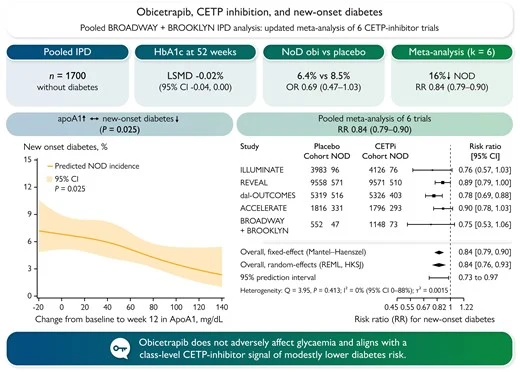
Over 52 weeks, diabetes developed in 6.4% taking obicetrapib versus 8.5% taking placebo, but the results did not rule out no difference.
Meta-analysis
Limit: Follow-up lasted only 52 weeks, limiting conclusions about longer-term blood sugar effects
Edited by Boris Djordjevic · AgingResearch.News
A pooled analysis of two randomized trials studied 1,700 people without diabetes: 899 with normal blood sugar and 801 with prediabetes. Women made up 38.8% of participants. Participants received either 10 mg of obicetrapib or placebo for 52 weeks.
Obicetrapib did not raise glycated hemoglobin, a measure of average blood sugar, compared with placebo. The difference was −0.02 percentage points, with a range of likely values that included no difference. Diabetes developed in 6.4% of the obicetrapib group versus 8.5% of the placebo group. This numerically lower risk was not conclusive. A separate analysis combining six trials linked obicetrapib’s drug class to a 16% lower relative risk of developing diabetes. The authors concluded that obicetrapib did not adversely affect blood sugar.
Why it matters
Diabetes prevention matters for health in later life. The research addressed whether another cholesterol-lowering drug shares the diabetes risk recognized with statin therapy.
Caveats
The pooled trials lasted only 52 weeks, and the range of likely effects on diabetes included no difference. The obicetrapib analysis excluded people with existing diabetes; the abstract did not report side-effect results.
The paper
University Heart and Vessel Centre Frankfurt; Imperial College London
European Journal of Preventive Cardiology, Oct 24, 2026