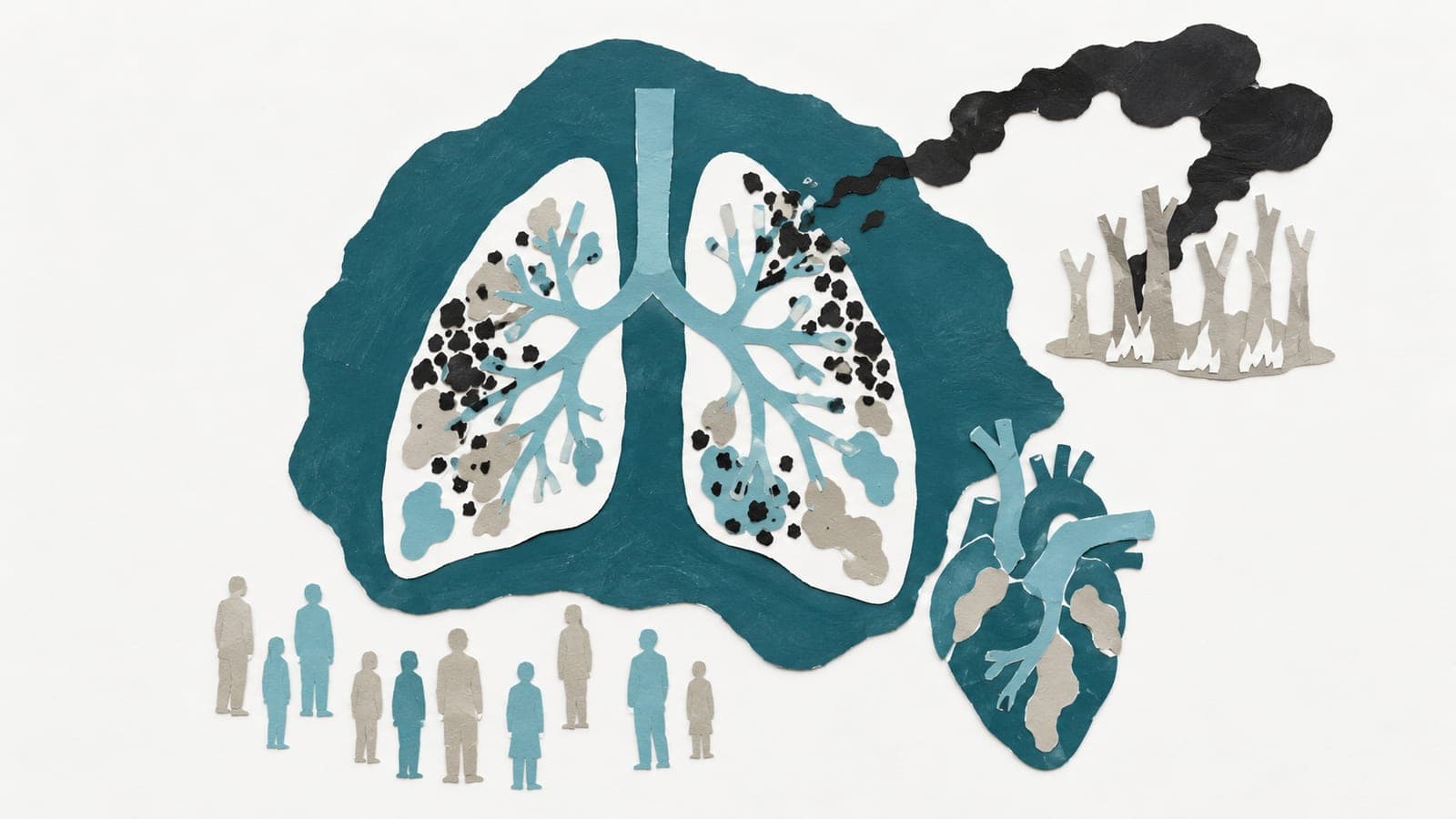
Carbon in wildfire smoke linked to deaths in older US adults
Each extra microgram of smoke particles per cubic meter was linked to a mortality hazard ratio—a measure of relative risk—of 1.032.
Edited by Boris Djordjevic · AgingResearch.News
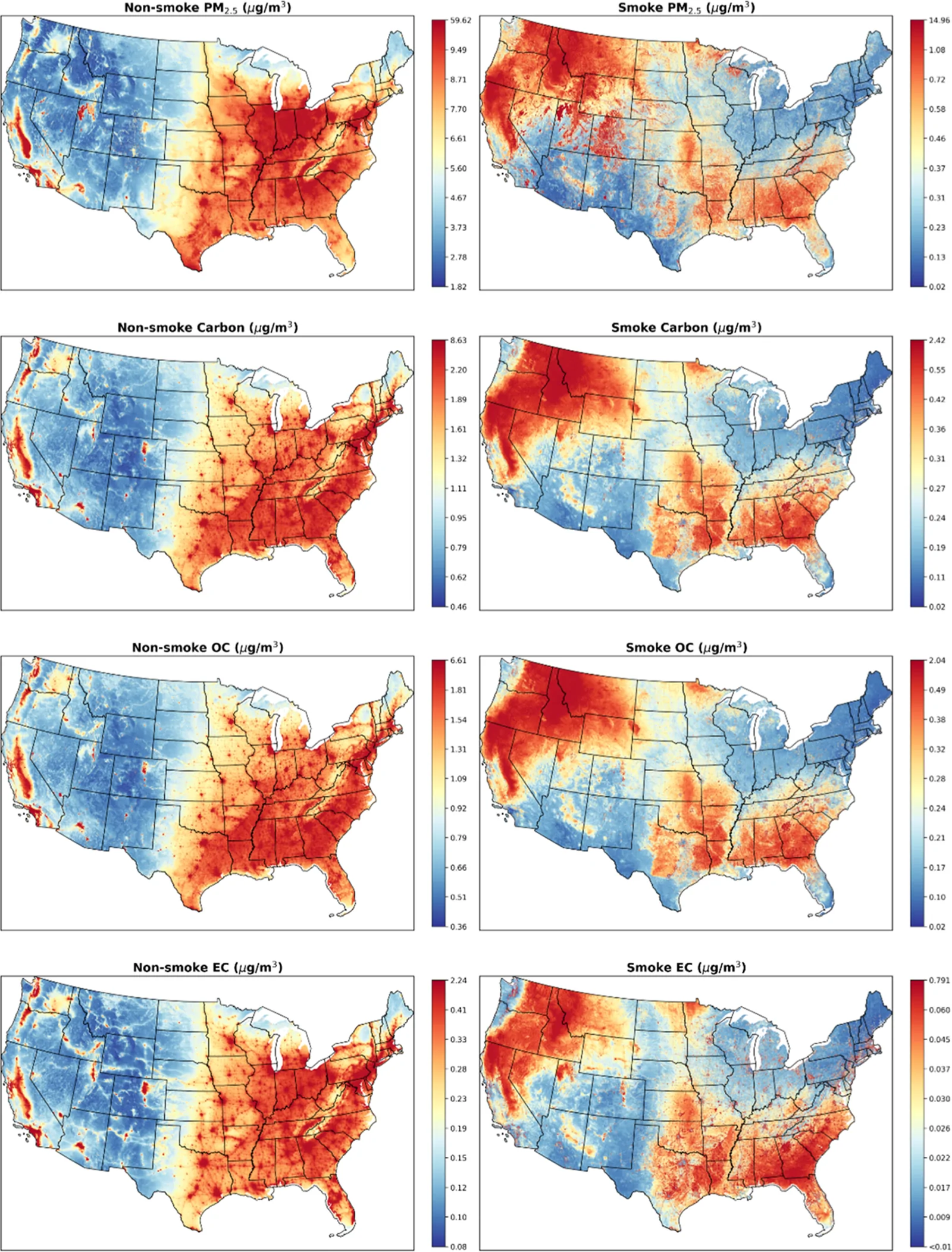
Researchers linked annual air pollution estimates to 77,470,752 US Medicare beneficiaries during 2002–2019 in an observational study. They examined fine airborne particles from wildfire smoke and other sources, including their carbon-containing components.
Long-term exposure to smoke particles and their carbon-containing components was associated with higher risk of death from any cause per unit mass than their non-smoke counterparts. For smoke carbon, the mortality hazard ratio was 1.087 per additional microgram per cubic meter. The associations were stronger among Black beneficiaries, other racial groups and people eligible for Medicaid. Their strength also varied across geographic regions and patterns of smoke exposure.
Why it matters
The findings support more detailed assessments of wildfire smoke’s health burden in older adults and efforts to reduce exposure.
Caveats
This observational study identified associations, not proof that smoke particles caused deaths. The results concern US Medicare beneficiaries and do not necessarily apply to people outside that program.
The paper
Carbonaceous Components Underlying Wildfire Smoke PM2.5-Associated Mortality in Older U.S. Adults
Emory University
Environmental Science & Technology, Oct 13, 2026, Open access