Two blood proteins linked to small-vessel stroke risk
Higher levels of blood proteins SPATA20 and KDELC2 were linked to higher and lower small-vessel stroke odds, respectively (odds ratios 1.47 and 0.82).
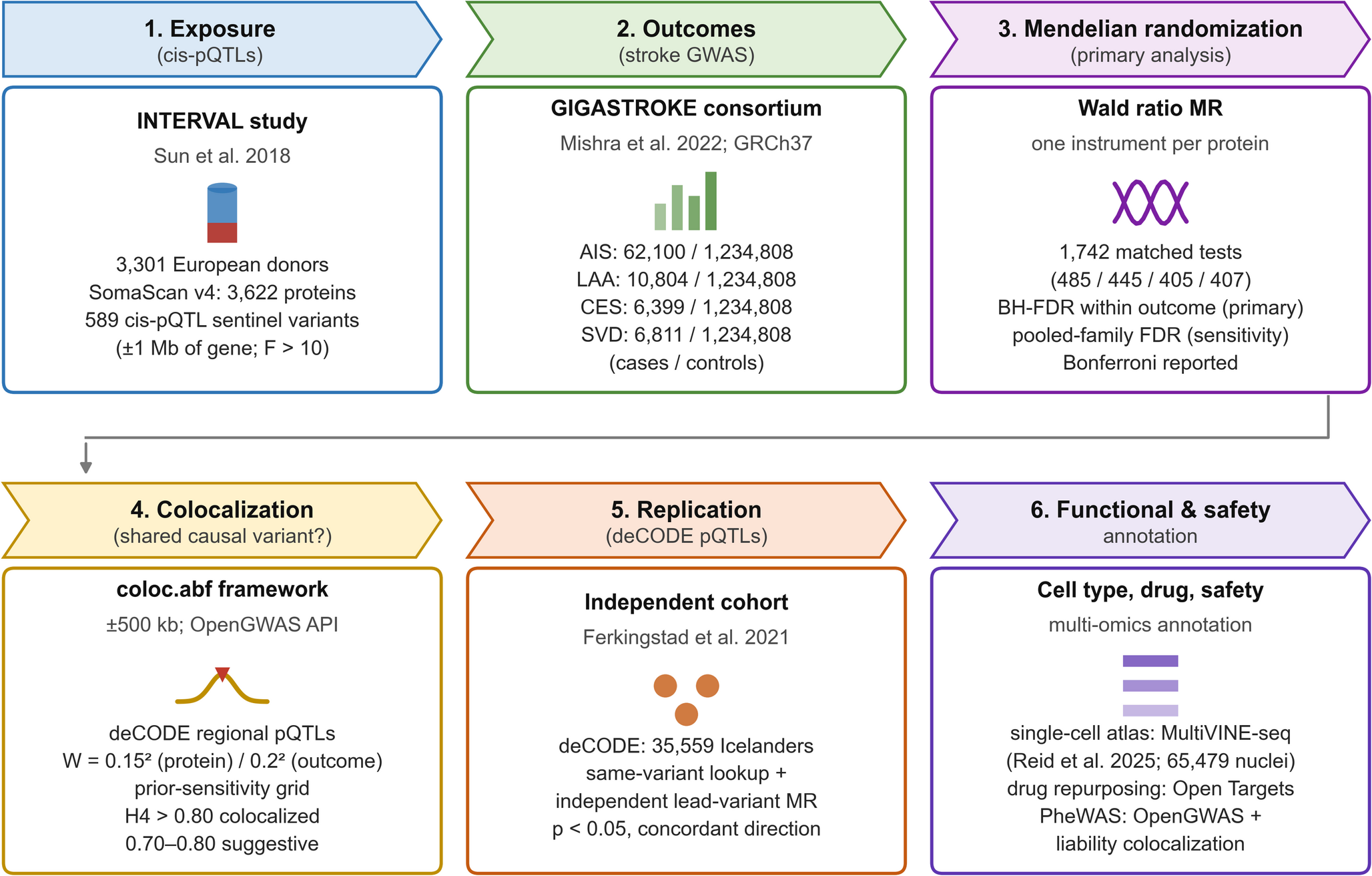
65,479 nuclei, independent replication
Limit: Effects of protein-targeting drugs on stroke prevention were not measured
Edited by Boris Djordjevic · AgingResearch.News
Using human genetic data from INTERVAL and GIGASTROKE, researchers conducted a Mendelian randomization analysis. This method uses inherited genetic differences as stand-ins for blood protein levels to examine links with disease. They screened 589 genetic signals against ischemic stroke overall and three subtypes. Ischemic strokes result from blocked blood flow to the brain.
The analysis prioritized two proteins linked to stroke involving small blood vessels. Higher SPATA20 levels were associated with higher odds; higher KDELC2 levels were associated with lower odds. These odds ratios describe relative odds, not the absolute chance of stroke. The researchers reported independent support for SPATA20 across screens, while the KDELC2 association was newly reported.
Why it matters
Small-vessel disease lacks a specific preventive therapy, leaving a gap in stroke prevention in later life.
Caveats
This genetic analysis did not test whether drugs targeting these proteins would prevent stroke. Both candidates need replication with different protein-measuring technologies and experiments to test their biological effects before therapeutic development.
The paper
Proteome-Wide Mendelian Randomization Identifies Therapeutic Targets for Ischemic Stroke
First Hospital of Jilin University
Translational Stroke Research, Oct 22, 2026


