Opioids linked to higher death risk in chronic kidney disease
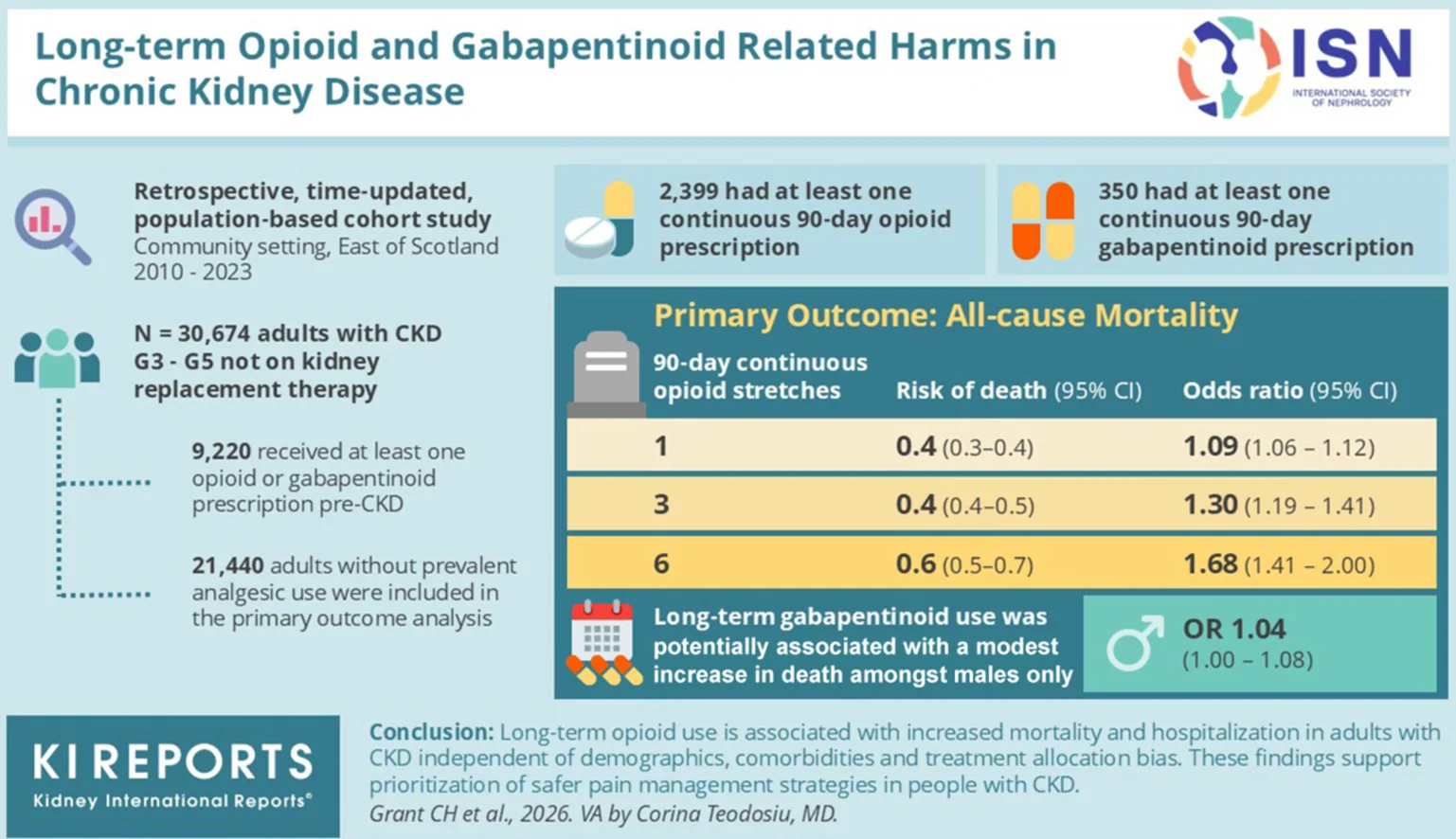
Estimated death risk over 28 days was 0.4% after one 90-day opioid prescription period versus 0.6% after six in adults with chronic kidney disease.
30,674 participants, dose-response, preregistered osf.io/5qsyh
Limit: Worsening frailty and multimorbidity can drive both opioid prescribing and death
Edited by Boris Djordjevic · AgingResearch.News
An observational cohort study analyzed records from 21,440 adults aged 18 or older with chronic kidney disease but without kidney failure in eastern Scotland. None had prescriptions for opioids or gabapentinoids, another group of pain medicines, in the six months before diagnosis. Researchers tracked cumulative 90-day prescription periods.
Greater opioid exposure was associated with higher death risk after adjustment for demographics, other illnesses and factors affecting prescribing. Over a median follow-up of 4.3 years, emergency hospitalization occurred in 79.1% of people with at least one 90-day opioid period, versus 57.8% without one. The analysis found no association between cumulative exposure to either drug group and hip fractures. Gabapentinoids were potentially associated with a modest increase in death among men, but not women.
Why it matters
Chronic pain affects over half of people with chronic kidney disease, making pain management relevant to long-term care as they age. The authors called for prioritizing safer pain-management strategies.
Caveats
This observational study cannot establish that the medicines caused deaths or hospitalizations. The main analysis excluded recent opioid or gabapentinoid users and did not cover people with kidney failure.
From the paper
- Participants
A total of 21,440 patients without prevalent analgesic use and with nonmissing SIMD were included in the primary and secondary analyses and followed up for a median of 4.3 years (IQR: 2–7).
Results, Cumulative Analgesic Exposure and Length of Follow-Up
- Follow-up
A total of 21,440 patients without prevalent analgesic use and with nonmissing SIMD were included in the primary and secondary analyses and followed up for a median of 4.3 years (IQR: 2–7).
Results, Cumulative Analgesic Exposure and Length of Follow-Up
- Limitation
Missing analgesic dose, directions, and indication(s) limited the evaluation of granular exposure estimates.
Quoted word for word from the full text on PubMed Central.
The paper
Long-Term Opioid and Gabapentinoid Related Harms in CKD
University of Dundee; University of St Andrews
Kidney International Reports, Sep 17, 2026, Open access