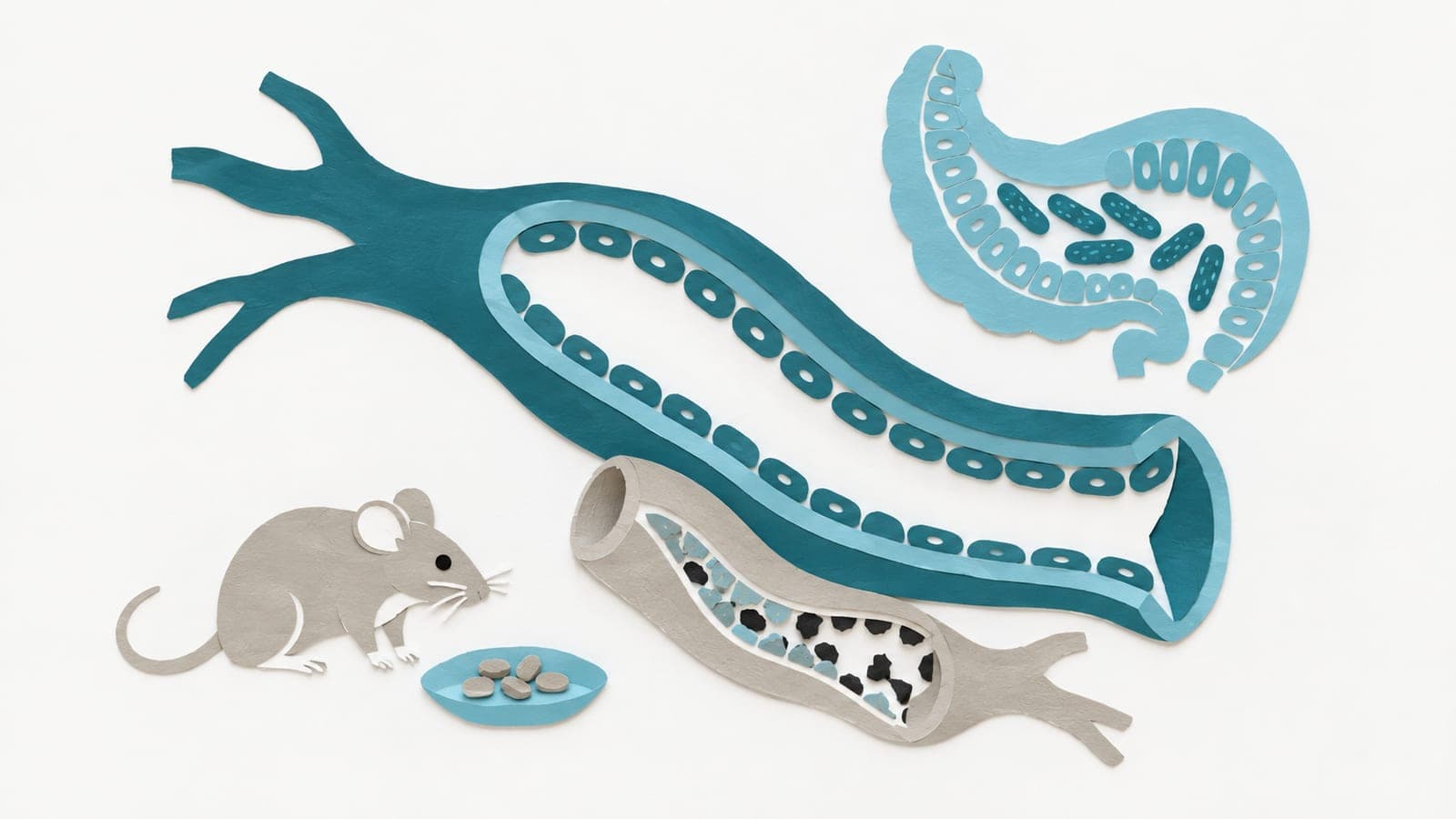
Gut bacterium reduced artery disease progression in mice
In mouse experiments, supplementing a gut bacterium lowered levels of a circulating chemical and reduced the progression of noise-related plaque buildup in arteries.
Limit: The abstract omits the supplement dose and treatment duration
Edited by Boris Djordjevic · AgingResearch.News
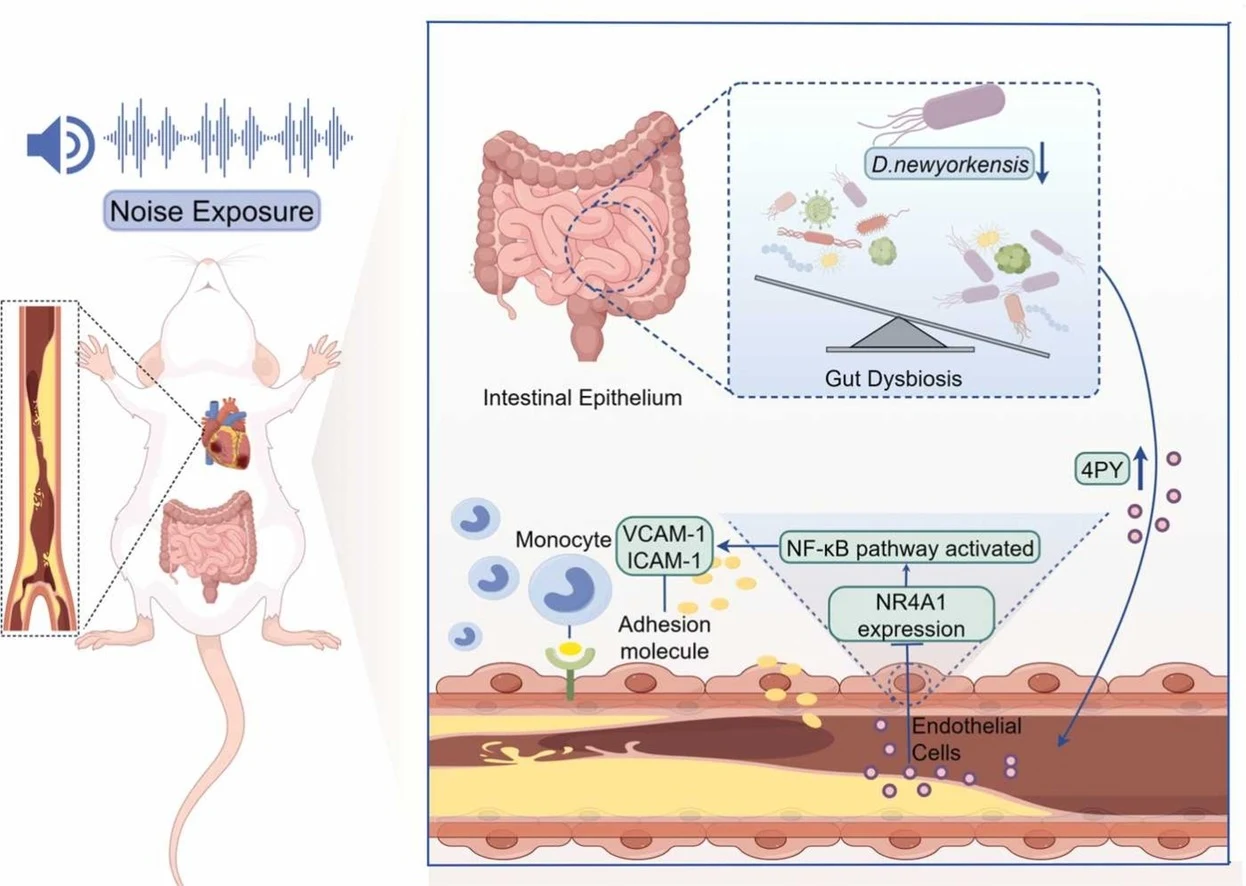
In mice, researchers tested supplementation with Dubosiella newyorkensis, a gut bacterium, in experiments on noise-related atherosclerosis—the buildup of fatty plaques in arteries. Supplementation lowered blood levels of N1-methyl-4-pyridone-3-carboxamide, or 4PY, and reduced disease progression.
Separate analyses of UK Biobank data linked noise exposure to a higher risk of coronary heart disease. The researchers also reported higher circulating 4PY levels with noise exposure in humans and rodents. In humans, noise exposure was linked to a lower abundance of the gut bacterium. The authors suggested that changing gut microbes may offer a strategy for managing noise-related cardiovascular complications.
Why it matters
Atherosclerosis is an age-related artery disease. The work addresses how environmental noise might contribute to its progression through changes in gut microbes and blood chemistry.
Caveats
The supplementation results came from mouse experiments, not a treatment study in people. The abstract did not report the number of mice, supplement dose or duration.
The paper
Harbin Medical University
Pharmacological Research, Oct 21, 2026, Open access