Model estimates rising health and economic burdens in older adults
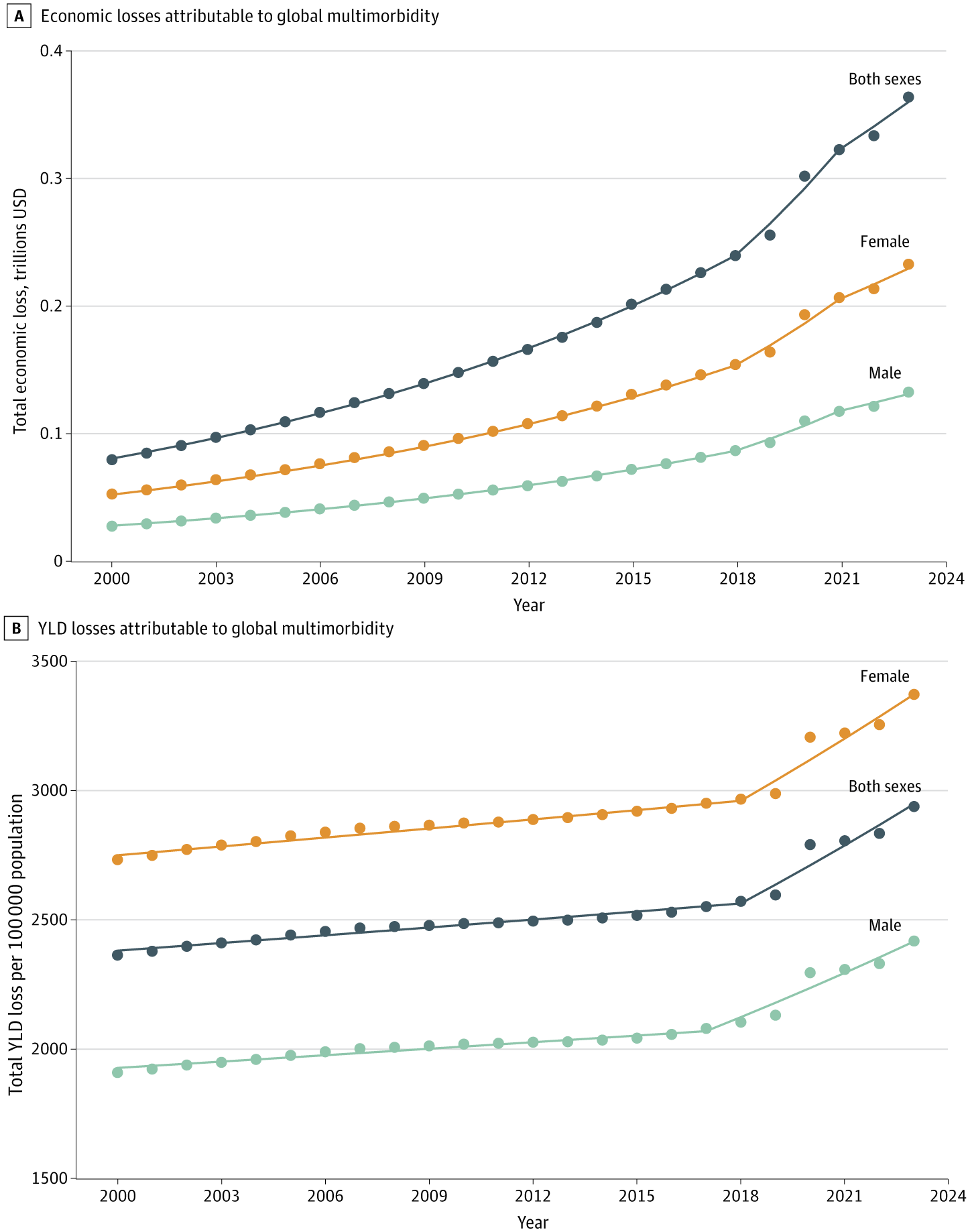
Estimated years lived with disability rose from 2,367.81 to 2,941.68 per 100,000 people aged 60 or older between 2000 and 2023.
Edited by Boris Djordjevic · AgingResearch.News
Researchers used observational modeling in an economic evaluation of multiple coexisting health conditions among adults aged 60 or older in 204 countries and territories. They combined global disease estimates with economic, health spending and population data for 2000 to 2023. Economic analyses covered 180 countries and territories.
The model assessed 78 combinations spanning physical illnesses, mental health conditions and disorders affecting thinking and memory. The health measure, years lived with disability, captures time spent in less than full health. Estimated economic losses rose from $80.10 billion in 2000 to $363.25 billion in 2023, growing faster than the disability burden. The monetary figures used 2021 international dollars, adjusted for differences in purchasing power. Patterns varied by sex, country income group and disease combination.
Why it matters
For aging populations with multiple health conditions, the authors suggested that policy priorities should consider economic vulnerability alongside health burden.
Caveats
The findings came from observational modeling of existing estimates and other data, with uncertainty around the results. They concern adults aged 60 or older, not younger populations.
The paper
Dual Health and Economic Burden of Multimorbidity in Aging Populations
Xi'an Jiaotong University; for the Global Aging Multimorbidity Collaboration
JAMA Network Open, Oct 1, 2026, Open access