Alcohol’s link to death rates varied by drink in UK adults
High alcohol intake was linked to higher death rates than never or occasional drinking (hazard ratio 1.24, comparing death rates over time).
Limit: Never and occasional drinkers were grouped together, potentially masking differences in their mortality risks
Edited by Boris Djordjevic · AgingResearch.News
This prospective observational study followed 340,924 UK Biobank participants for an average of 13.4 years. Researchers recorded 22,381 deaths and examined links with total alcohol intake and different beverages. High intake meant more than 40 grams of alcohol daily for men and more than 20 grams for women. Never or occasional intake meant no more than 20 grams weekly.
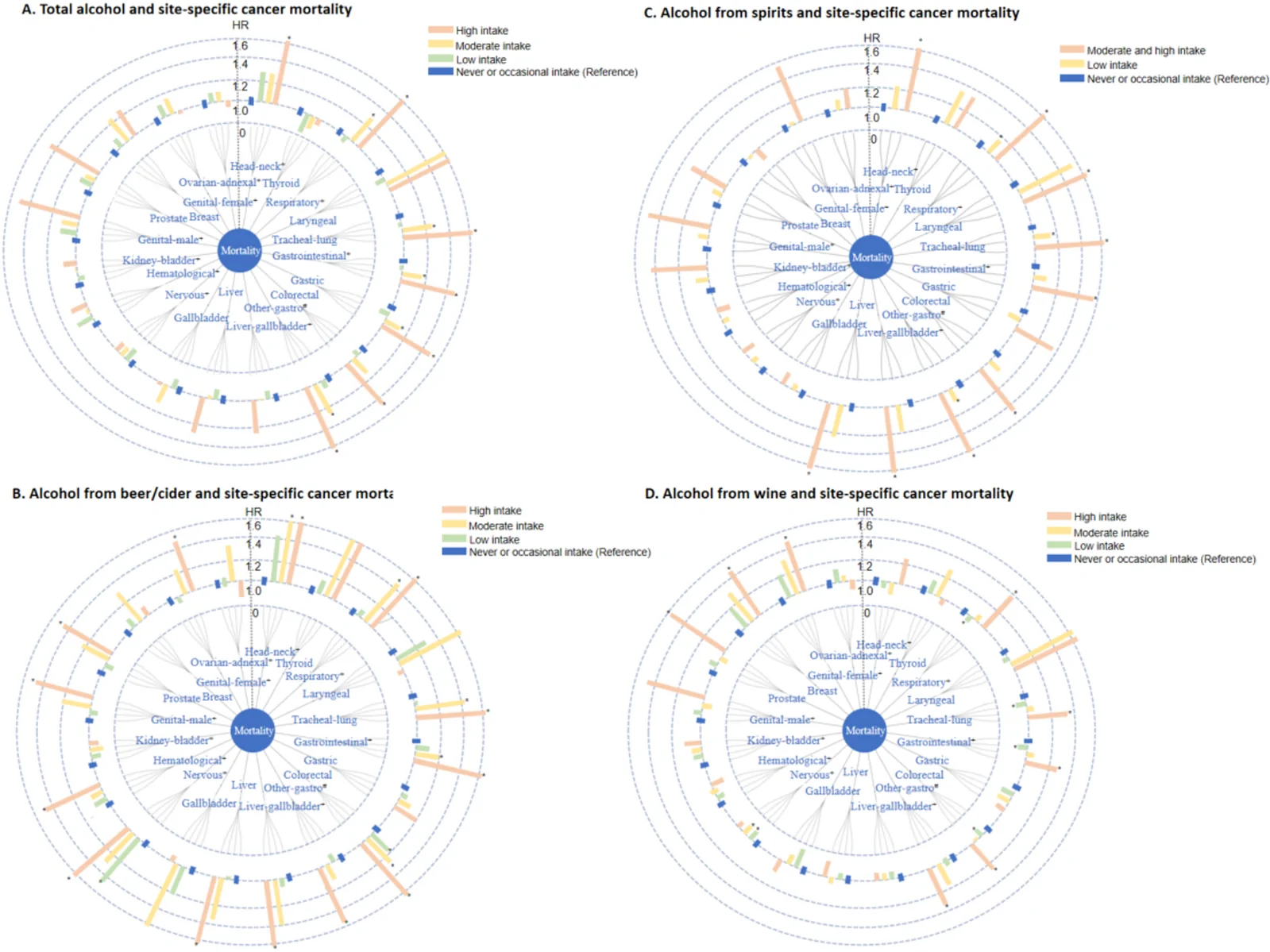
High total intake was associated with higher death rates overall and from cardiovascular disease, cancer and other causes. Moderate total intake was associated with higher cancer mortality only. Even low-to-moderate intake from spirits and beer or cider was linked to higher death rates. Low-to-moderate wine intake was linked to lower death rates. However, high intake, regardless of beverage type, was associated with higher mortality from various specific cancers.
Why it matters
Cancer and cardiovascular disease threaten health as people age. The study addressed whether beverage type matters when examining alcohol’s links to deaths from these diseases.
Caveats
This observational study could not establish cause and effect, including whether wine protected health. Its findings came from UK Biobank participants and may not apply to other populations.
The paper
Central South University
Nutrition Journal, Jul 22, 2026, Open access