Higher counts of an immune cell linked to aging eye disease
One genetic analysis linked a one-standard-deviation increase in eosinophils, a white blood cell type, to 1.07 times the odds of macular degeneration.
388,758 participants
Limit: Disease risk after lowering eosinophil counts was not measured
Edited by Boris Djordjevic · AgingResearch.News
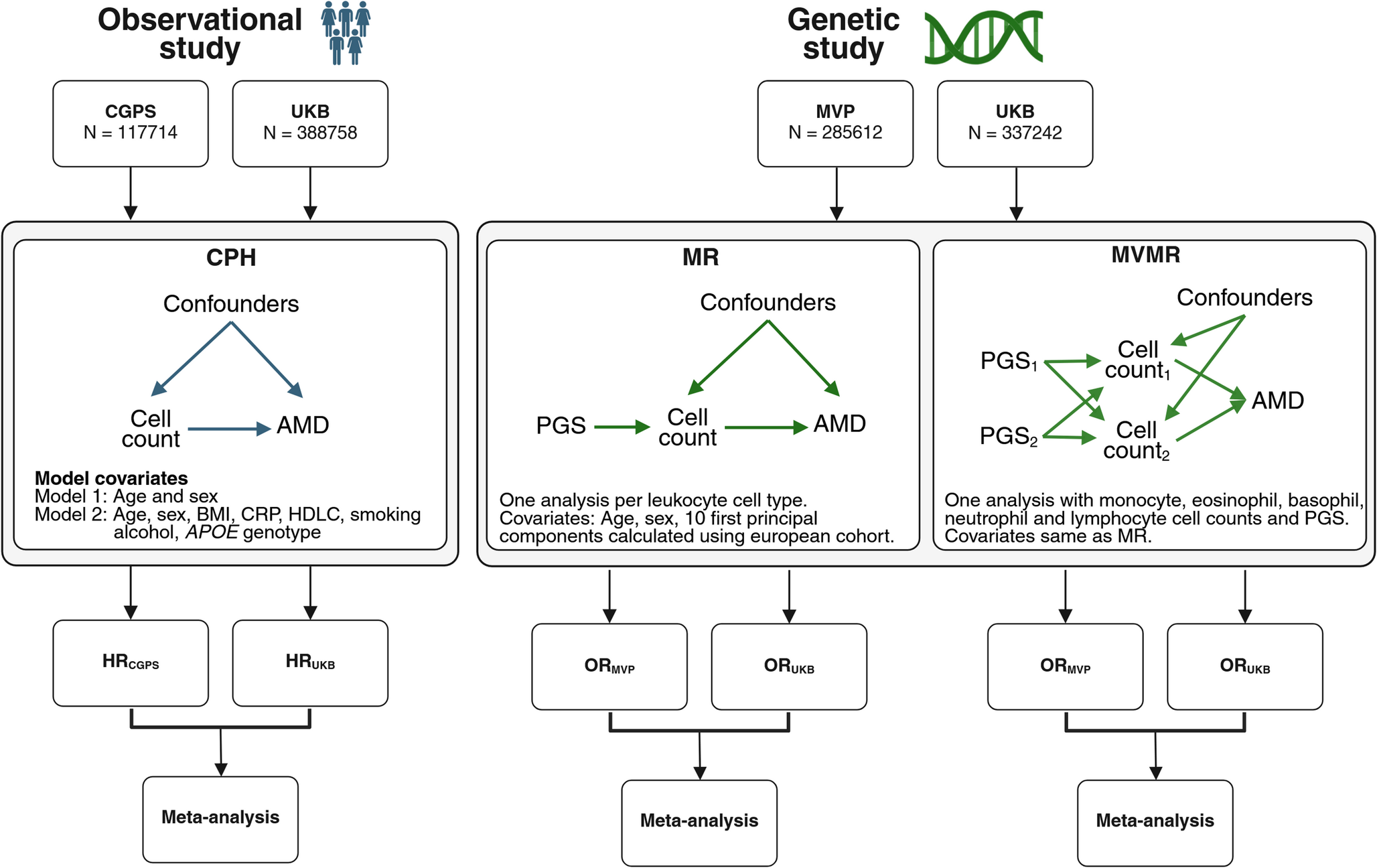
The observational and genetic study included 117,714 people from the Copenhagen General Population Study, 388,758 from UK Biobank and 285,612 from the Million Veteran Program. All were of European ancestry and had no clinically diagnosed age-related macular degeneration at enrollment.
Researchers compared initial white blood cell counts with later diagnoses in Copenhagen and UK Biobank. They also used Mendelian randomization, which analyzes genetic variants, in UK Biobank and the veteran cohort. Across the cohorts, 27,130 people developed clinically diagnosed disease. Higher counts of eosinophils, a type of white blood cell, were associated with higher disease risk. Genetic analyses linked a one-standard-deviation increase in genetically predicted eosinophil counts to 1.07 and 1.12 times the disease odds. A standard deviation measures how much counts varied.
Why it matters
Age-related macular degeneration is a leading cause of vision loss. The work bears on whether immune processes throughout the body may contribute to its development.
Caveats
These observational and genetic analyses did not test whether lowering eosinophil counts changes disease risk. Results may not apply to other ancestry groups or people already diagnosed with the disease.
The paper
Leukocytes and age-related macular degeneration
Copenhagen University Hospital-Rigshospitalet
European Journal of Epidemiology, Oct 21, 2026


