Frailty changes linked to chronic disease risk in China
An observational study of 17,708 adults aged 40 or older linked worsening frailty to higher disease risks and improved frailty to lower risks.
17,708 participants
Limit: Higher BMI among frail participants could partly explain their higher chronic disease risks
Edited by Boris Djordjevic · AgingResearch.News
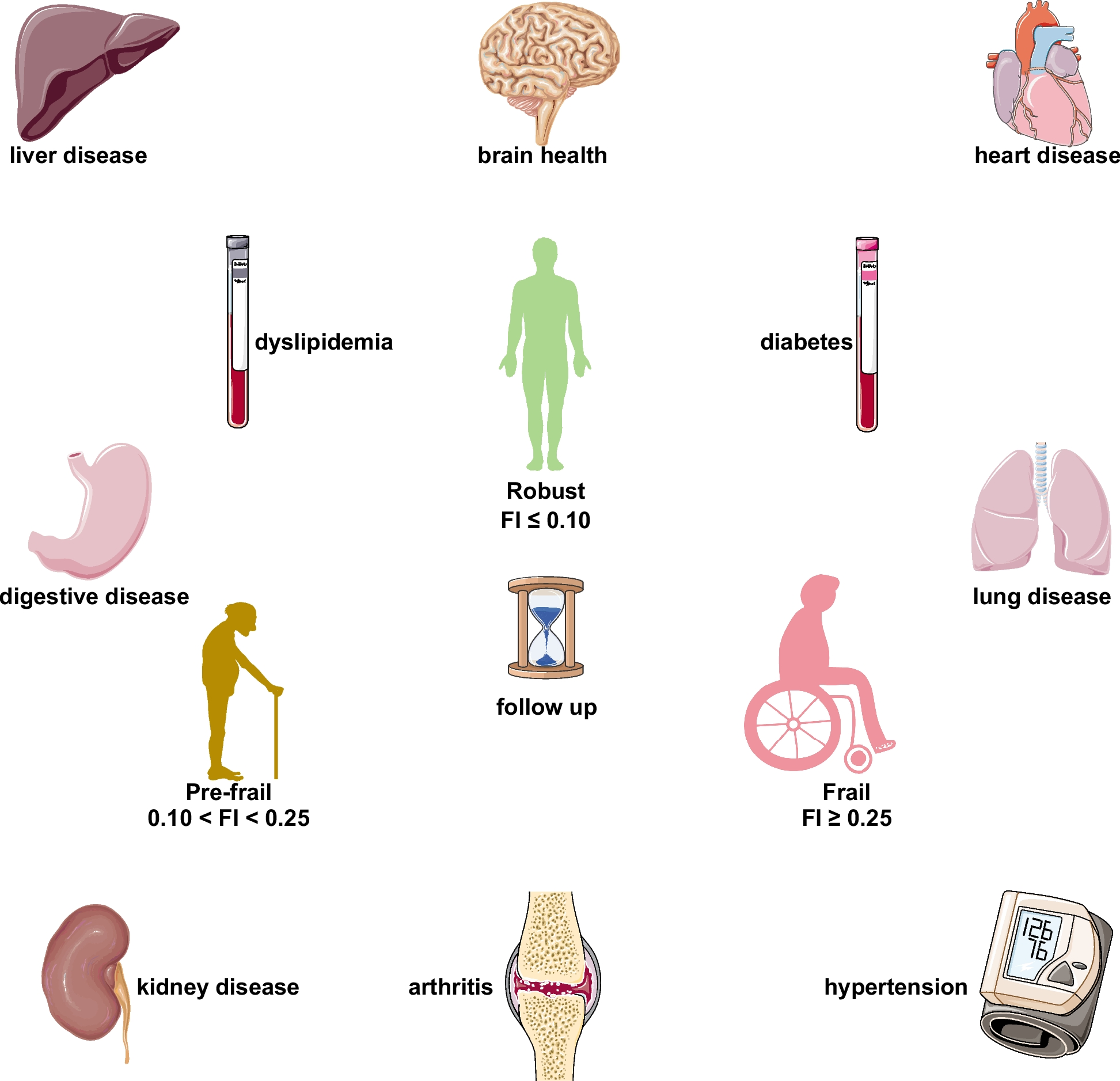
In an observational cohort study, researchers analyzed data from 17,708 adults aged 40 or older in China. They assessed frailty—a decline in the body’s capacity to cope with stress—at enrollment and two years later, classifying it as stable, improved or worsened. They tracked the onset of 13 chronic diseases. Analyses of frailty changes had median follow-up periods ranging from 4.4 to 5.0 years across disease groups.
Frailty at enrollment was associated with higher risks of all 13 diseases, with the strongest link for psychiatric problems. Worsening frailty was linked to higher risks, particularly for asthma. Improved frailty status was associated with lower risks, notably for kidney disease. The associations were particularly strong among adults aged 40 to 65.
Why it matters
Monitoring frailty may help guide efforts to prevent chronic diseases as people age. The authors suggested that routine assessments may offer opportunities for timely intervention, especially in middle age.
Caveats
This observational study cannot show that improving frailty prevents chronic disease. Its findings do not establish the same links in people younger than 40 or populations outside China.
The paper
Tianjin Medical University General Hospital
Archives of Public Health, Jul 23, 2026, Open access


