Mitochondrial modulator M1 attenuates ovarian aging by remodeling granulosa cell metabolism and improving oocyte maturation
Abstract
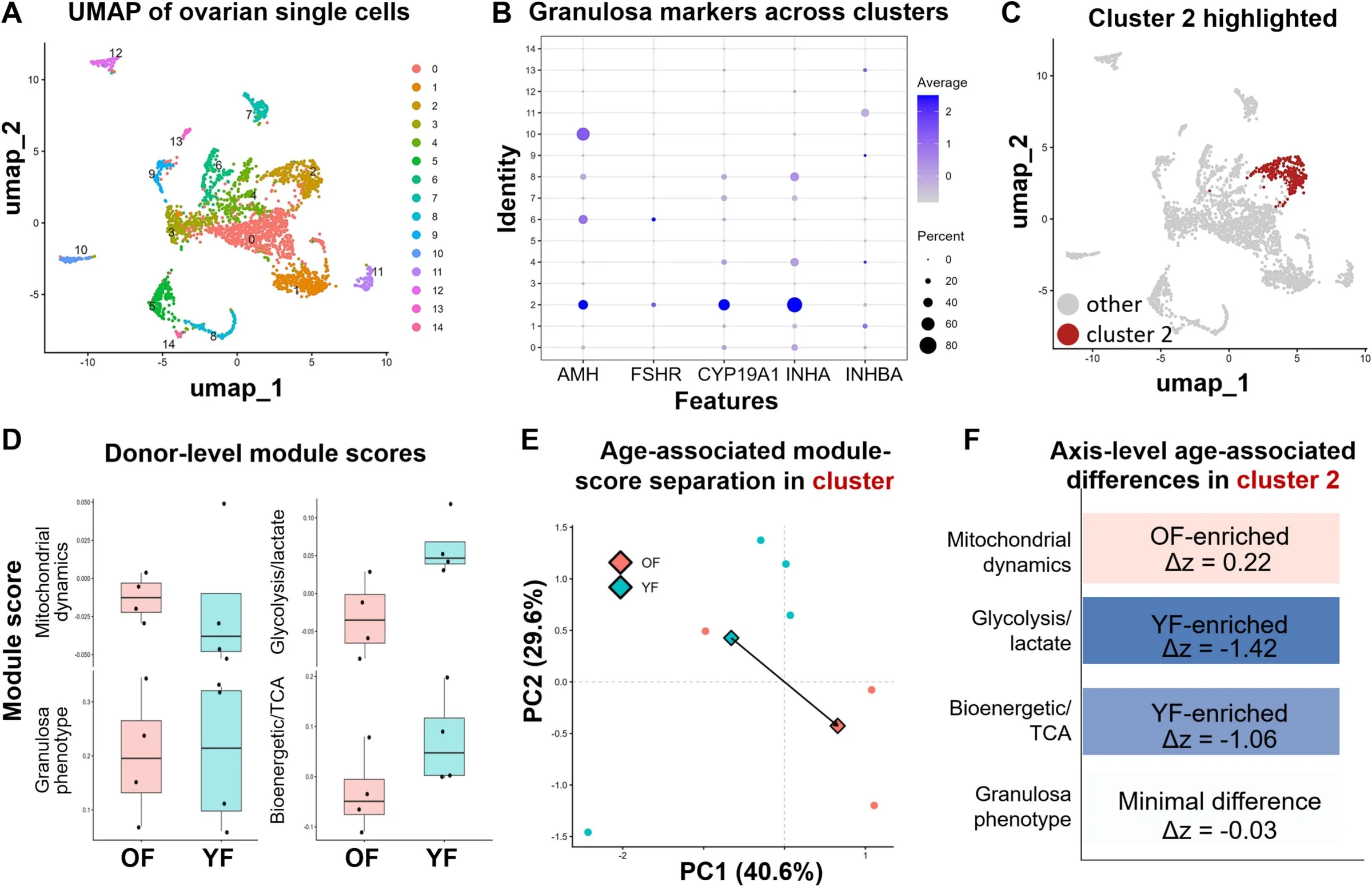
Ovarian aging is characterized by granulosa cell (GC) dysfunction and compromised oocyte maturation, yet effective mitochondria-targeted interventions remain limited. We investigated the association of the mitochondrial fusion promoter M1 with age-related transcriptional, mitochondrial, and metabolic phenotypes. Reanalysis of public single-cell transcriptomic data identified age-associated differences in a granulosa-enriched cluster across mitochondrial dynamics-related, glycolysis/lactate metabolic, bioenergetic/TCA-cycle, and granulosa-cell phenotype programs. RT-qPCR in early-passage, late-passage, and M1-treated late-passage HGL5 cells showed partial concordance with this transcriptomic framework. In late-passage HGL5 cells, M1 treatment induced a less fragmented, elongation-associated mitochondrial morphology accompanied by altered DRP1 phosphorylation, increased per-well respiratory readouts, and increased ATP fluorescence. In ex vivo aged oocytes, M1 increased polar body extrusion and was associated with reduced DCFDA fluorescence and increased CMXRos fluorescence. These findings indicate that M1 is associated with mitochondrial and metabolic remodeling in a late-passage HGL5 model displaying senescence-associated features and favorable maturation-associated readouts in aged oocytes. These data do not establish physiological granulosa-cell rejuvenation, improved developmental competence, or a DRP1-dependent mechanism. Further studies are required to establish the molecular target of M1 and its effects on fertilization, embryo development, and reproductive outcomes.
The paper
Mitochondrion, Oct 17, 2026