A gene supports bone gains from blocking oxidized fats in mice
In 6-month-old genetically modified mice, deleting a bone-signaling gene prevented gains in bone density and spongy bone in males and reduced them in females.
Limit: Bone density and spongy bone were measured, not bone strength
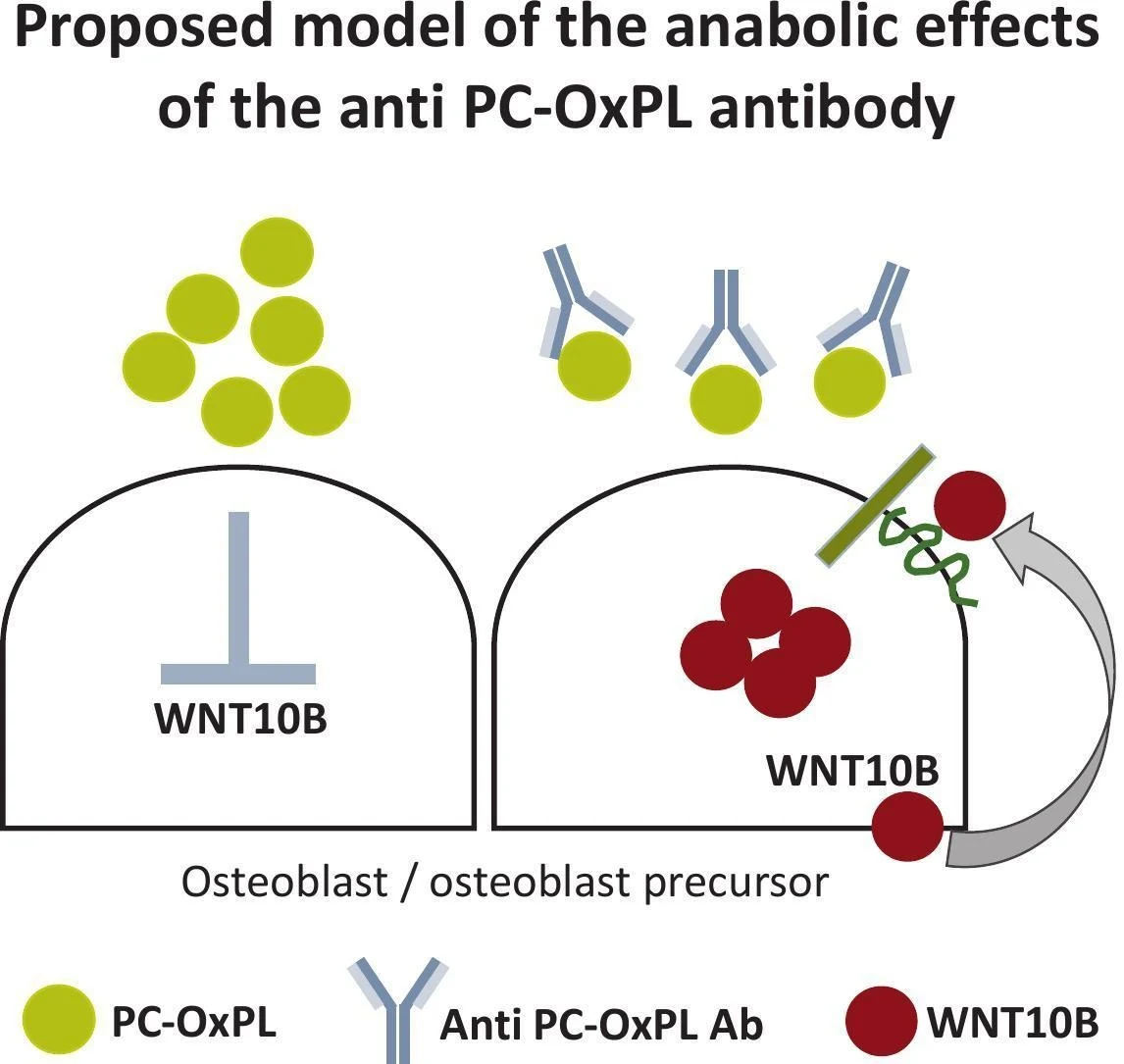
An experiment in 6-month-old male and female mice tested why blocking oxidized phospholipids, chemically altered fat molecules, increased bone mass. Some mice were genetically engineered to produce an antibody fragment that blocks these molecules. The researchers tested what happened when those mice also lacked Wnt10b, a gene involved in signals that promote bone formation.
Without Wnt10b, the male mice did not show increases in bone mineral density or in spongy bone in the spine and thighbone. Removing the gene reduced, rather than prevented, these increases in females. The findings indicated that oxidized phospholipids decreased bone mass at least partly by suppressing Wnt10b.
Why it matters
Oxidized phospholipids are implicated in osteoporosis. Understanding how they affect bone-forming signals may help clarify a process involved in age-related bone loss.
Caveats
This was a genetic experiment in mice, not a treatment study in people. The bone measurements came from 6-month-old animals.
The paper
Wnt10b is required for the increase in cancellous bone caused by oxidized phospholipids blockade
Central Arkansas Veterans Healthcare System
Bone, Oct 17, 2026, Open access