Periconceptional and early-pregnancy exposure to SGLT2 inhibitors and congenital malformations: a systematic review and meta-analysis
Abstract
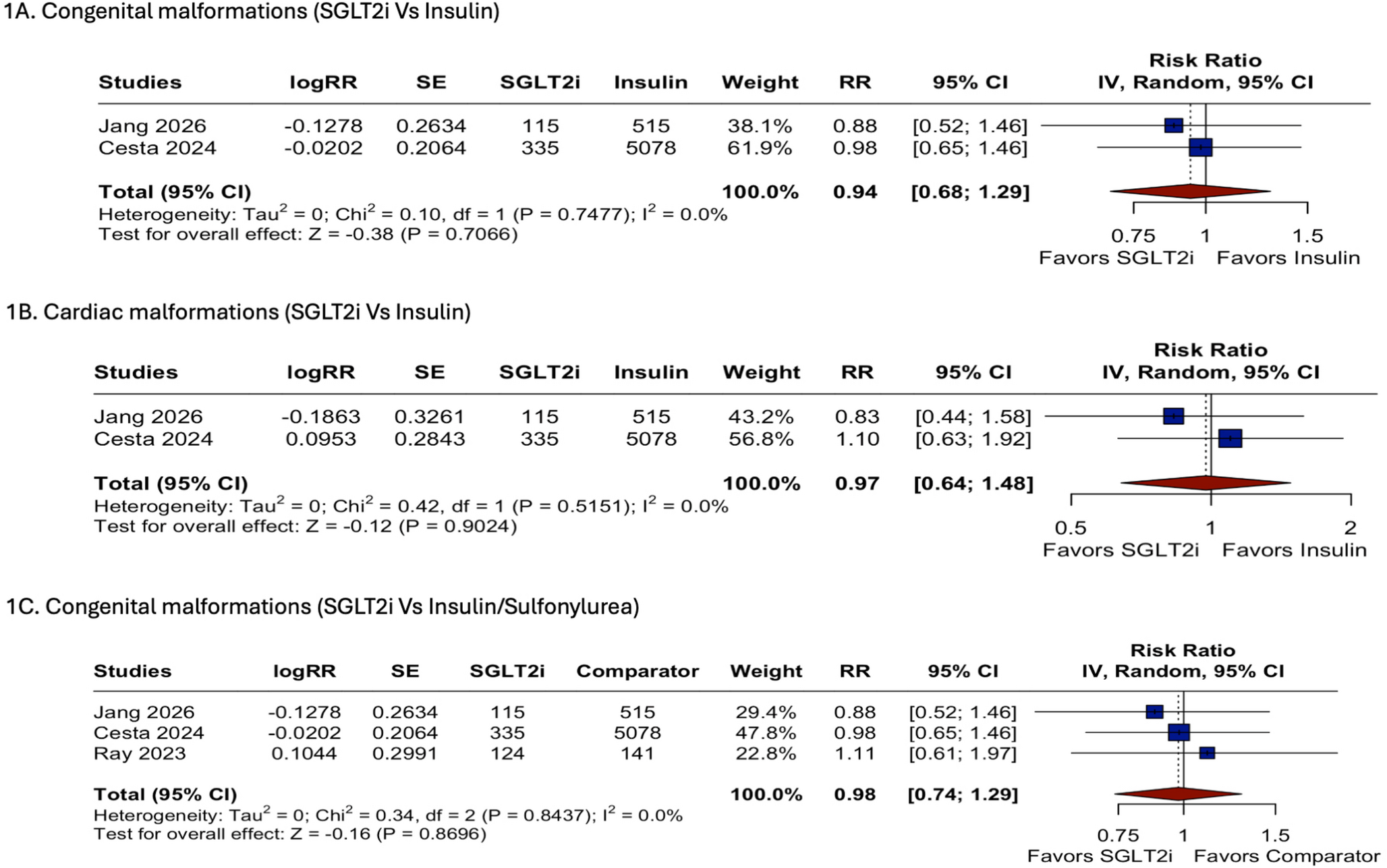
PURPOSE: Sodium-glucose cotransporter-2 (SGLT2) inhibitors are increasingly prescribed to women of reproductive age for type 2 diabetes and cardiorenal protection, and are commonly continued through the periconceptional period until pregnancy is recognized. Human safety data on inadvertent first-trimester exposure remain scarce, creating substantial clinical uncertainty. METHODS: We systematically searched PubMed/MEDLINE, Embase, and CENTRAL from inception to 15 May 2026 for observational cohort studies comparing early-pregnancy or preconception exposure to SGLT2 inhibitors with active antidiabetic comparators among women with type 2 diabetes. Adjusted risk ratios (RRs) were pooled using random-effects meta-analysis. RESULTS: Three cohorts, including 669 SGLT2 inhibitor-exposed pregnancies, were eligible. In the prespecified insulin-comparator analysis, SGLT2 inhibitor exposure was not associated with major congenital malformations (RR 0.94, 95% CI 0.68-1.29) or cardiac malformations (RR 0.97, 95% CI 0.64-1.48). The inclusion of a preconception sulfonylurea comparator cohort yielded a similar estimate for major congenital malformations (RR 0.98, 95% CI 0.74-1.29). In a Korean cohort, exposure during gestational weeks 4-10 was associated with congenital heart defects (RR 2.79, 95% CI 1.16-7.06). CONCLUSIONS: Based on the limited observational evidence available, early SGLT2 inhibitor exposure was not associated with an increased risk of overall major congenital or cardiac malformations; however, the estimates were imprecise and could not rule out clinically important increases in risk. Certainty of the evidence was low to very low because of residual confounding, live-birth selection, heterogeneous exposure definitions, and few exposed events. A possible timing-specific cardiac signal requires replication.
The paper
Center for Endocrinology; Mymensingh Medical College Hospital
Endocrine, Oct 17, 2026

