Recurrent In-Stent Restenosis and Accelerated Neoatherosclerosis in a Middle-Aged Woman With High Inflammatory Burden
Abstract
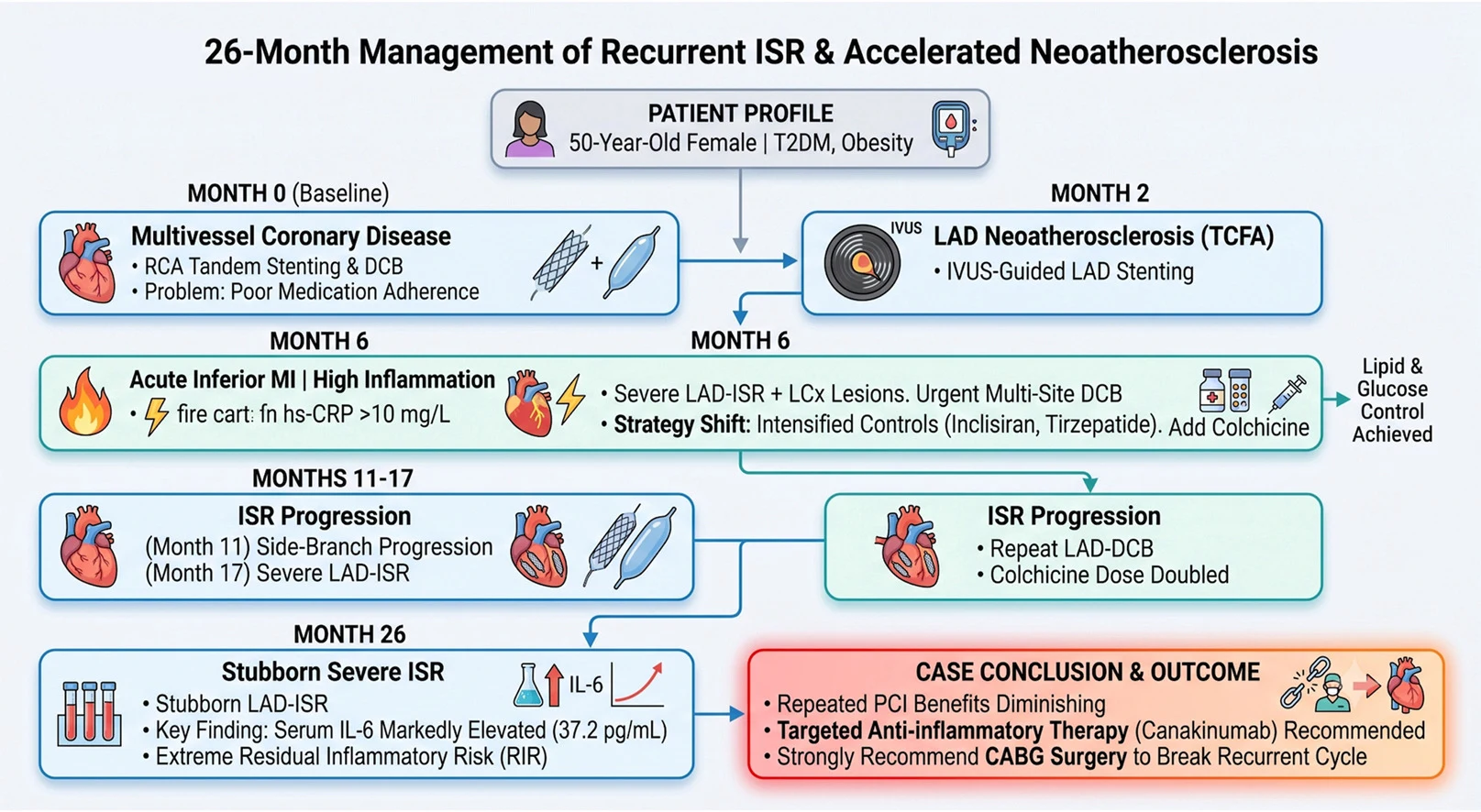
BACKGROUND: Recurrent in-stent restenosis (ISR) driven by accelerated neoatherosclerosis and high residual inflammatory risk remains a formidable clinical challenge. CASE SUMMARY: A 50-year-old noncompliant, obese, diabetic woman presented with recurrent multivessel ISR. Intravascular ultrasound confirmed intrastent thin-cap fibroatheromas. Despite multiple drug-coated balloon interventions, intensive lipid-lowering via inclisiran, and glycemic control with tirzepatide, she suffered relentless ISR driven by highly elevated interleukin-6. She received advanced anti-inflammatory therapies and was referred for bypass surgery. DISCUSSION: Literature highlights that targeting upstream inflammation is critical when standard therapies fail to halt malignant neoatherosclerosis. This case interests readers by demonstrating compliance optimization via long-acting agents and navigating advanced anti-inflammatory pathways (colchicine escalation, canakinumab) for refractory ISR. TAKE-HOME MESSAGES: Biomarkers like interleukin-6 must be evaluated in refractory ISR; persistent residual inflammation warrants advanced anti-inflammatory therapies or early surgical revascularization.