Prediction of 10-Year Incident Hypertension After Pregnancy: A Population-Based Cohort Study
Abstract
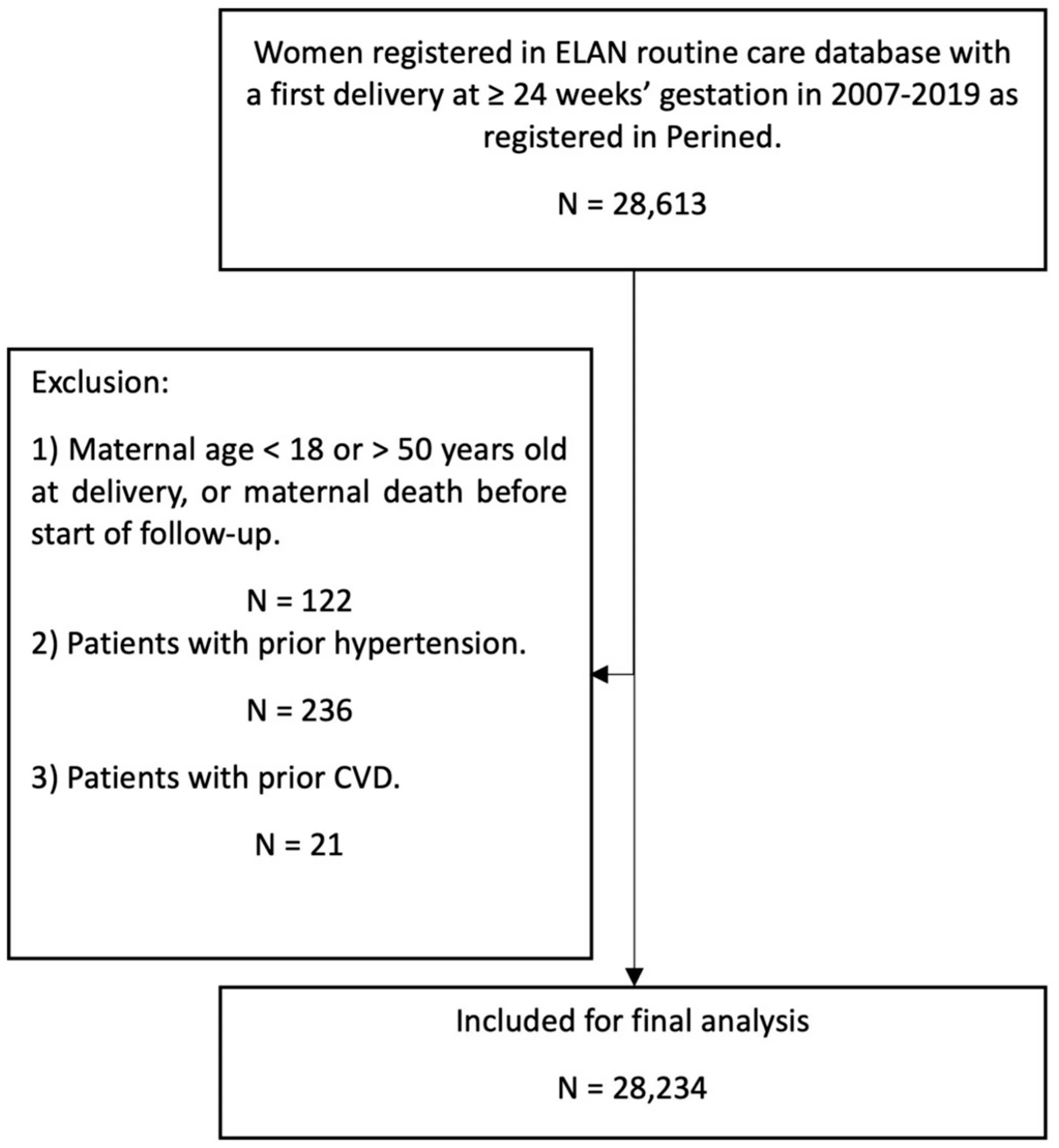
OBJECTIVE: To develop a model including pregnancy-related factors for the prediction of incident hypertension after pregnancy and to assess the impact of pregnancy-related factors on model performance. DESIGN: Population-based cohort study. SETTING: Routine primary care data linked to the data from the Dutch Perinatal Registry and Statistics Netherlands. POPULATION: Women with a first childbirth at ≥ 24 weeks' gestation between 2007 and 2019 were included and were followed for up to 10 years after childbirth. METHODS: Two Cox proportional hazards models were developed to estimate the 10-year risk of hypertension. Model 1 included sociodemographic factors and CVD-related factors, while model 2 additionally included pregnancy-related factors. MAIN OUTCOME MEASURES: Ten-year risk of incident hypertension. RESULTS: We included 28 234 women, of which 639 developed hypertension (cumulative 10-year incidence 3.3%). The C-index of model 1 was 0.659 (95% CI: 0.642-0.684) and increased to 0.772 (95% CI: 0.754-0.796) after the addition of pregnancy-related factors. The C-index difference was 0.113 (95% CI: 0.092-0.132), mostly driven by the inclusion of hypertensive disorders of pregnancy. Net reclassification improvement was 0.213 (95% CI: 0.159-0.273) for events and 0.001 (95% CI: -0.004 to 0.006) for non-events. CONCLUSIONS: Our prediction model for hypertension showed good discrimination and calibration after the addition of pregnancy-related factors. This model may help to target cardiovascular risk management for women with a high risk of hypertension after pregnancy in order to improve women's cardiovascular health.