Metabolic Changes During a Calorie-Restricted, Fish-Rich Ketogenic Diet Associated With Increased Circulating TMAO in Healthy Adults
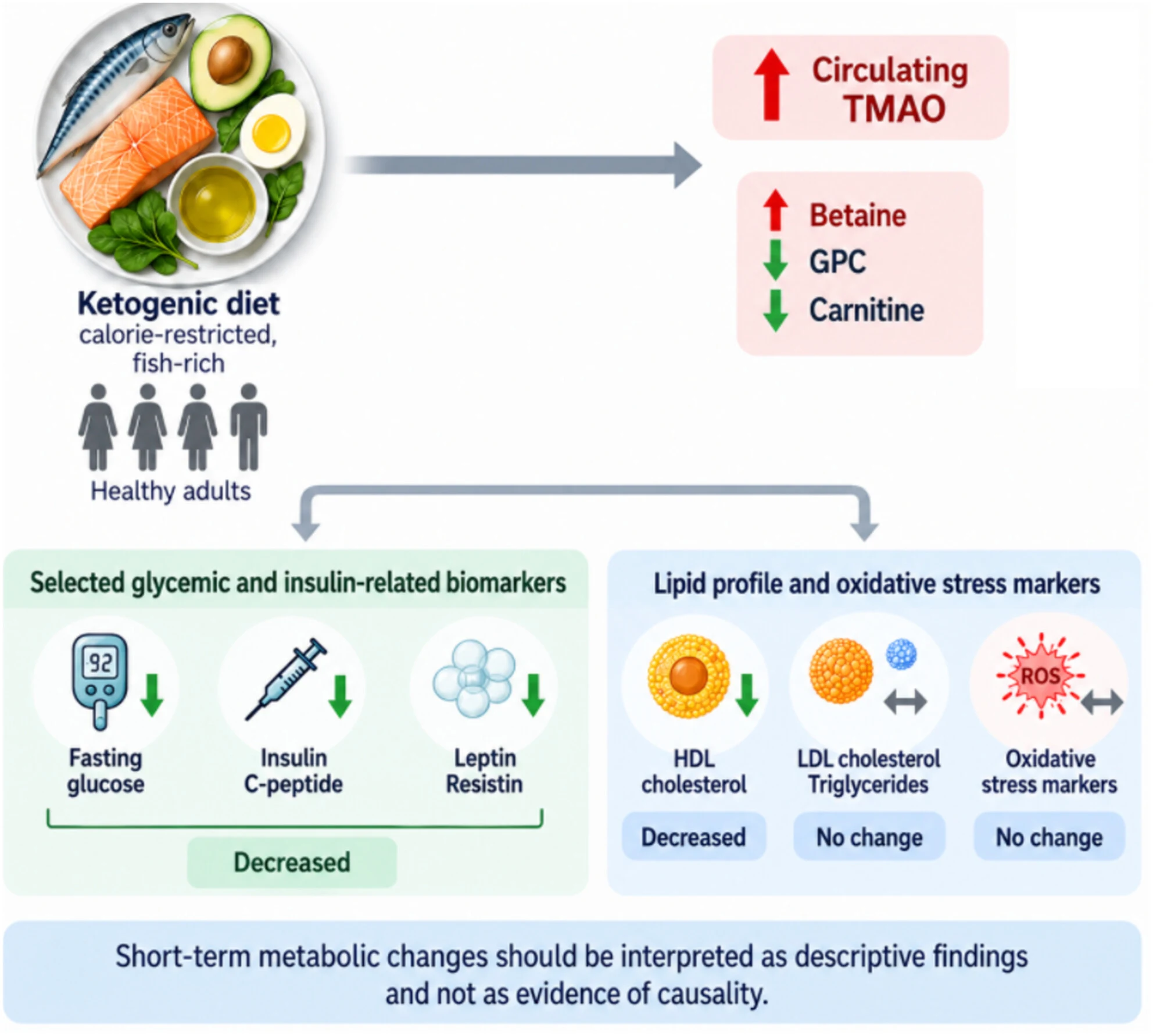
2 weeks
Abstract
BACKGROUND: A ketogenic diet (KD) is increasingly investigated as a nutritional approach for improving glycemic control and metabolic health. However, relatively few studies have examined fish-rich ketogenic interventions. Fish consumption may substantially increase circulating trimethylamine N-oxide (TMAO), while habitual fish intake is generally associated with favourable cardiometabolic outcomes. The metabolic significance of a short-term diet-induced increase in TMAO therefore remains unclear. This study aimed to characterize changes in circulating TMAO and related metabolites, glycemic and insulin-related biomarkers, oxidative stress markers, and lipid profiles during a fish-rich, calorie-restricted KD in healthy adults. METHODS: Nine men and five women (mean age 45 ± 3 years) participated in a 2-week, single-arm, within-subject pre-post dietary intervention. TMAO and related metabolites, selected glycemic and insulin-related biomarkers, oxidative stress markers, and lipid-profile parameters were assessed before and after the intervention. Participants followed individualized fish-rich ketogenic meal plans providing an approximately 500 kcal/day energy deficit. RESULTS: Following the intervention, circulating TMAO and betaine concentrations increased significantly, whereas carnitine and glycerophosphocholine (GPC) concentrations decreased. Favourable changes were observed in fasting glucose, insulin, C-peptide, leptin, and resistin. HDL cholesterol decreased significantly, while total cholesterol, LDL cholesterol, and triglycerides remained unchanged. No evidence of increased oxidative stress was observed. The direct estimate of insulin sensitivity (HOMA-%S) did not reach statistical significance after correction for multiple comparisons. CONCLUSIONS: A 2-week, calorie-restricted, fish-rich ketogenic intervention was associated with a marked increase in circulating TMAO together with favourable changes in selected glycemic, insulin-related, and adipokine biomarkers, without evidence of increased oxidative stress. HDL cholesterol decreased, whereas other lipid-profile parameters remained largely unchanged. Because caloric restriction, ketogenic macronutrient composition, high fish intake, and reductions in body weight and adiposity occurred simultaneously, the independent contribution of TMAO to these metabolic changes cannot be determined. These findings should therefore be considered preliminary and hypothesis-generating.
The paper
Poznan University of Physical Education; Medical University of Gdansk
Endocrinology, Diabetes & Metabolism, 16 Oct 2026