Association Between Diet Quality and 20-Year Heart Failure Incidence: Findings from the ATTICA Cohort Study (2002-2022)
Abstract
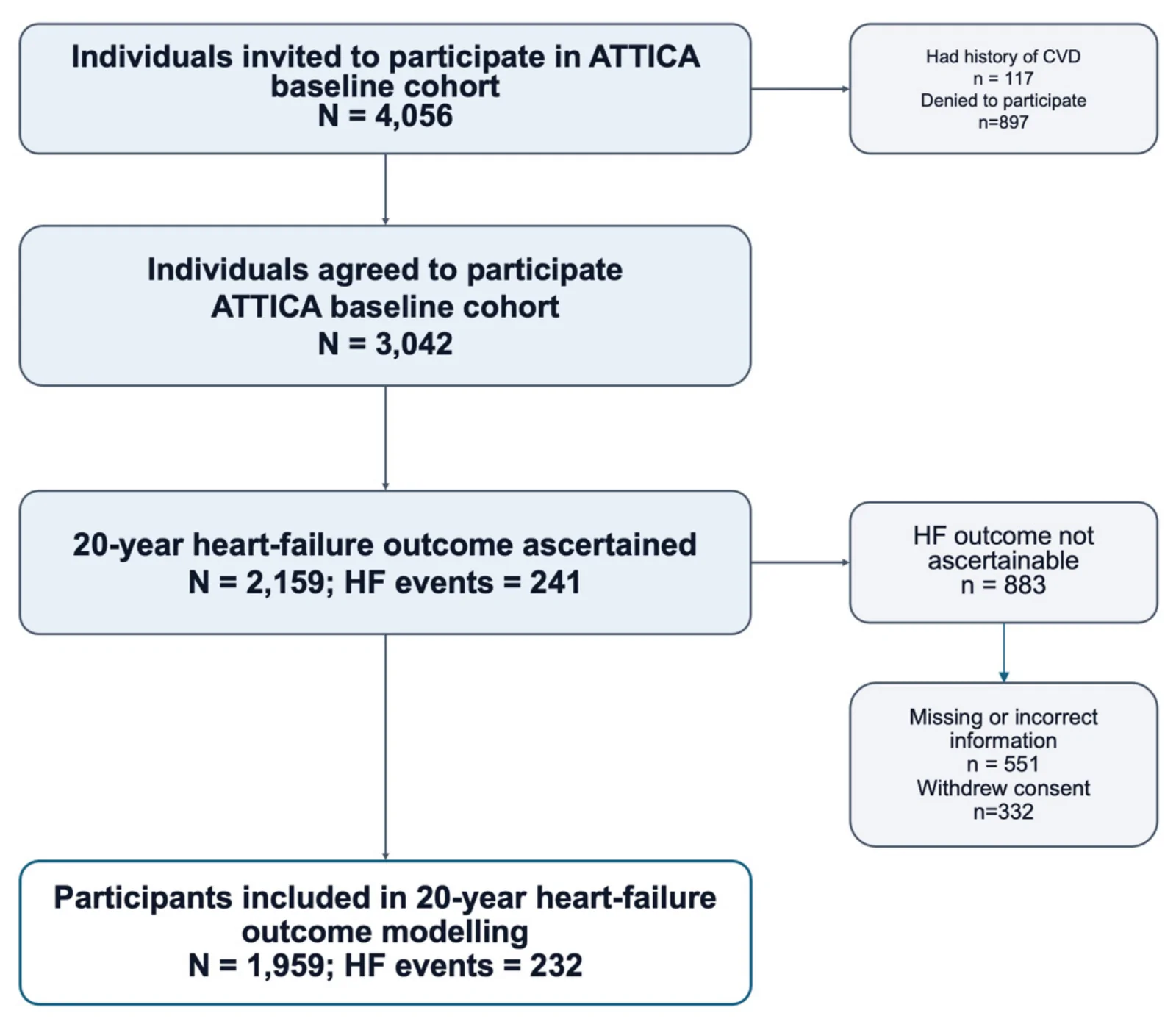
Background/Objectives: Diet quality is a potentially modifiable determinant of heart failure (HF), yet evidence regarding its long-term association with HF incidence remains limited. This study examined the association between baseline diet quality and 20-year incident HF in the population-based ATTICA cohort. Methods: Among 3042 adults free of cardiovascular disease at baseline (2001-2002), HF status was available for 2159 participants in 2022, of whom 241 (11.2%) developed HF. Diet quality, including the relative contributions of healthy and unhealthy food groups, was assessed using the Global Diet Quality Score (GDQS), derived from a validated food-frequency questionnaire. Logistic regression models were sequentially adjusted for age, sex, body mass index, education, physical activity, smoking burden, hypertension, diabetes, and hypercholesterolemia. Results: HF incidence was 20.7%, 5.1%, and 6.6% among participants with low, intermediate, and high diet quality, respectively (p < 0.001). In the fully adjusted analysis (n = 1973), better overall diet quality was associated with lower odds of HF (odds ratio [OR] per 1-point increment, 0.97; 95% confidence interval [CI], 0.94-0.99). A greater contribution of healthy foods was also inversely associated with HF (OR, 0.96; 95% CI, 0.93-0.98), whereas the unhealthy-food component was not independently associated with the outcome (OR, 1.04; 95% CI, 0.96-1.13). Conclusions: Better diet quality, particularly greater consumption of health-promoting foods, was independently associated with lower 20-year HF incidence in a Mediterranean population.
The paper
National and Kapodistrian University of Athens; Harokopio University of Athens
Nutrients, 6 Oct 2026, Open access