The Proposed Vitamin D-Homocysteine Relationship in Cardiometabolic Health: A Narrative Review of Mechanisms, Evidence, and Research Phenotypes
Abstract
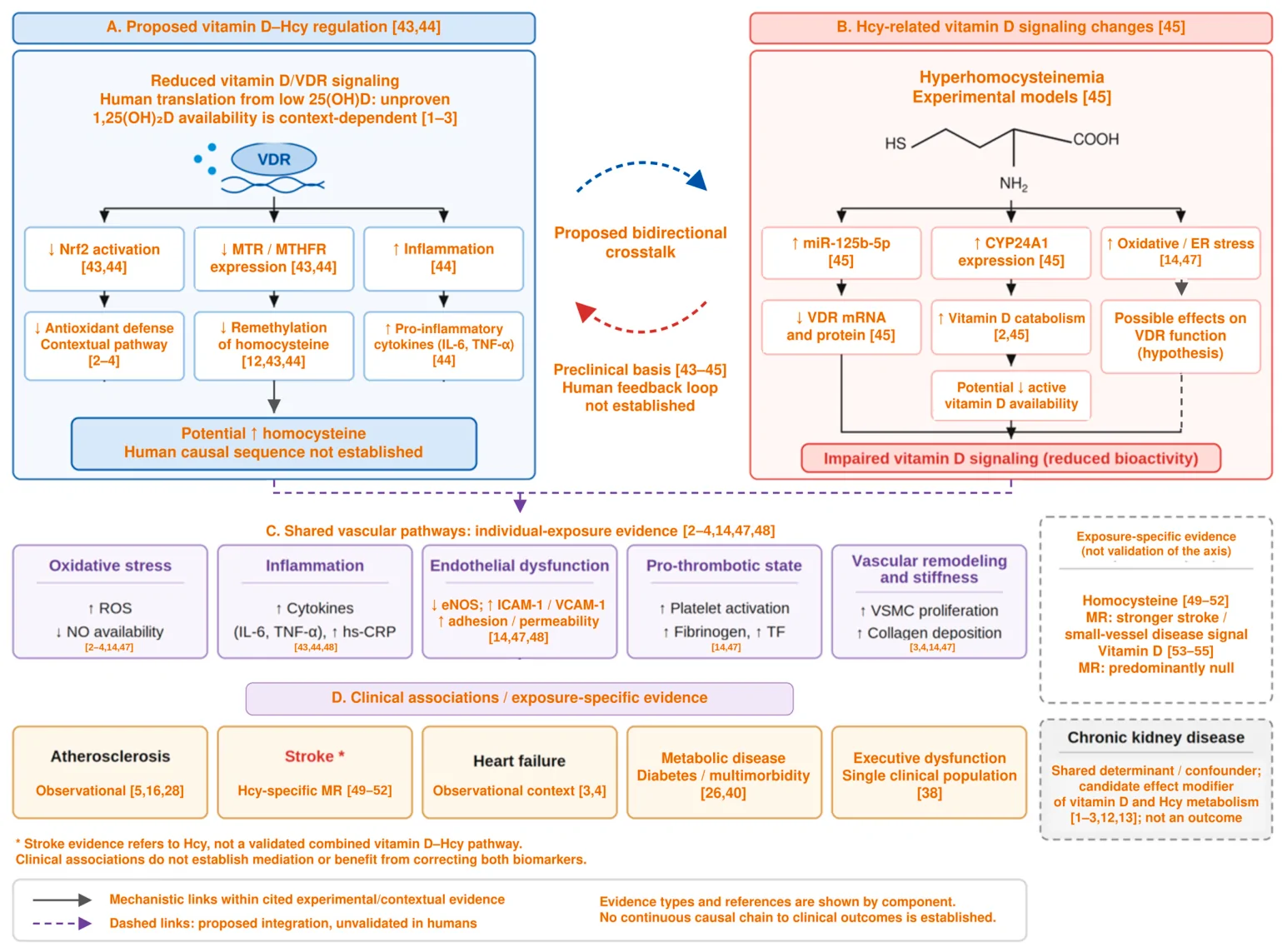
The clinical relevance of a proposed relationship between vitamin D status and homocysteine remains uncertain. This narrative review integrates mechanistic, observational, Mendelian randomization (MR), and trial evidence. A documented supplementary search of PubMed and Europe PMC was executed on 21 September 2026 for publications through 31 July 2026; no formal risk-of-bias assessment or quantitative synthesis was performed. Experimental studies support vitamin D-dependent regulation of homocysteine metabolism and homocysteine-related suppression of vitamin D signaling, but reciprocal regulation has not been established in humans. Human biomarker associations and supplementation effects on homocysteine are heterogeneous; two frequently cited intervention publications report the same trial. Additional longitudinal and multibiomarker studies provide preliminary outcome associations, without externally validating the proposed four-category classification or its treatment utility. Homocysteine MR signals are more consistent for stroke than coronary disease, subject to validity and multiplicity concerns. Vitamin D MR is predominantly null, including the republished stratified analysis, and large supplementation trials have not demonstrated consistent cardiovascular benefit. A combined folate-vitamin D cognitive trial did not demonstrate its primary intention-to-treat benefit and does not validate vascular treatment selection. Clinical outcome trials carry greater weight for treatment decisions than molecular plausibility or biomarker co-occurrence. The proposed classification and explanatory models remain hypothesis-generating: a clinically meaningful reciprocal axis and differential benefit from phenotype-guided combined nutritional intervention are unproven.
- Vitamin D
- Folate + vitamin D
- Methionine and one-carbon metabolism
- Vitamin D receptor signalling
- Homocysteine
- Coronary disease
The paper
The Catholic University of Korea St. Vincent's Hospital
Nutrients, 25 Sep 2026, Open access


