Potential Physiological Convergence Between GLP-1 Receptor Signaling and Hepatocyte TAZ in Metabolic Liver Disease: From Metabolic Homeostasis to Fibrotic Remodeling
Abstract
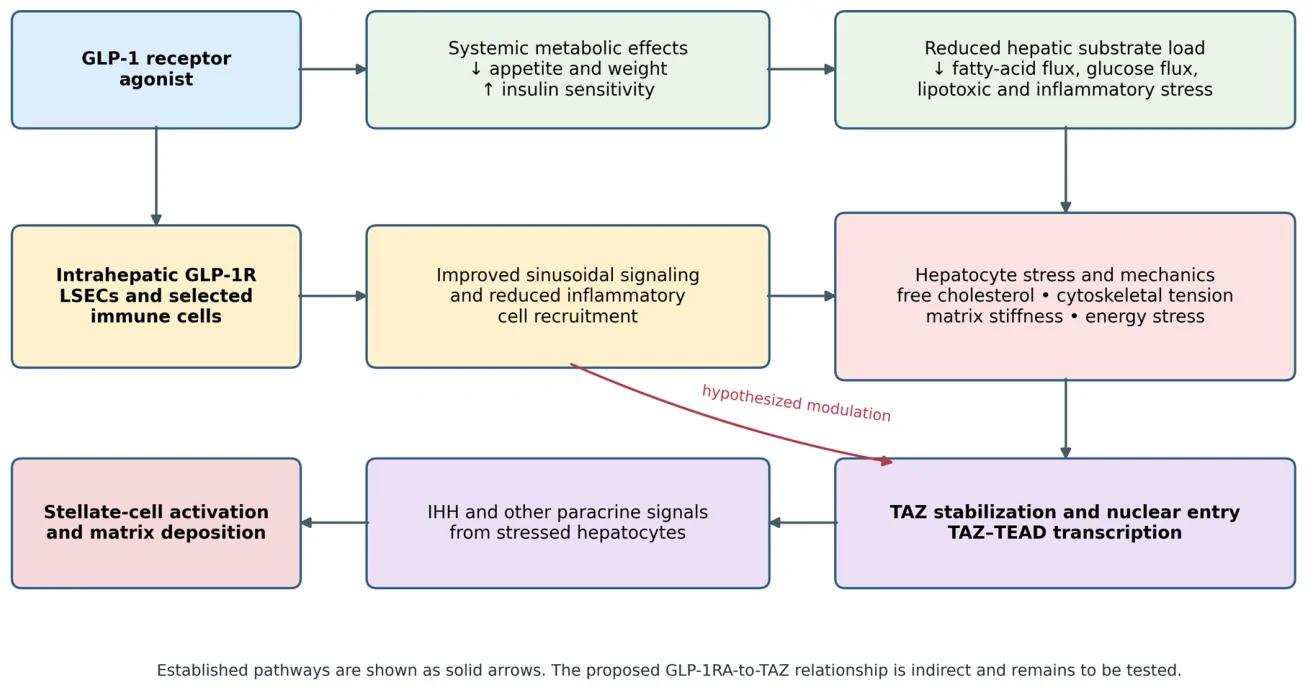
Metabolic dysfunction-associated steatotic liver disease (MASLD) progresses when nutrient excess, insulin resistance, adipose dysfunction, and hepatocellular stress overwhelm hepatic adaptation. Glucagon-like peptide-1 receptor agonists (GLP-1RAs) improve weight, glycemic control, and steatohepatitis, and semaglutide has demonstrated histological improvement in metabolic dysfunction-associated steatohepatitis (MASH). In parallel, the transcriptional coactivator with PDZ-binding motif (TAZ; WWTR1) has emerged as a nutrient-, cholesterol-, and mechanics-responsive regulator linking stressed hepatocytes to inflammation and fibrogenesis through Hippo-YAP/TAZ signaling and Indian hedgehog. This narrative review integrates incretin physiology with cell-specific TAZ biology across the gut-brain-axis, adipose tissue, pancreatic islets, liver sinusoidal endothelial cells, hepatocytes, immune cells, and hepatic stellate cells. Recent evidence that semaglutide can signal through intrahepatic sinusoidal endothelial GLP-1 receptors provides a weight-loss-independent route to reduced hepatic inflammation and fibrosis; however, it does not establish that TAZ is a downstream mediator. The evidence therefore supports a multilevel convergence model in which GLP-1RAs lower metabolic and inflammatory inputs that favor TAZ activation, while direct GLP-1RA-to-TAZ signaling remains a testable hypothesis. Receptor-validated, cell-specific, weight-controlled, and longitudinal human studies are needed to distinguish mediation from parallel response and to determine whether TAZ-pathway biomarkers can guide mechanism-based therapy.
- GLP-1 receptor agonists
- Semaglutide
- GLP1R
- Extracellular matrix remodelling
- Hepatic fibrosis
- Metabolic dysfunction-associated steatohepatitis
The paper
King Saud bin Abdulaziz University for Health Sciences
Cells, 4 Oct 2026, Open access