Incremental value of DXA-derived visceral versus total adiposity beyond routine anthropometric assessment for hypertension discrimination: a population-based study
Abstract
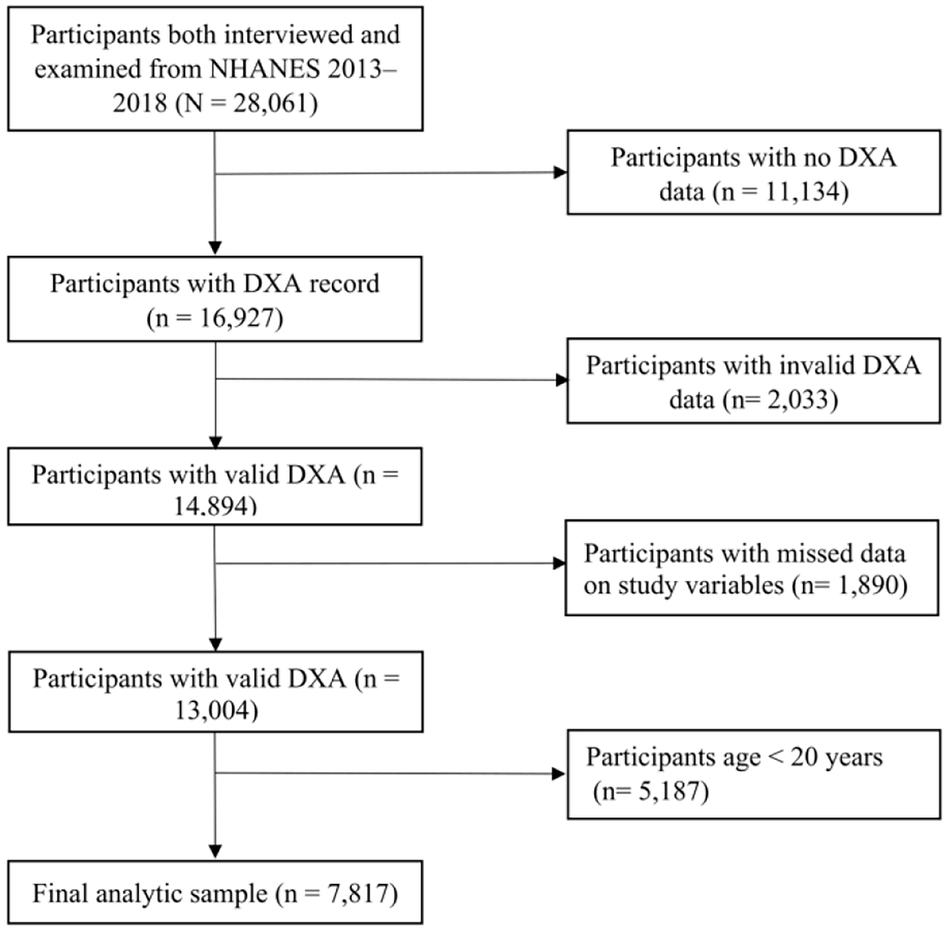
Hypertension is strongly linked to obesity, yet it remains uncertain whether DXA-derived measures of adiposity improve hypertension discrimination beyond routine anthropometric assessment and whether any incremental value reflects visceral rather than total adiposity. This study examined whether DXA-derived visceral and total adiposity provide incremental discriminatory value beyond routine anthropometric assessment for hypertension discrimination. We analyzed 7817 adults aged 20-59 years from the 2013 to 2018 National Health and Nutrition Examination Survey with valid DXA measurements. Discriminatory performance and the incremental value of DXA-derived adiposity measures beyond anthropometric assessment were evaluated using receiver operating characteristic curve analysis, model fit, and reclassification metrics. Among routinely available anthropometric measures, waist circumference demonstrated the highest discriminatory performance for hypertension (AUC 0.791, 95% CI: 0.780-0.802). Addition of DXA-derived visceral adiposity significantly improved discrimination (AUC 0.865, ΔAUC = 0.074) and significantly improved model fit beyond waist circumference (P < 0.001), whereas total adiposity measured by fat mass index provided negligible incremental value (ΔAUC = 0.0020) and did not improve model fit. Reclassification metrics yielded consistent findings, and results generally remained robust across sensitivity analyses; however, when hypertension was defined using measured blood pressure alone, the incremental improvement was attenuated (ΔAUC = 0.012 vs. 0.074). Among DXA-derived adiposity measures, only visceral adiposity provided meaningful incremental discriminatory value beyond the best-performing routine anthropometric measure, whereas total adiposity did not. These findings suggest that when DXA-based body composition assessment is performed, the clinically relevant information may be derived from visceral rather than total adiposity.
From the paper
- Participants
Among the 7817 participants included in the analysis, 3117 (39.9%) had hypertension.
- Result
Of the DXA-derived adiposity measures, FMI was associated with hypertension (OR 1.96, 95% CI: 1.77–2.17), while VAT mass demonstrated the strongest association with hypertension (OR 2.65, 95% CI: 1.82–3.86).
Results, Associations of anthropometric and DXA-derived adiposity measures with hypertension
Quoted word for word from the full text on nature.com.
The paper
Western Sydney University
Hypertension Research, 15 Oct 2026