Recommendations of the Groupe Francophone des Myélodysplasies (GFM) - Diagnostic approach and management of myelodysplastic syndromes, chronic myelomonocytic leukemias, and VEXAS syndrome
Abstract
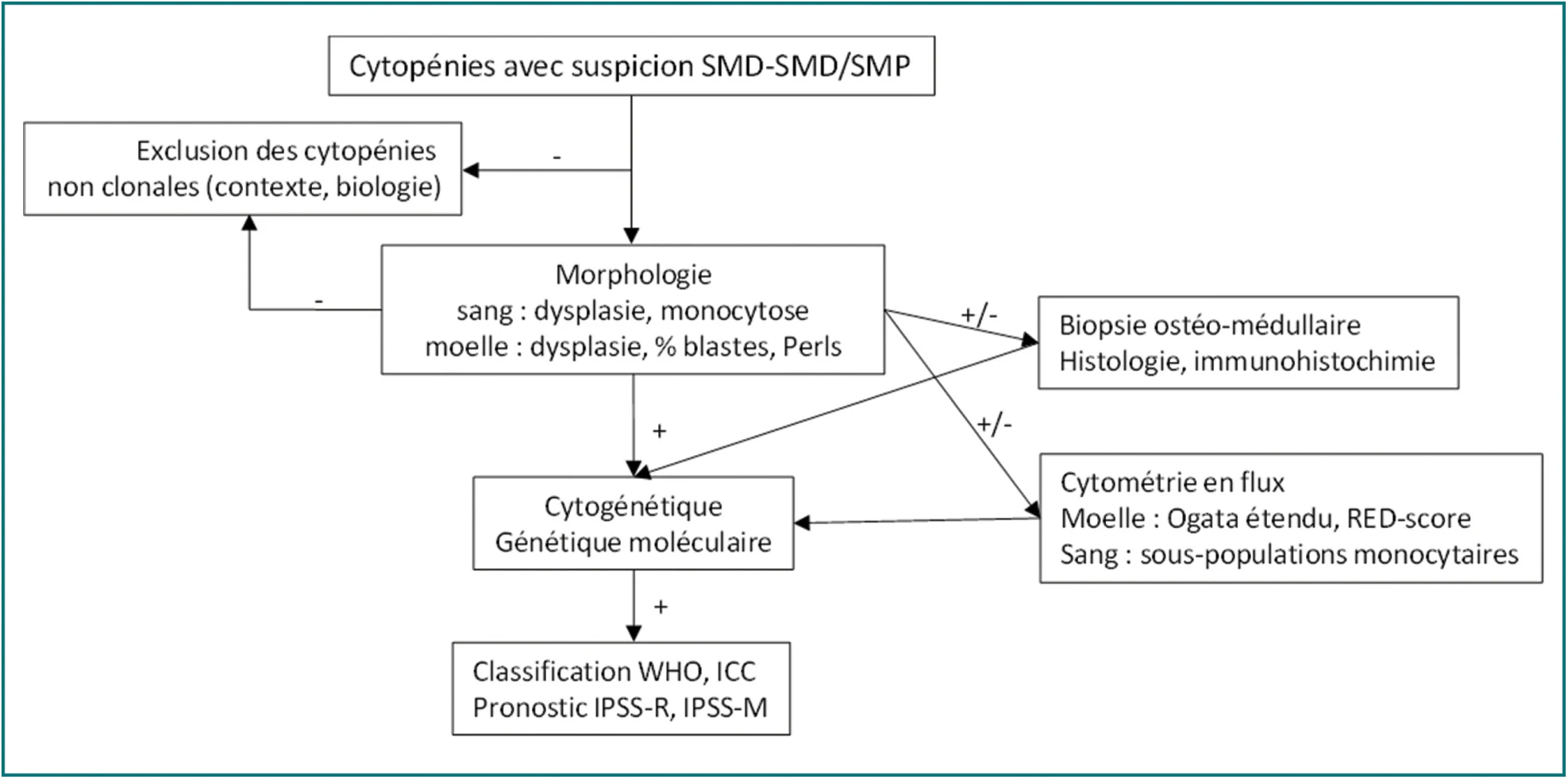
This document presents the national recommendations of the Francophone Group for Myelodysplastic Syndromes (Groupe Francophone des Myélodysplasies, GFM) for the diagnosis and management of myelodysplastic syndromes (MDS), chronic myelomonocytic leukemia (CMML), and VEXAS syndrome. Diagnosis relies on the integration of complete blood count data, bone marrow morphology, cytogenetics, and molecular biology, including targeted gene sequencing panels. The document also provides surveillance recommendations for clonal hematopoiesis of indeterminate potential (CHIP) and clonal cytopenias of undetermined significance (CCUS), which carry a risk of progression to MDS of up to 10-30% over ten years. Prognostic stratification is based on the IPSS-R and IPSS-M scoring systems, the latter incorporating somatic mutations to refine risk assessment. For lower-risk MDS, management primarily targets anemia through erythropoiesis-stimulating agents, luspatercept, and imetelstat (available very soon). Higher-risk forms are treated with azacitidine, potentially combined with venetoclax. Allogeneic hematopoietic stem cell transplantation continues to be refined at all stages, from donor selection to post-transplant management. Finally, the management of VEXAS syndrome is specifically detailed, encompassing corticosteroids, anti-inflammatory biotherapies, and azacitidine.
- Allogeneic hematopoietic stem cell transplantation
- Anti-inflammatory biotherapies
- Azacitidine
- VEXAS syndrome
- Anemia
- Humans
The paper
université Grenoble Alpes; université Paris Cité
Bulletin du Cancer, 15 Oct 2026