Two blood fats linked to lower Alzheimer's disease risk
An analysis of human genetic data suggested that other blood-fat measures may partly account for the associations with Alzheimer's disease.
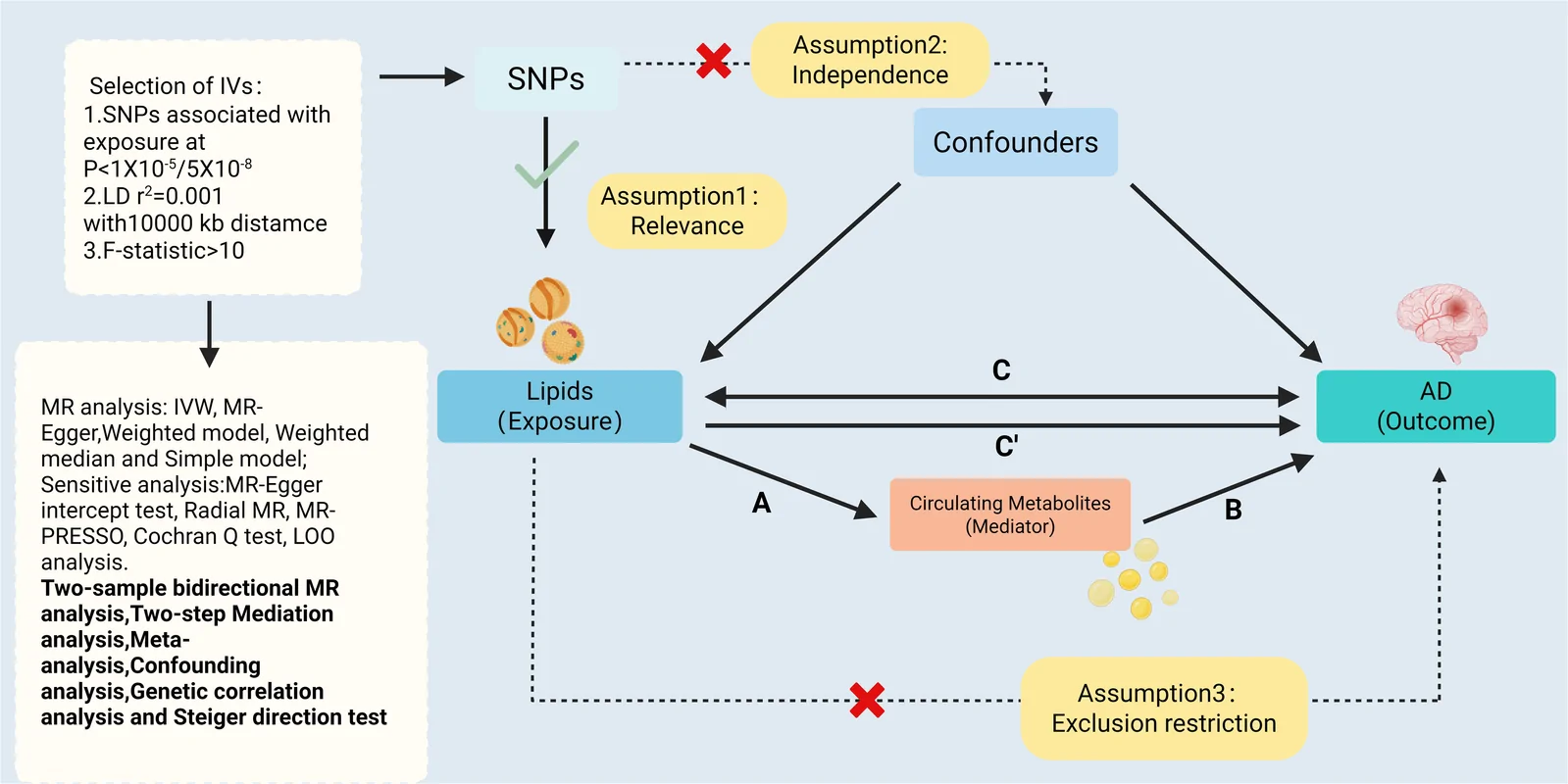
Researchers analysed human genetic data using Mendelian randomization, an approach that uses inherited genetic differences to examine links between traits and disease. They linked two specific lipids, or fat molecules, to lower Alzheimer's disease risk. They then assessed whether other circulating substances might help account for these associations.
For one lipid, triglycerides—a type of fat—in low-density lipoproteins (LDL), particles that carry fats in blood, accounted for 17.6% of the estimated protective association. The figures for medium and small LDL particles were 22.8% and 18.1%. For the other lipid, the ratio of free cholesterol to total fat in medium high-density lipoproteins, another type of fat-carrying particle, accounted for 13.0% of the association. The researchers identified this last measure as a potentially harmful intermediate, rather than a protective one.
Why it matters
Alzheimer's disease is an age-related illness. Investigating how the body handles fats may help researchers understand pathways involved in its development.
Caveats
This was a Mendelian randomization analysis, not a trial of changing blood-fat levels. It does not establish that altering these fats would prevent Alzheimer's disease.
- Alzheimer's disease
- Triglycerides in small LDL
- Free cholesterol to total lipid ratio in medium HDL
- PI
- TAG
- Humans
The paper
Henan University of Traditional Chinese Medicine
Journal of Alzheimer's Disease Reports, 12 Jun 2026, Open access